How to Style Flats Without Looking Shorter as a Petite Woman
If you’re petite, you’ve probably heard the advice to “just wear heels” so many times it feels like flats are off-limits. That’s not true. The problem isn’t the shoe — it’s how most petite women wear it. Flat shoes remove the lift heels give you, and if nothing else in your outfit compensates, your leg line breaks up and your proportions shrink. The good news is that styling flats petite the right way takes about 15 minutes of outfit planning, not a shoe swap.
This guide walks you through the exact adjustments — vamp height, hem length, color matching, and toe shape — that keep your silhouette long even in a shoe with zero heel. You’ll learn what to buy, what to alter, and what to avoid entirely. None of this requires special skills or expensive pieces. By the end, you’ll be able to put together a flats outfit that reads just as long and put-together as a heeled one.
- A pair of flats with a low-cut vamp (skimmers or ballet flats)
- At least one pair of pointed-toe flats
- Trousers or jeans that can be hemmed or already hit ankle-length
- A tailor or needle and thread for hemming
- Tops in coordinating or matching tones for a monochrome look
- Cropped pants or a hemming option for wide-leg styles
- Choose a flat with a low-cut vamp
- Match flats to skin tone or hemline
- Skip the ankle strap (or style around it)
- Hem pants to hit right above the shoe
- Create a monochrome column from waist to toe
- Add a pointed toe to elongate the foot line
- Balance wide-leg pants with a cropped top
- Avoid bulky socks or visible cuffs
Choose a Flat With a Low-Cut Vamp
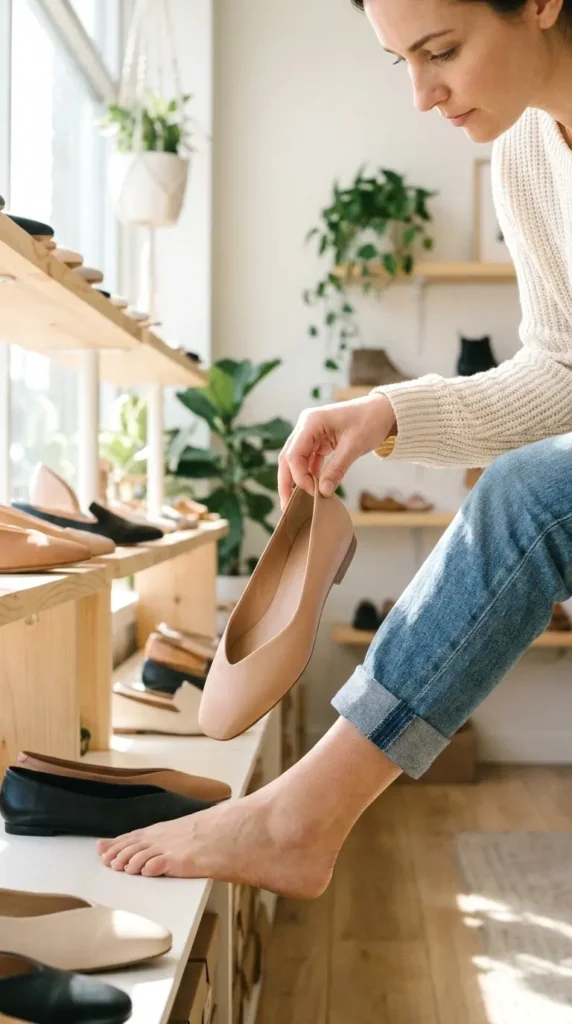
The vamp is the front panel of the shoe that covers your toes, and its height changes how much of your foot shows. A high vamp cuts across the top of your foot and visually chops your leg line short. Look for skimmers or ballet flats where the vamp sits low, closer to your toes than your ankle. This exposes more skin between your foot and your pant hem, which reads as length to the eye. If you’re shopping in store, hold the shoe up and check where the front edge lands compared to your own foot before trying it on.
Match Your Flats to Your Skin Tone or Hemline
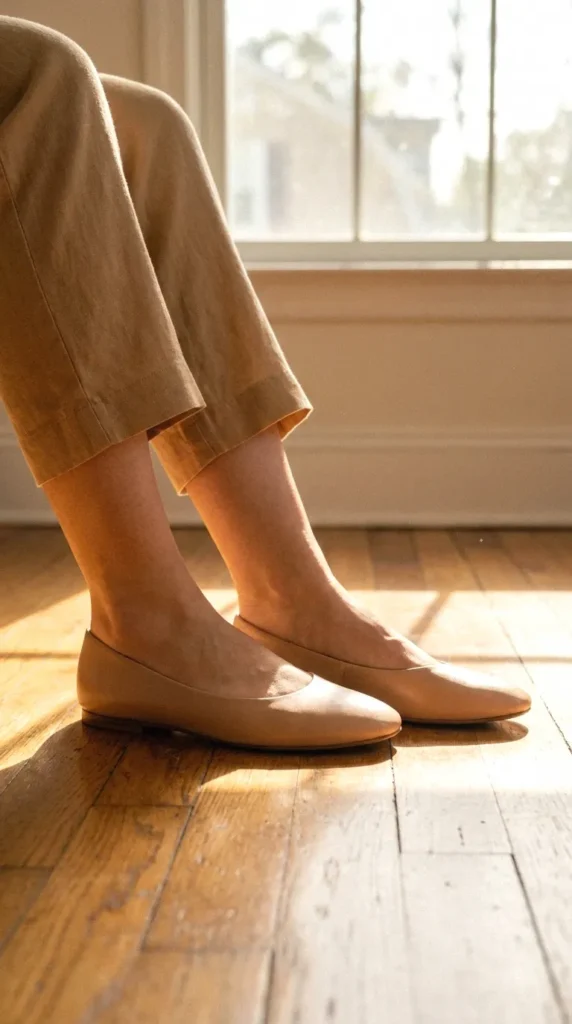
A flat that closely matches your skin tone (nude, blush, or a warm tan depending on your undertone) blurs the line between foot and floor, so your leg appears to keep going. If a skin-matching shade isn’t available or doesn’t suit your outfit, match the shoe color to your pant hem instead. Either trick removes a visual break point. Avoid a flat in a sharply contrasting color paired with cropped pants — that combination is one of the fastest ways to shorten your line, since the eye stops right at your ankle.
Skip the Ankle Strap (or Style Around It)
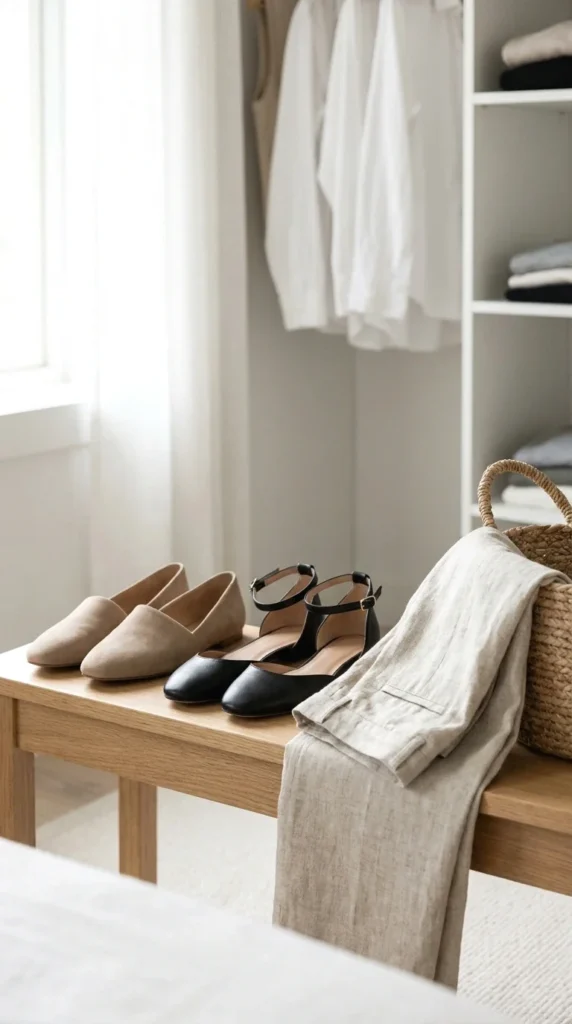
Ankle straps sit at the exact spot where your leg needs to look continuous, and a strap there acts like a belt cinching your line in half. If you already own a pair, keep them for outfits with a full-length pant that covers the strap entirely. For bare-ankle looks, choose a strapless flat instead — a plain skimmer, a loafer, or a pointed slip-on all keep that stretch of ankle clear and uninterrupted.
Hem Your Pants to Hit Right Above the Shoe
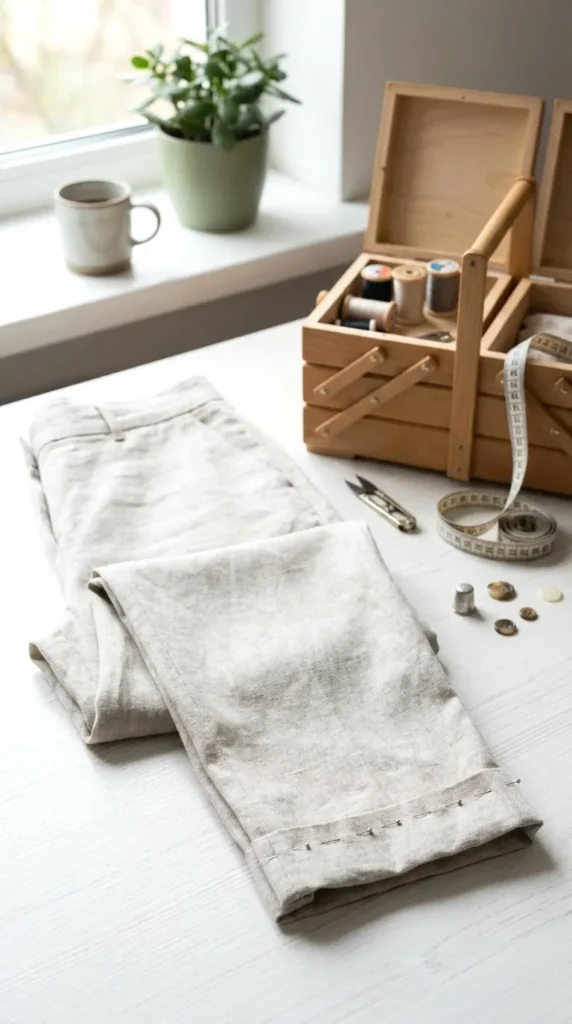
If your pants pool over the top of your flats or stop awkwardly mid-shin, both create a visual cutoff exactly where you don’t want one. Aim for a hem that ends half an inch above where the shoe begins, right at the top of your foot. This small gap of exposed skin does the same lengthening trick as the low vamp — it keeps the eye moving instead of stopping. A tailor can do this in under 20 minutes, or you can pin and hem a straight-leg pair yourself with a simple blind stitch.
Create a Monochrome Column From Waist to Toe
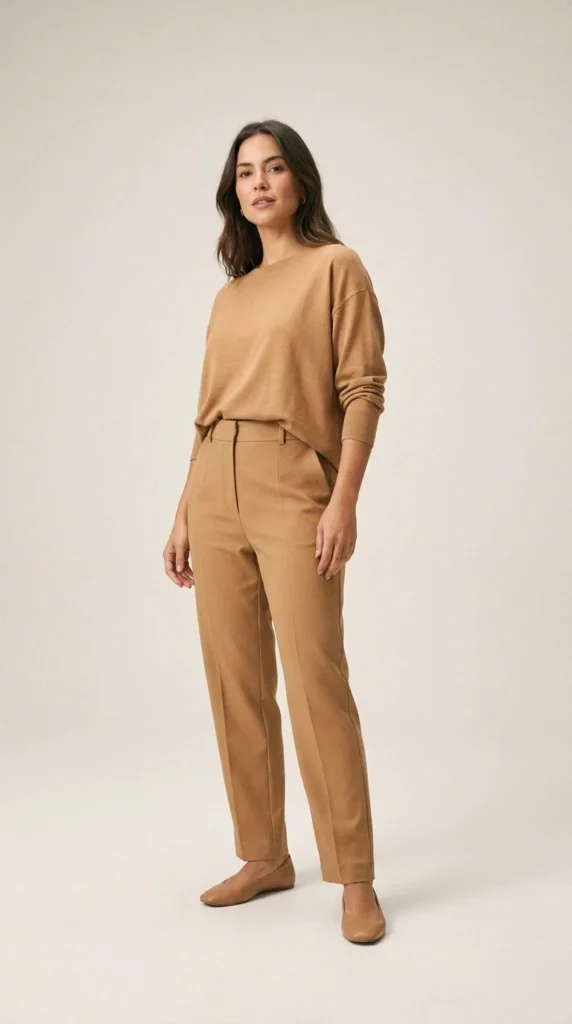
One unbroken color from your waistband down to your shoes tricks the eye into reading your whole lower body as a single long line, with no horizontal stops to interrupt it. Try matching:
- Pants and top in the same shade or tonal family
- Shoes in a close match to your pants
- A cardigan or jacket that continues the same tone if worn open
This works especially well in navy, black, or camel, where slight shade variation between pieces still reads as cohesive rather than mismatched.
Add a Pointed Toe to Elongate the Foot Line
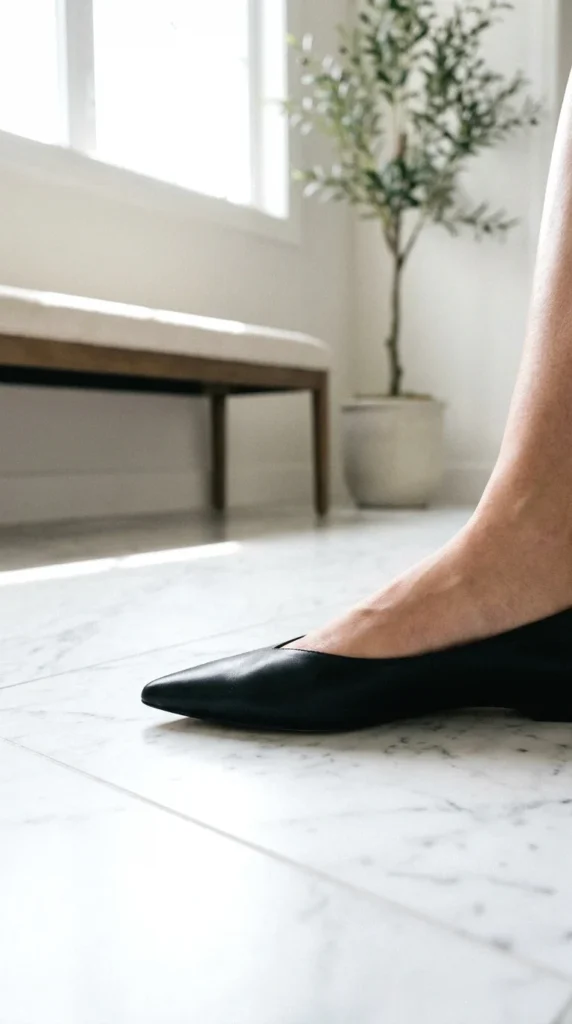
A rounded toe box ends your foot line abruptly, while a pointed or almond toe tapers it forward, adding visual inches without adding actual length. This matters more for petite frames because your foot-to-leg ratio is already working with less overall height to play with. Choose a moderate point rather than an extreme one — an overly sharp toe on a small foot can look disproportionate in the opposite direction, so stick to a soft almond shape for the most flattering result.
Balance Wide-Leg Pants With a Cropped Top
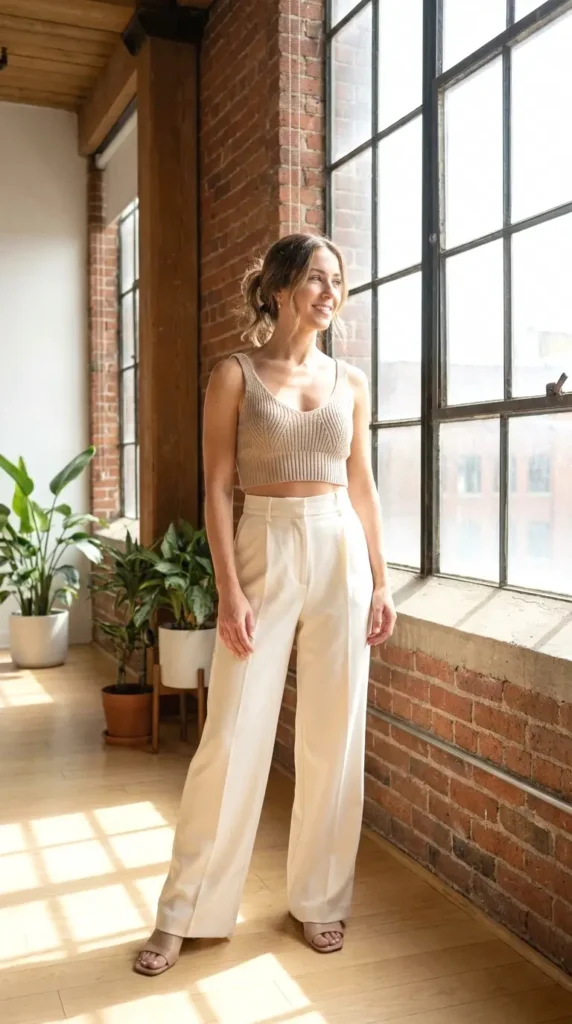
Wide-leg trousers add volume at the bottom, and without something to balance that up top, your proportions shift downward and shorten your overall look. Tuck in a fitted top or wear a cropped one that hits at your natural waist, so the eye has a clear split point between top and bottom halves. This creates two proportionate sections instead of one bottom-heavy block. Two-thirds pant, one-third top is a reliable ratio to aim for when you’re unsure.
Avoid Bulky Socks or Visible Cuffs
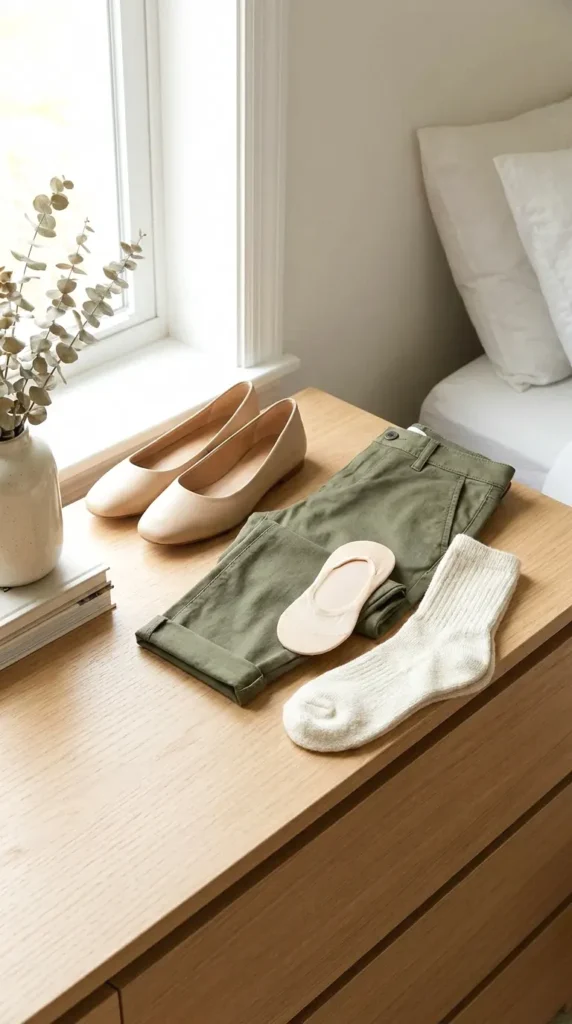
A thick sock peeking above your flat, or a folded cuff sitting right at the ankle, adds visual width and a hard stop exactly where you’re trying to create length. If you need sock coverage for comfort, choose a no-show or low-cut liner sock instead — nothing should be visible above the shoe line. Same goes for pant cuffs: a raw or single-fold hem lies flatter and reads cleaner than a thick, doubled cuff.
- Choose a flat with a low-cut vamp
- Match flats to skin tone or hemline
- Skip the ankle strap (or style around it)
- Hem pants to hit right above the shoe
- Create a monochrome column from waist to toe
- Add a pointed toe to elongate the foot line
- Balance wide-leg pants with a cropped top
- Avoid bulky socks or visible cuffs
Conclusion
You now know exactly how to keep your leg line long in flats, from vamp height down to the hem. None of it requires giving up comfort for height. Try one full outfit using these rules and see how different it feels compared to your usual flat-shoe pairing. Next time you’re shopping, bring this list with you and check each pair against it before buying.
Save this guide to your Pinterest board so you have it ready before your next shopping trip.