Petite Plus Size Styling Tricks: How to Use Vertical Lines to Look Taller and Leaner
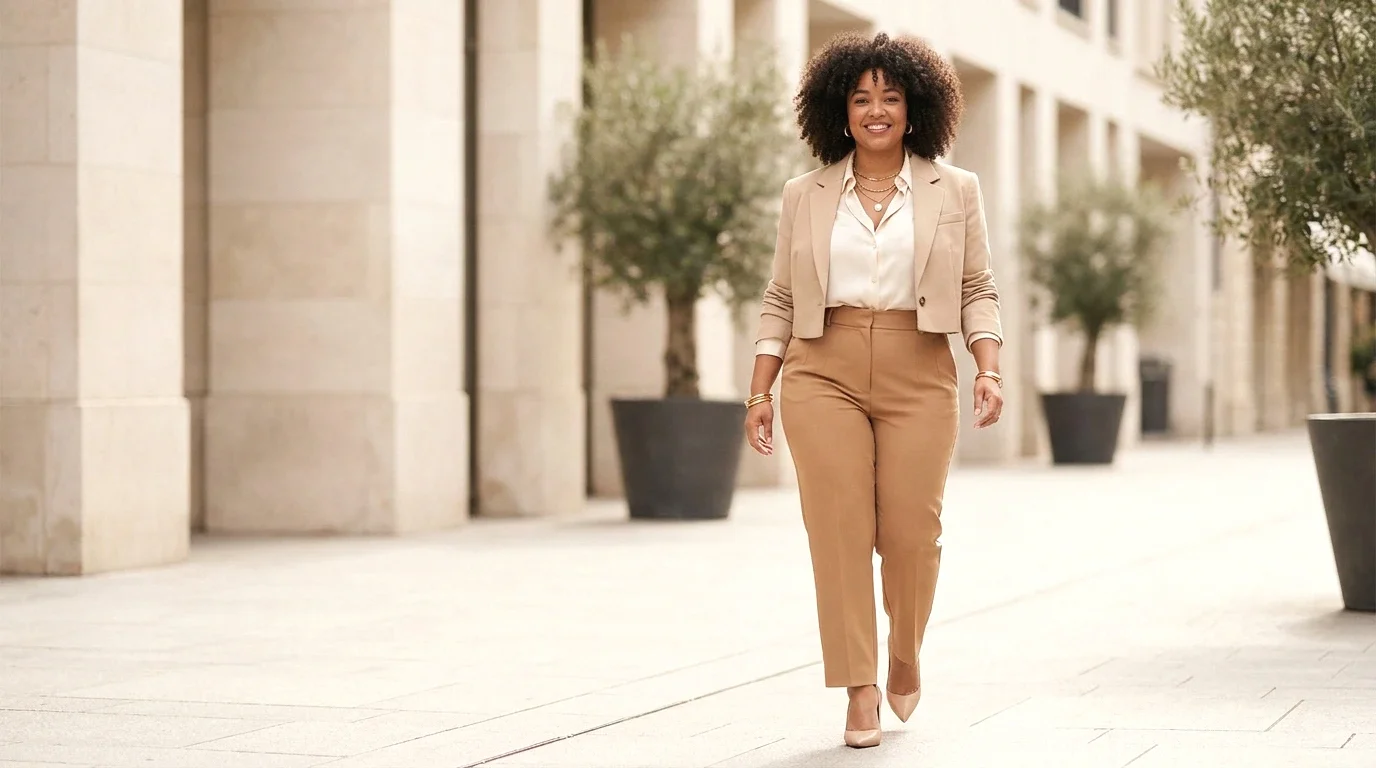
If you’re 5’3″ or under and plus size, you already know most style advice doesn’t fit you. Petite guides assume you’re straight-sized. Plus-size guides assume you’re average height. You’re left guessing, and most of what you try either swallows your frame or cuts you in half at the waist. Vertical lines fix both problems at once. They pull the eye up and down instead of side to side, which makes your torso and legs read as longer without changing a single thing about your actual size. These petite plus size styling tricks aren’t about hiding your body. They’re about directing attention the way tall models’ clothes naturally do, using seams, stripes, and layers you probably already own. By the end of this guide, you’ll know exactly where to place a vertical line, which ones actually work on a shorter frame, and which “vertical” trends secretly cut you shorter instead of taller. Grab an outfit you already have on hand — you’ll be testing this as you go.
- One tonal or monochrome outfit (or two similar-toned pieces)
- One pinstriped item, if you own one
- An open cardigan, duster, or unbuttoned shirt jacket
- A pair of shoes close in color to your pants or hemline
- A long necklace, scarf, or thin belt (optional, for Step 7)
- Start with a monochrome or tonal base
- Add a vertical focal point down the center
- Choose pinstripes over wide or horizontal stripes
- Layer with an open cardigan or duster
- Pick a higher rise that lengthens the torso
- Match your shoe color to your pant or hem
- Add one vertical accessory line
Start With a Monochrome or Tonal Base
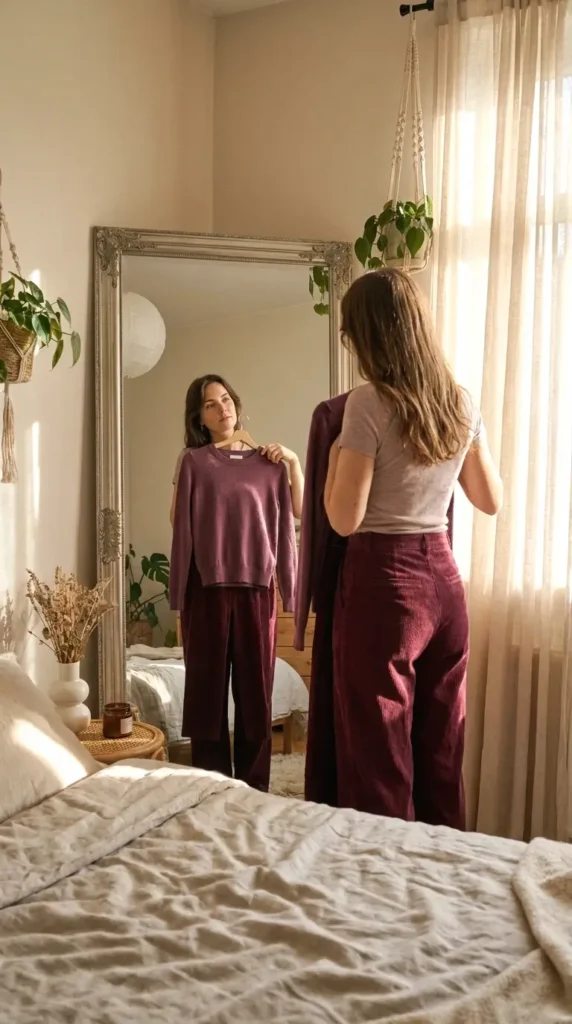
Two colors that are close in value read as one continuous line to the eye. Three or more competing colors chop your body into visual sections, which shortens you no matter how tall you actually are. Pull one top and one bottom in the same color family — navy on navy, or a deep plum top with a wine-toned pant. If you don’t own exact matches, stay within two shades of each other rather than reaching for true contrast.
Add a Vertical Focal Point Down the Center
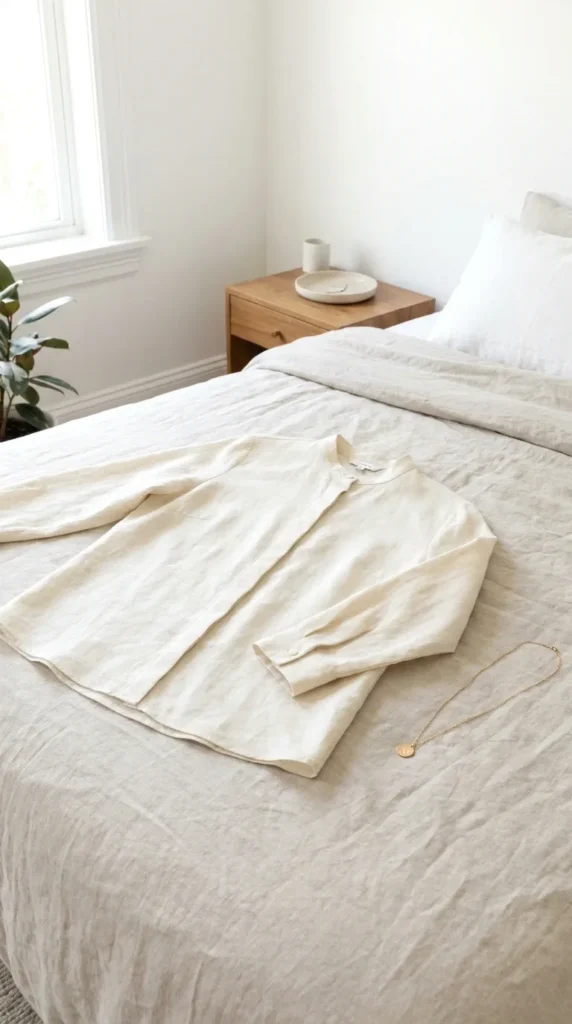
Once your base is tonal, give the eye one clear path to travel. A row of buttons, an open zipper, or a seam running from collar to hem does this job. Look at what you’re already wearing: is there a center seam, a button placket, or a zipper pull? Center it exactly — even a half-inch off to one side breaks the illusion and reads as sloppy instead of intentional.
Choose Pinstripes Over Wide or Horizontal Stripes
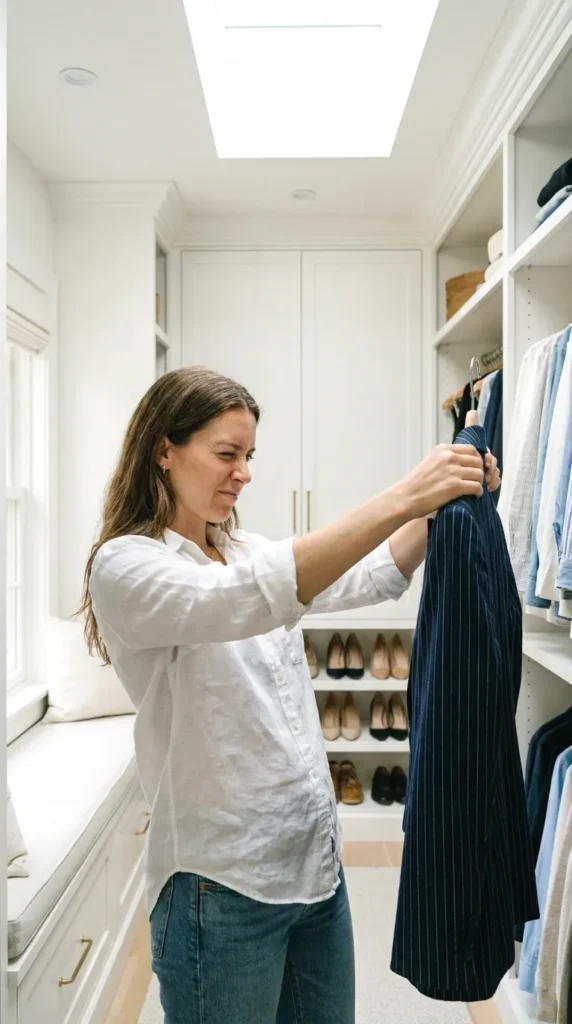
Not all stripes elongate. Wide stripes, horizontal stripes, and stripes that curve with a seam actually widen and shorten a petite plus size frame. Thin, straight pinstripes spaced less than half an inch apart are the only stripe pattern that reliably lengthens. Check any striped piece by holding it at arm’s length: if you can count fewer than 10 stripes across the widest part, the stripes are too wide to help.
Layer With an Open Cardigan or Duster
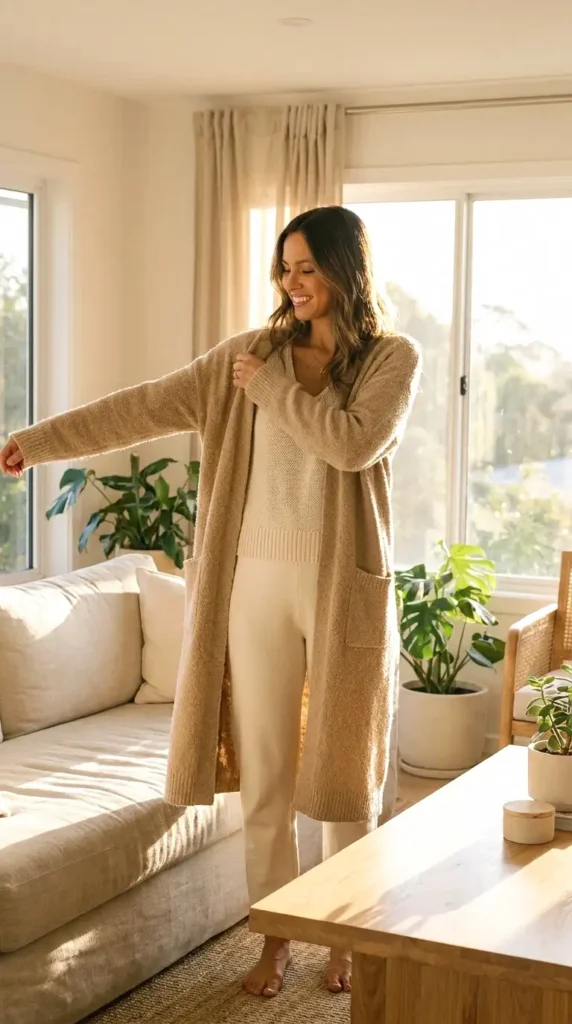
Length matters more than fit here. A cardigan or duster that hits at mid-thigh or lower, worn open, creates one long unbroken line from shoulder to hem. Closing the buttons cuts that same line into two boxy halves. Choose a layering piece in the same tone as what’s underneath so the eye reads it as an extension, not a separate garment. If your only cardigan is cropped, save it for a different look — cropped layers work against this trick entirely.
Pick a Higher Rise That Lengthens the Torso
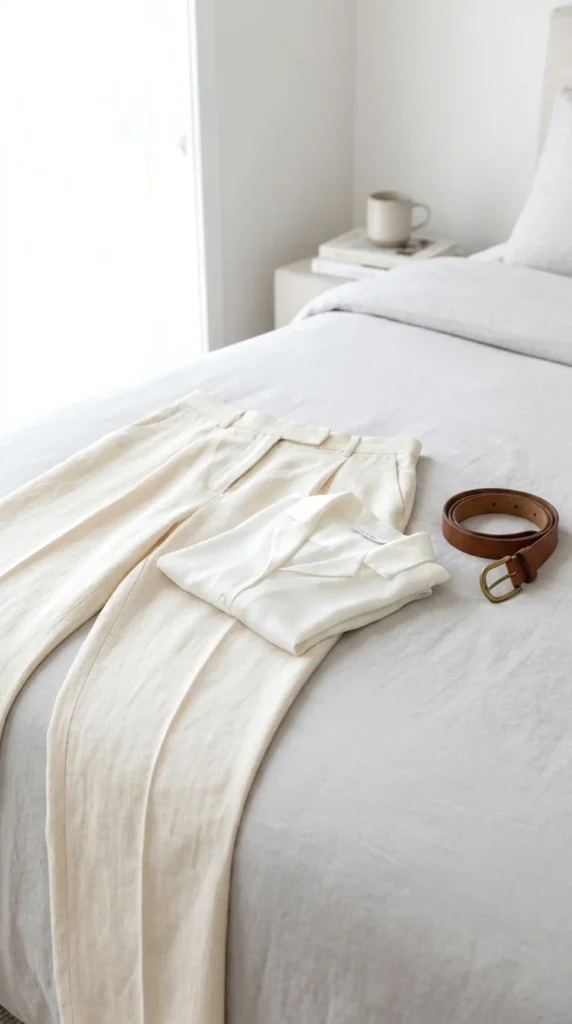
A low or mid rise pant sits below your natural waist, which visually shortens your torso and adds inches to your hip. A rise that sits at or just above your natural waistline does the opposite: it extends your leg line and gives your torso room to look proportionate. Tuck your top in, even loosely. A full tuck or a French tuck both work, but leaving everything untucked hides the rise entirely and cancels out the benefit.
Match Your Shoe Color to Your Pant or Hem
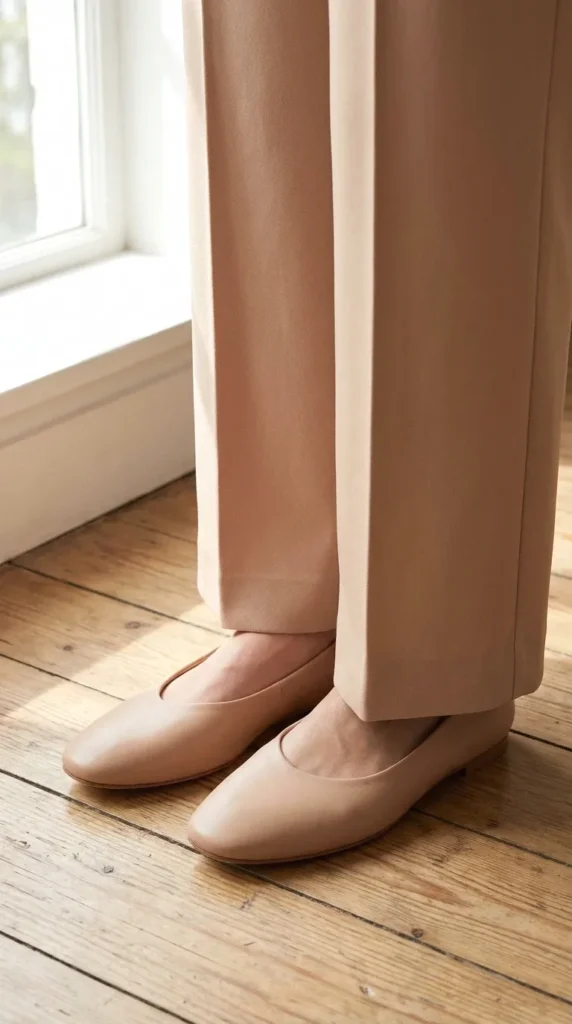
Where your pant ends and your shoe begins is where most outfits accidentally stop the eye. Closing that gap in color keeps the vertical line running all the way to the floor. Nude, tonal, or same-color shoes work best. A skin-tone-matched flat or heel extends the leg line even further, since there’s no visible break between fabric and foot at all.
Add One Vertical Accessory Line
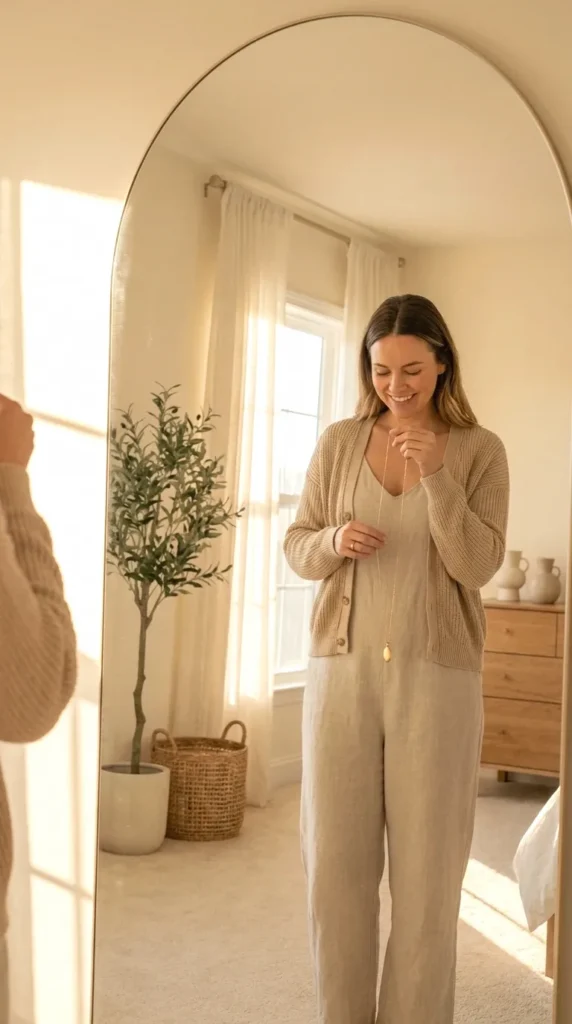
A single long accessory finishes the effect, but more than one creates clutter that competes for attention. Choose one: a long pendant, a skinny scarf worn loose down the front, or a thin vertical bag strap. Let it hang past your hip line rather than stopping at your chest. Adding a second vertical accessory — say, a necklace and a scarf together — actually breaks the clean line instead of reinforcing it.
- Start with a monochrome or tonal base
- Add a vertical focal point down the center
- Choose pinstripes over wide or horizontal stripes
- Layer with an open cardigan or duster
- Pick a higher rise that lengthens the torso
- Match your shoe color to your pant or hem
- Add one vertical accessory line
Conclusion
That’s the whole method — seven small adjustments, one goal. You now know exactly where a vertical line belongs on your frame and which “vertical” trends actually cut you shorter. These petite plus size styling tricks work with clothes you already own, no shopping required. Next time you get dressed, try just Steps 1 and 2 together and notice the difference in the mirror. Pin this guide so you’ve got the full checklist next time you’re picking an outfit.