How to Build a Petite Travel Capsule Wardrobe in 10 Pieces
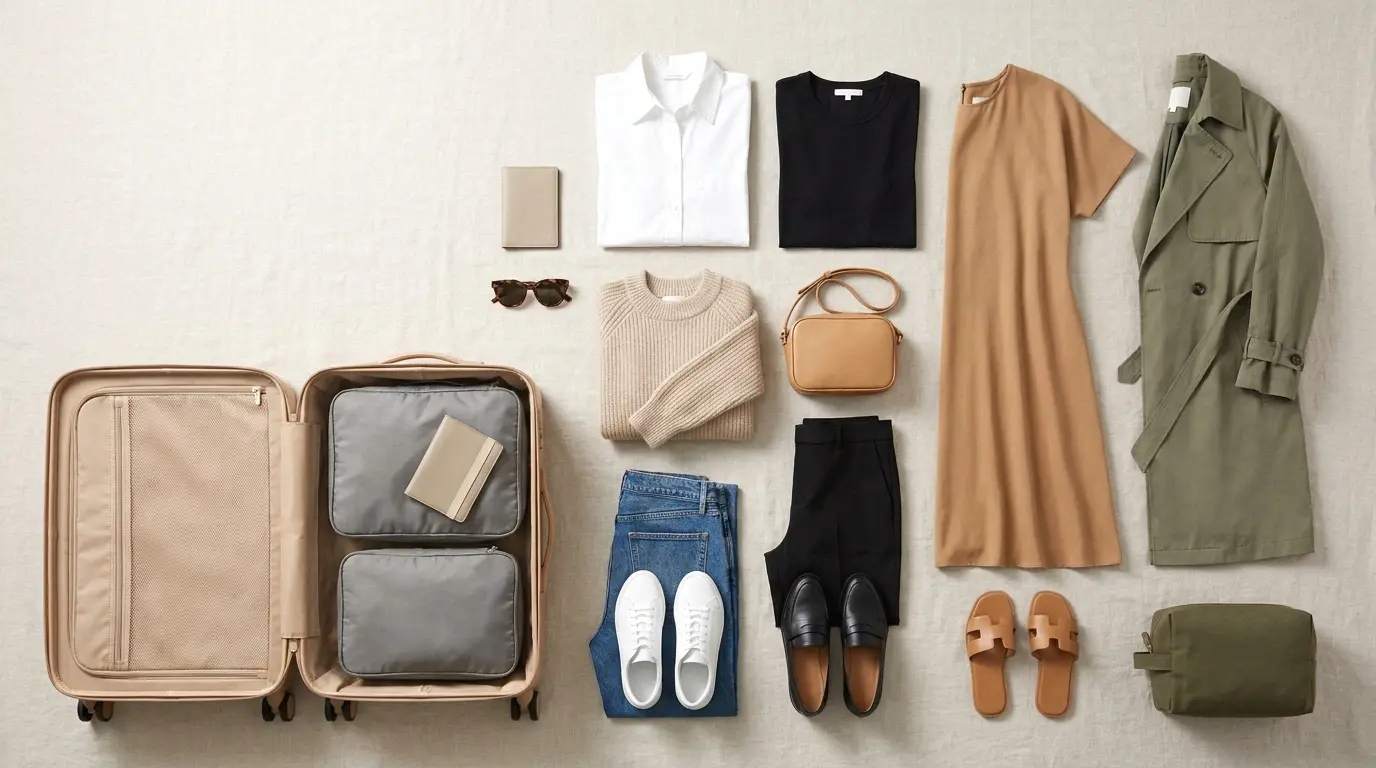
Packing for a trip usually means one of two things if you’re petite: you either overpack “just in case,” or you land somewhere with a suitcase full of clothes that swallow your frame and nothing that actually goes together. A petite capsule wardrobe for travel fixes both problems at once. Instead of grabbing whatever’s clean, you choose ten pieces on purpose — ones cut for a shorter frame, in a color story that mixes without effort.
This guide walks you through picking those ten pieces in the right order, so each one earns its spot by working with at least three others already in your bag. By the end, you’ll have a full week of outfits packed into a single carry-on, with nothing wasted and nothing wrinkled beyond repair. The picking takes about 90 minutes once you know what to look for. The payoff lasts the whole trip.
- A carry-on or medium packing cube set
- One pair of petite-cut trousers
- One skirt or slim petite denim
- One cropped or petite-length blazer
- One neutral bodysuit or fitted tank
- One printed or textured blouse
- One versatile knit sweater
- One day-to-night dress
- One statement jacket or cardigan
- One pair of petite-friendly shoes
- Pick your color story
- Add petite-cut trousers
- Add a second bottom
- Choose a cropped blazer
- Build around a bodysuit or tank
- Add a printed blouse
- Pack a versatile knit
- Choose a day-to-night dress
- Add a statement layer
- Finish with the right shoes
Pick Your Color Story Before You Choose a Single Piece
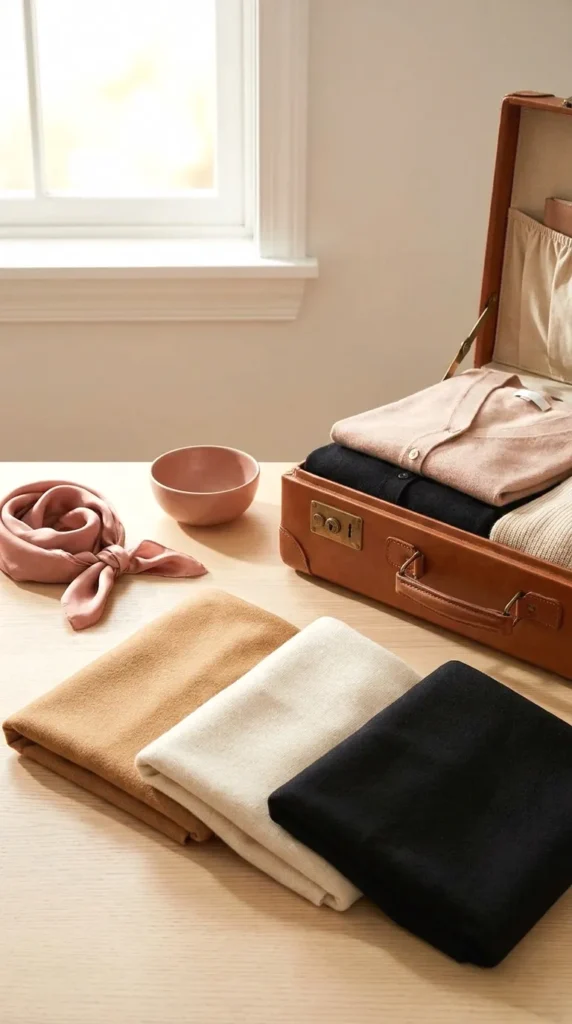
Every piece you pack after this step gets measured against one question: does it match the story? Choose three neutrals (like camel, black, and cream) and two accent colors you already own multiples of. Write them down or photograph a swatch on your phone.
Skipping this step is the number one reason capsule wardrobes fail. You end up with ten “cute” pieces that only make three outfits, not the fifteen or more a real capsule should give you.
Start With One Well-Fitted Pair of Petite-Cut Trousers
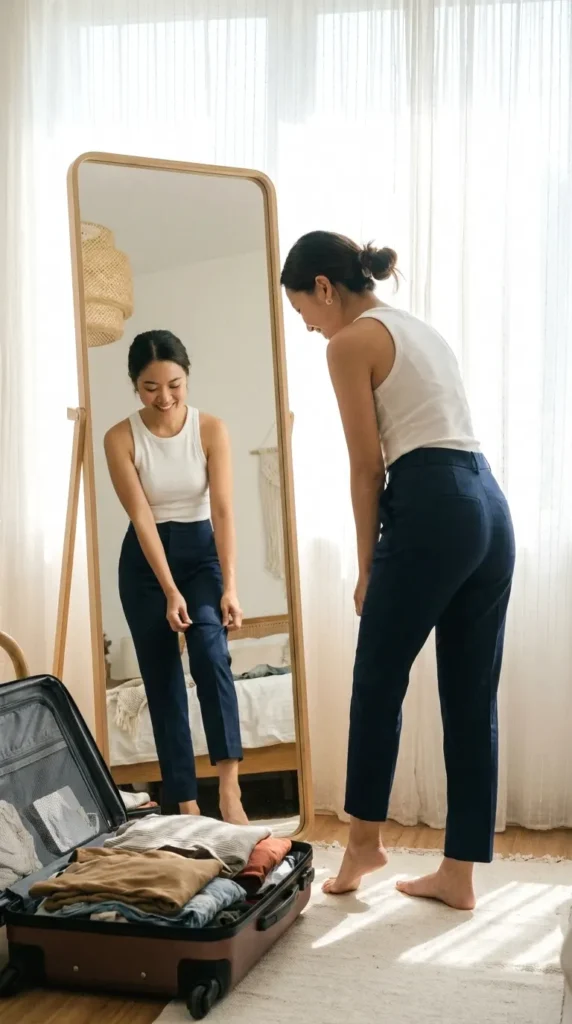
Petite sizing exists because standard-length trousers pool at the ankle and shorten your leg line visually — the opposite of what you want on a trip full of photos. Look for an inseam under 29 inches, hemmed to hit right at your ankle bone or slightly above.
Try them on with the shoes you plan to travel in, not barefoot. Fit at the waist and hip matters more than the label size; petite cuts vary a lot between brands, so a 4 in one may fit like a 6 in another.
Add a Second Bottom That Layers Differently — a Skirt or Slim Denim
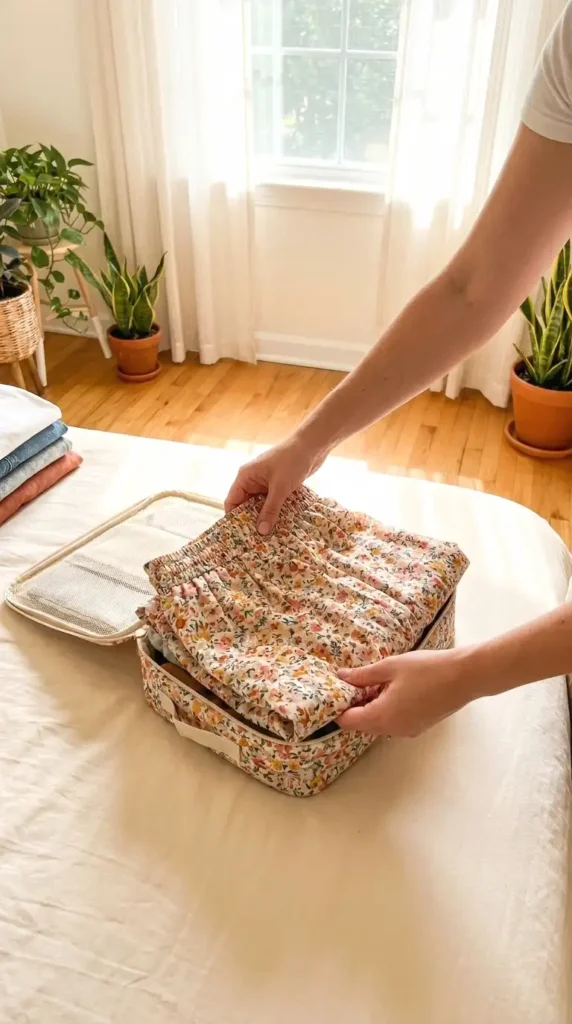
One bottom repeated every day gets boring fast, and it limits your outfit count more than any other piece. A midi skirt in a flowy fabric or a pair of slim, ankle-length denim gives you a second silhouette without doubling your luggage weight.
If denim is your pick, go for a mid-rise, straight or slightly tapered leg — skinny jeans can shorten a petite frame, while a wide leg can overwhelm it. A slim straight cut splits the difference.
Previous batch pattern: mostly opened with imperative statement + explanation. I’ll vary — open one with a condition, one with an observation, one with a number.
Choose a Cropped or Petite-Length Blazer as Your Structure Piece
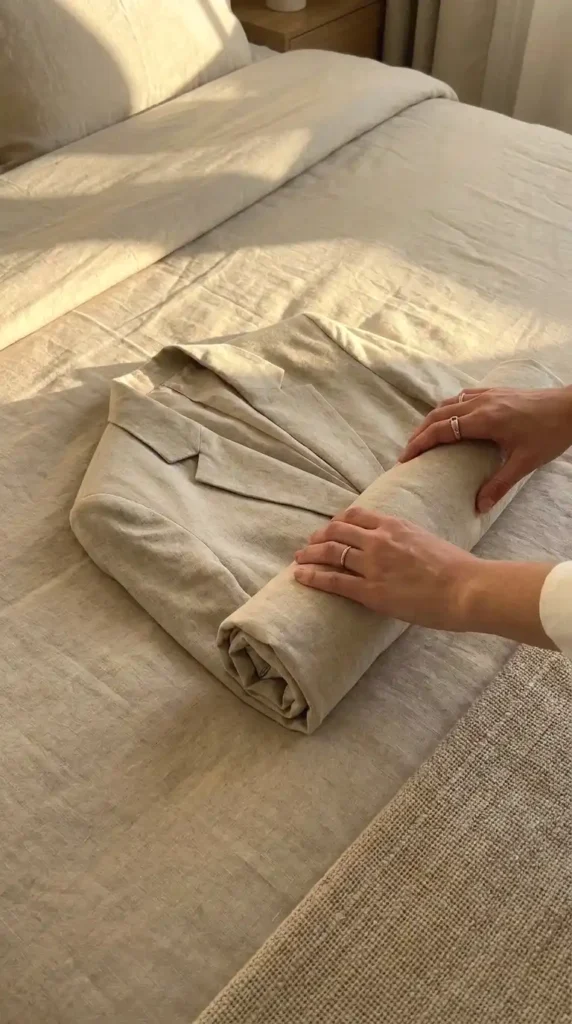
If you only pack one tailored piece, make it this one. A blazer cropped to hit at the hip — not below it — instantly sharpens any outfit and works over a dress, a tank, or the blouse you’ll pack next. Look for shoulder seams that sit right at your shoulder edge, since dropped shoulders read as borrowed clothing on a petite frame.
Unstructured, unlined blazers pack smaller and wrinkle less than stiff, fully lined ones. Roll it instead of folding for the trip over.
Build Around One Neutral Bodysuit or Fitted Tank
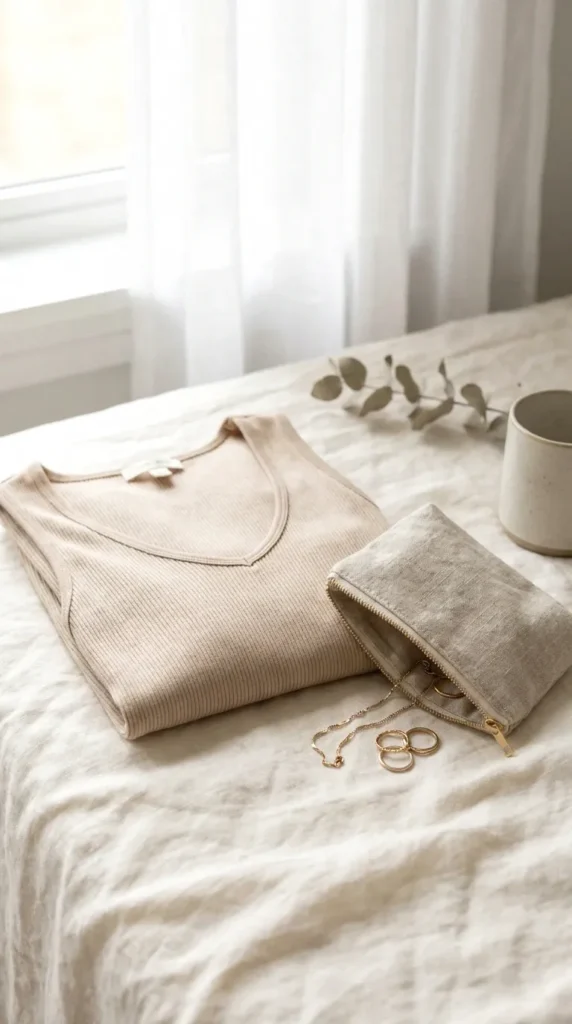
A bodysuit solves the tuck problem every petite traveler knows: shirts that untuck themselves after twenty minutes of walking. Snap-closure bodysuits stay put through a full day of sightseeing, and one in a neutral from your color story can go under the blazer, under the blouse, or alone with the skirt.
Two is the sweet spot if you have room — one in black, one in cream — but one well-chosen neutral still works for the full trip.
Add a Lightweight Blouse in a Print or Texture
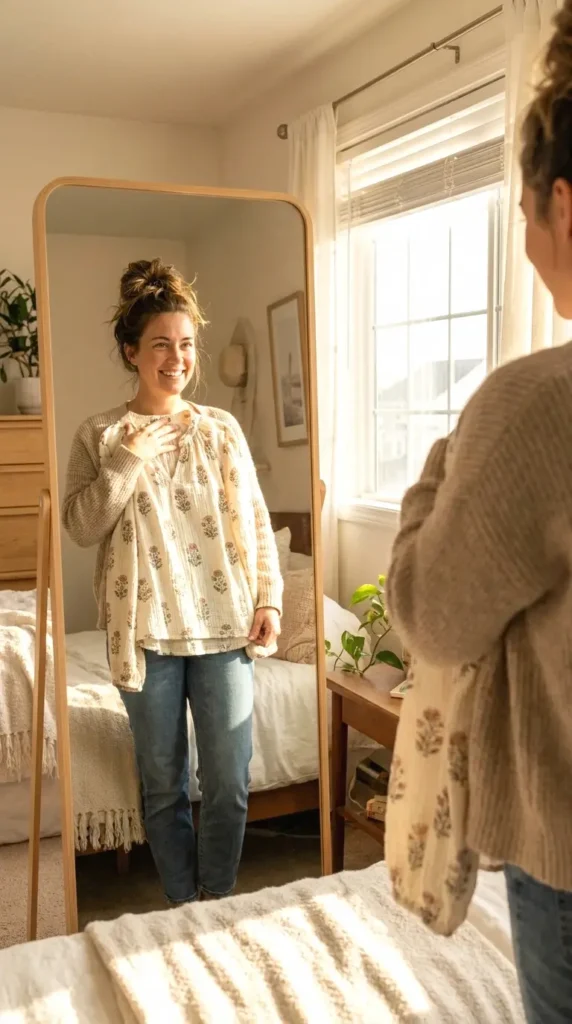
Nine solid pieces and one print keeps a capsule from feeling flat. Choose a blouse in a fabric with texture (like a subtle jacquard) or a small-scale print that repeats your accent colors — this is where the “story” from step one earns its keep. Avoid anything with a busy, large-scale pattern; it fights with everything else instead of blending in.
Previous batch opened with: conditional (“If you only pack…”), declarative statement, declarative statement. This batch: start with an observation, then a number, then a question-free condition — rotating openers again.
Pack One Versatile Knit Sweater for Layering
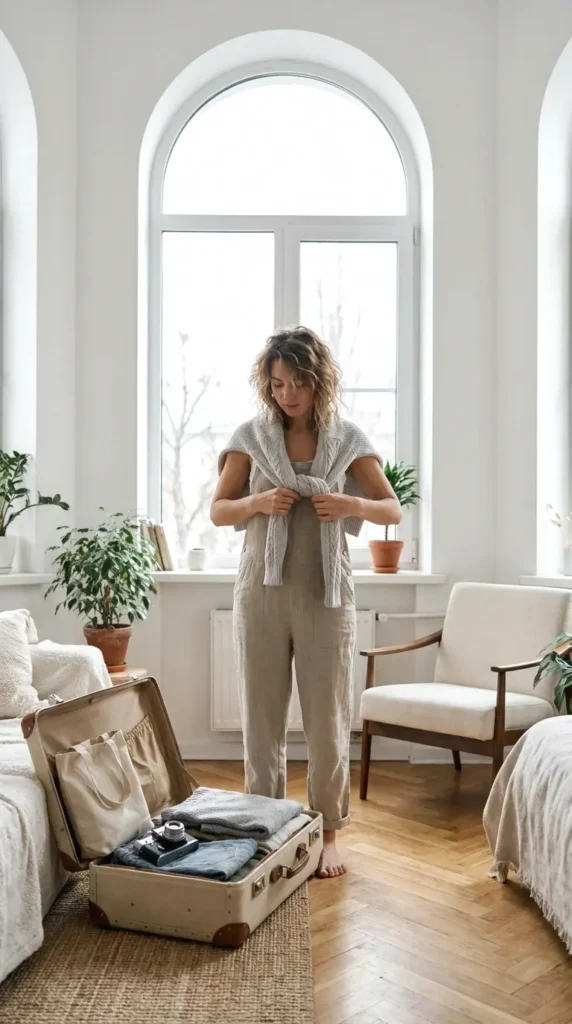
Airplane cabins, air-conditioned museums, and cool evenings all call for the same fix — a lightweight knit you can tie over shoulders, layer under the blazer, or wear alone with either bottom. Choose a fine-gauge knit rather than a chunky one; bulky sweaters eat suitcase space and add bulk exactly where a petite frame doesn’t need it.
A crew or v-neck in one of your three neutrals works hardest here. Save any statement knit for a future trip — this one’s job is to blend, not stand out.
Choose a Dress That Works Day to Night
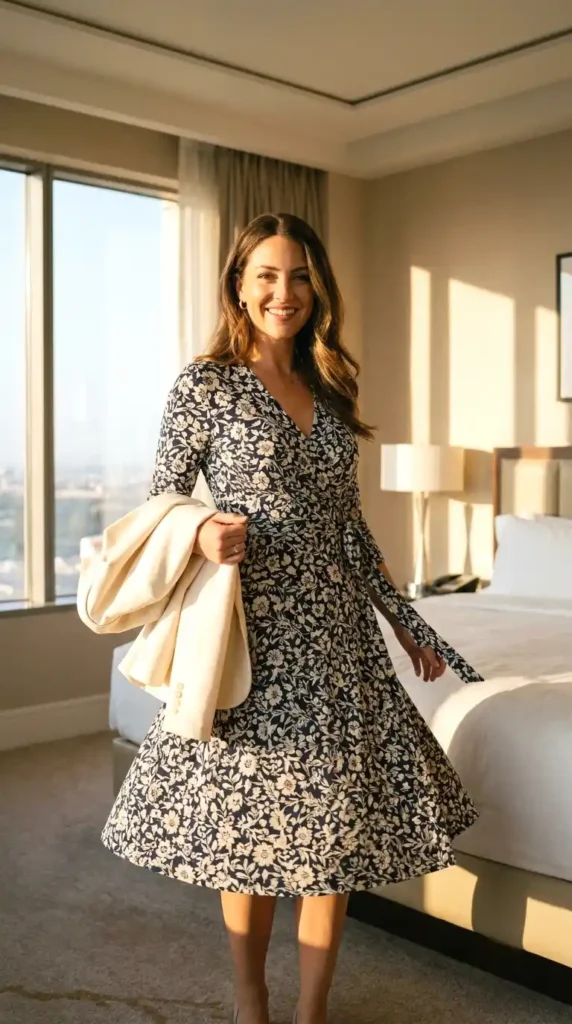
One dress should cover you from a daytime walking tour to a dinner reservation, which means avoiding anything too casual or too formal. A wrap dress or a simple sheath in a knee-length or slightly above-knee cut (petite frames often look best avoiding mid-calf, which can visually shorten the leg) gives you that range.
Try it on with the blazer over it and the sweater tied around it, since both pairings should look intentional, not accidental. If it only works alone, it’s not earning its space in a 10-piece bag.
Add One Statement Layer — a Jacket or Cardigan for Climate Shifts
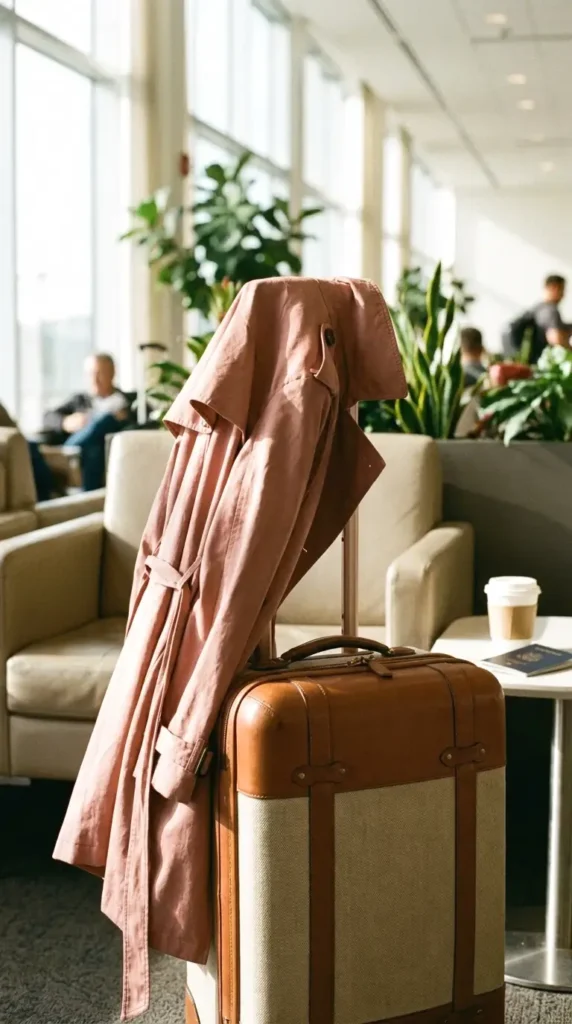
If your destination swings between warm days and cool nights, this piece is what keeps you from packing a second bag just for outerwear. A cropped denim jacket, a longline cardigan, or a lightweight trench in an accent color adds visual interest while still working over nearly everything else you’ve packed.
Finish With Petite-Friendly Shoes That Match Your Color Story
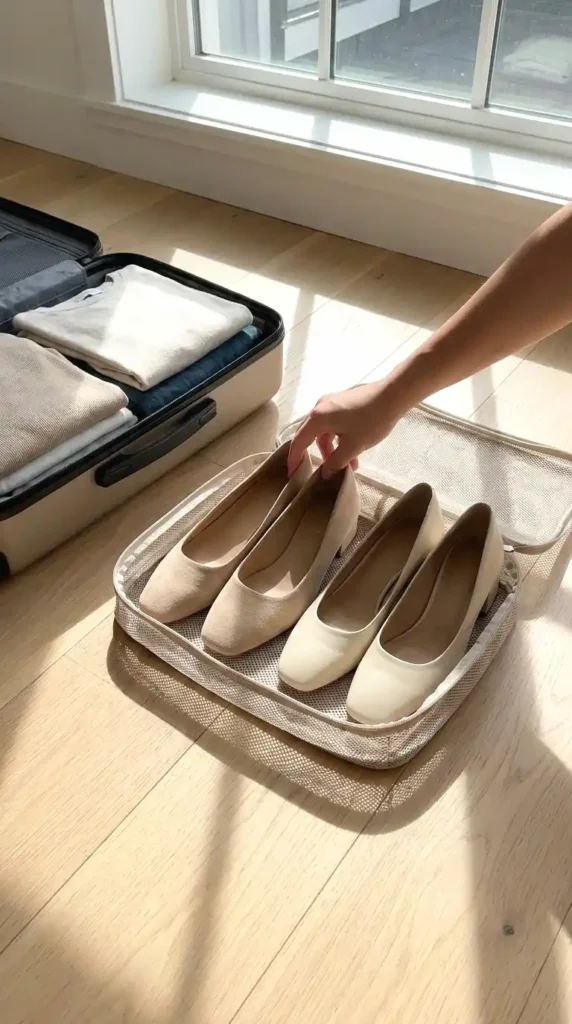
Two pairs is the real number here, even though the heading says one — one comfortable walking shoe and one dressier flat or low heel, both in a neutral from your palette. Petite frames benefit from shoes with a slightly pointed or almond toe, since rounded, chunky toes can shorten the visual leg line the same way a wide-leg pant does.
Break in the walking pair before your trip, not during it. Blisters on day one derail outfits two through ten just as fast as a bad packing choice does.
Fifteen or more, if every piece matches your color story. Mixing across all ten items is what stretches a small bag into a full week without repeats.
Start with your closet. Lay out everything in your chosen color story first, then only shop for the gaps — usually the blazer or the day-to-night dress.
Lean on the statement layer and the knit sweater to bridge the gap, and choose a bodysuit in a lightweight fabric so it works as a base layer either way.
Yes — mainly in proportion. Petite cuts shorten hems, sleeves, and jacket lengths so nothing overwhelms a shorter frame, which regular sizing often does by default.
- Pick your color story
- Add petite-cut trousers
- Add a second bottom
- Choose a cropped blazer
- Build around a bodysuit or tank
- Add a printed blouse
- Pack a versatile knit
- Choose a day-to-night dress
- Add a statement layer
- Finish with the right shoes
You’re Packed and Ready
You’ve just built a petite capsule wardrobe for travel that fits in one bag and mixes into a week of outfits without a single wasted piece. Every item earns its spot because you chose it on purpose, not because it was clean.
Next time you’re standing in front of your closet the night before a trip, you’ll reach for these ten pieces instead of overpacking out of panic.
Save this guide to your travel board so it’s ready the next time you pack. 🧳