

How to Layer a Blazer Over a Dress Without Losing Your Waistline
If you’re petite, you already know the drill. You pull on a blazer over your favorite dress, glance in the mirror, and suddenly you look like you borrowed a jacket from someone two sizes up. The waist disappears.
The proportions go flat. What should have looked polished now looks like you’re drowning in fabric. Figuring out how to layer a blazer petite style takes more than grabbing whatever jacket is on the hanger — it comes down to length, shoulder fit, and the order you put things on.
This guide walks you through the exact process, step by step, so the blazer works with your dress instead of hiding it. You’ll learn where the blazer should end, how to check the shoulder seam before you even try it on, and small styling moves — like leaving buttons open or adding a thin belt — that keep your waistline visible all day.
None of this requires tailoring experience or a big budget. Most of it takes less than 10 minutes once you know what to look for, and the payoff is an office outfit that actually looks put together instead of borrowed.
- A fitted or defined-waist dress
- A cropped or hip-length blazer
- A thin belt (optional, 1/2 inch to 3/4 inch wide)
- A full-length mirror
- Heels or pointed flats
- Choose a dress with a defined waist
- Pick a blazer that ends at the hip bone
- Check the shoulder seam
- Try the blazer on over the dress
- Leave the blazer open
- Cinch the waist with a thin belt
- Roll the sleeves
- Add heels or a pointed flat
Choose a Dress With a Defined Waist First
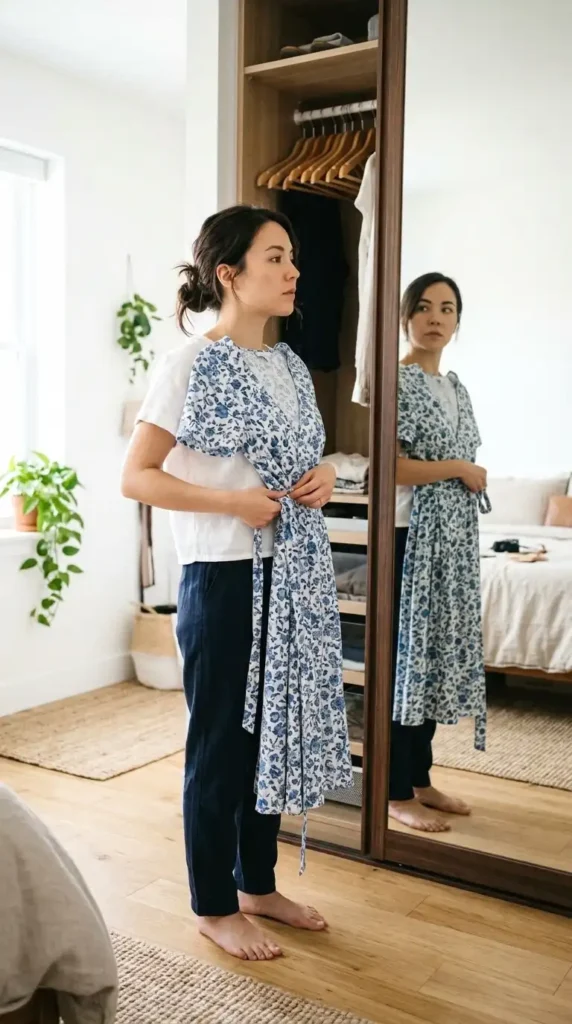
Start with the dress, not the blazer. A shift dress or anything cut straight up and down gives the blazer nothing to layer over, and the two pieces end up fighting each other. Look for a wrap dress, a dress with a seam at the natural waist, or one with a self-tie belt already built in.
The waist seam matters more than the dress length. If your dress has any waist definition, the blazer will sit on top of that shape instead of creating its own boxy line.
Pick a Blazer That Ends at or Above Your Hip Bone
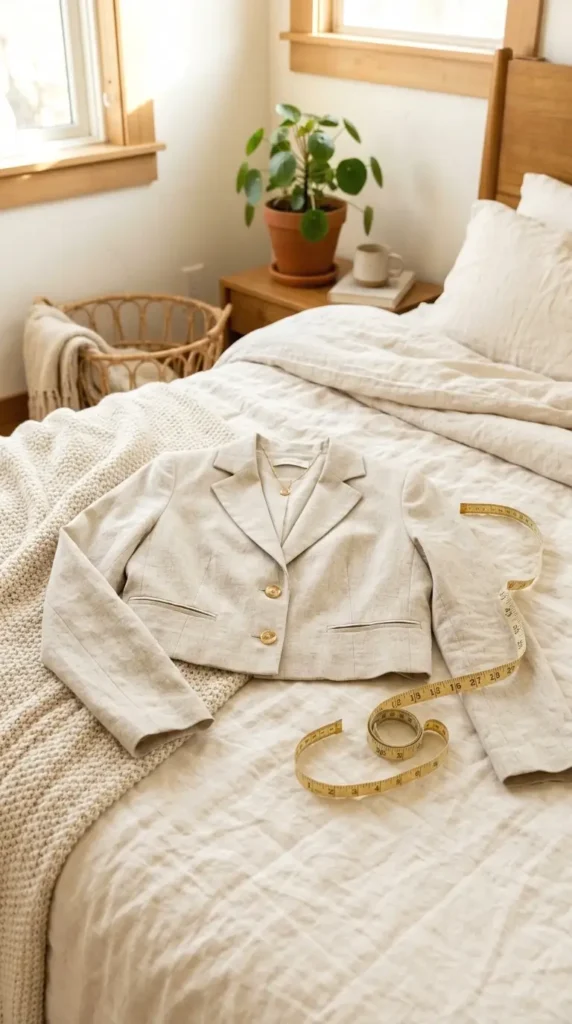
Length is where most petite layering goes wrong. A blazer that hits mid-thigh visually cuts your legs in half and adds bulk exactly where you don’t want it. Aim for a blazer that ends 1 to 2 inches above or right at your hip bone.
If you’re shopping and unsure, measure from your underarm down. Anything longer than 22 inches on a petite frame usually reads as oversized rather than tailored. Cropped and hip-length blazers both work — just avoid anything past the hip.
Check the Shoulder Seam Before You Buy or Wear

Put the blazer on alone, no dress yet, and look at where the seam of the sleeve meets the shoulder. It should land right at the edge of your shoulder bone. If it droops even slightly onto your arm, the whole jacket will look too big no matter what you do underneath it.
Try the Blazer On Over the Dress Before Committing
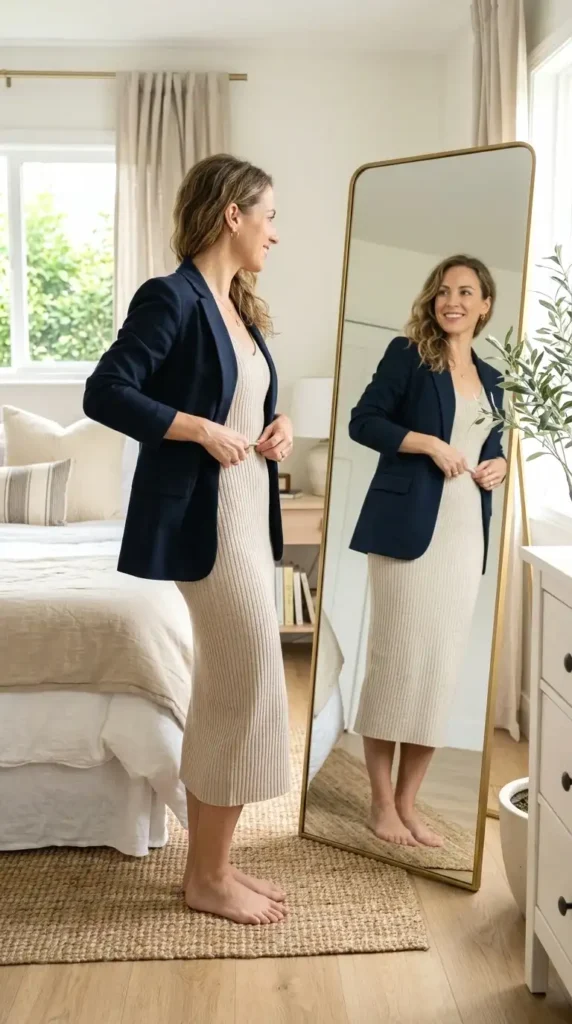
Once the dress and blazer both pass on their own, put them on together in front of a mirror. This step catches problems the other two can’t. Sometimes a blazer that fits perfectly alone still bunches oddly over a dress with more fabric at the waist.
Turn to the side. Check that you can still see a waist indentation through the open blazer. If the combined bulk erases it completely, the dress may be too structured for this particular blazer, and it’s worth trying a lighter-weight one instead.
Leave the Blazer Open Instead of Buttoning It

Buttoning a blazer over a dress creates one solid block of fabric from shoulder to hip, and that block hides the waist you worked to find in the first two steps. Leave it open. The vertical line down the center draws the eye up and down instead of across, which makes you look taller and leaner.
This one small choice does more for proportion than almost anything else in this guide, and it costs nothing.
Cinch the Waist With a Thin Belt if Needed
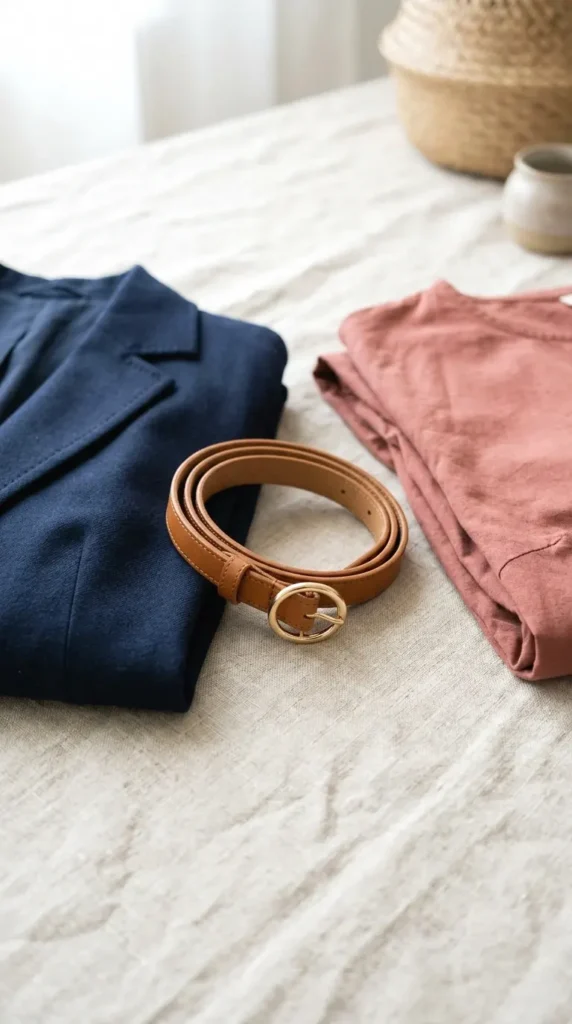
If your dress waist still feels a little lost under the open blazer, add a thin belt over both layers, right at your natural waistline. A 1/2 to 3/4 inch wide belt works best — anything chunkier competes with the blazer’s own lapels.
- Position the belt at your natural waist, not your hips
- Thread it through both the dress and blazer if the dress has belt loops
- Let the blazer fall open on either side of the belt
- Skip this step if your dress already has strong waist definition
Roll the Sleeves to Show Your Wrist

Full-length blazer sleeves that end right at your wrist bone add visual length to your arm and, oddly enough, make your whole frame look more compact. Roll the cuff back once or twice until your wrist bone is visible.
Add Heels or a Pointed Flat to Finish the Proportion
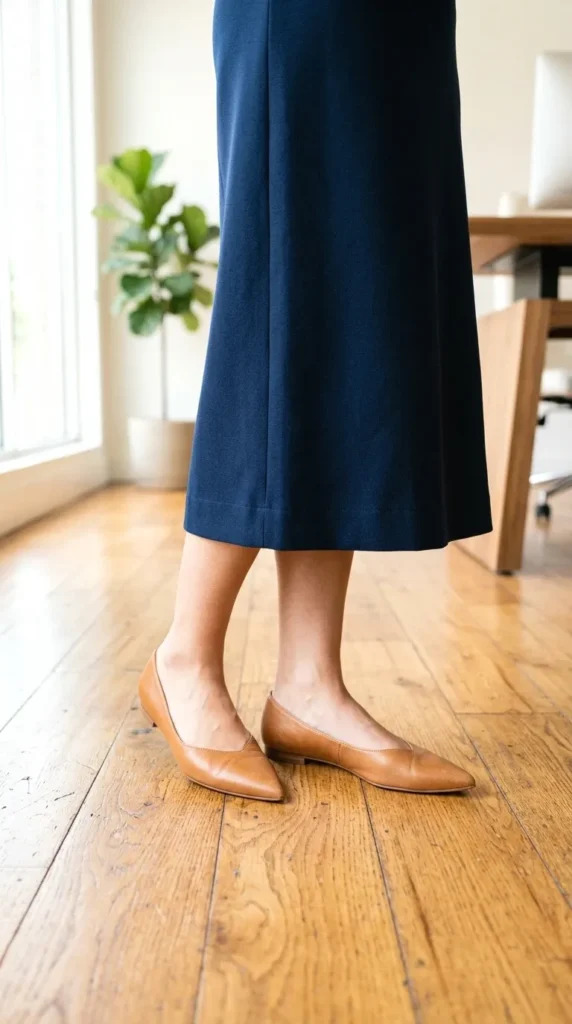
The last step happens at your feet, not your shoulders. A rounded-toe flat or a chunky shoe shortens the leg line the same way a too-long blazer does. A pointed flat or a heel of 1.5 to 2 inches elongates the leg and balances out the horizontal line the blazer creates at hip level.
This step is optional if you genuinely can’t wear heels, but a pointed toe alone makes a noticeable difference even in flats.
Common Mistakes
FAQ
2. Pick a blazer ending at the hip bone
3. Check the shoulder seam
4. Try the blazer on over the dress
5. Leave the blazer open
6. Cinch the waist with a thin belt
7. Roll the sleeves
8. Add heels or a pointed flat
Conclusion:
You’ve got the full formula now — the right dress waist, the right blazer length, and the small styling moves that keep both visible at once. This is the easiest way how to layer a blazer petite style without adding bulk or losing your shape.
Once this combination clicks, try it with a different blazer color or a printed dress to build a few go-to office looks from the same formula.
Save this pin so you have it ready on your next work-outfit morning. 📌