How to Build a Petite Capsule Wardrobe in a Weekend
Most petite capsule wardrobe advice gives you a generic list of “10 essential pieces” and calls it done. Then you try them on and the blazer sleeves swallow your hands, the trousers pool at your ankles, and the whole capsule feels like it was styled for someone six inches taller. That mismatch is the real reason petite wardrobes fail — not a lack of pieces, but pieces built for the wrong proportions.
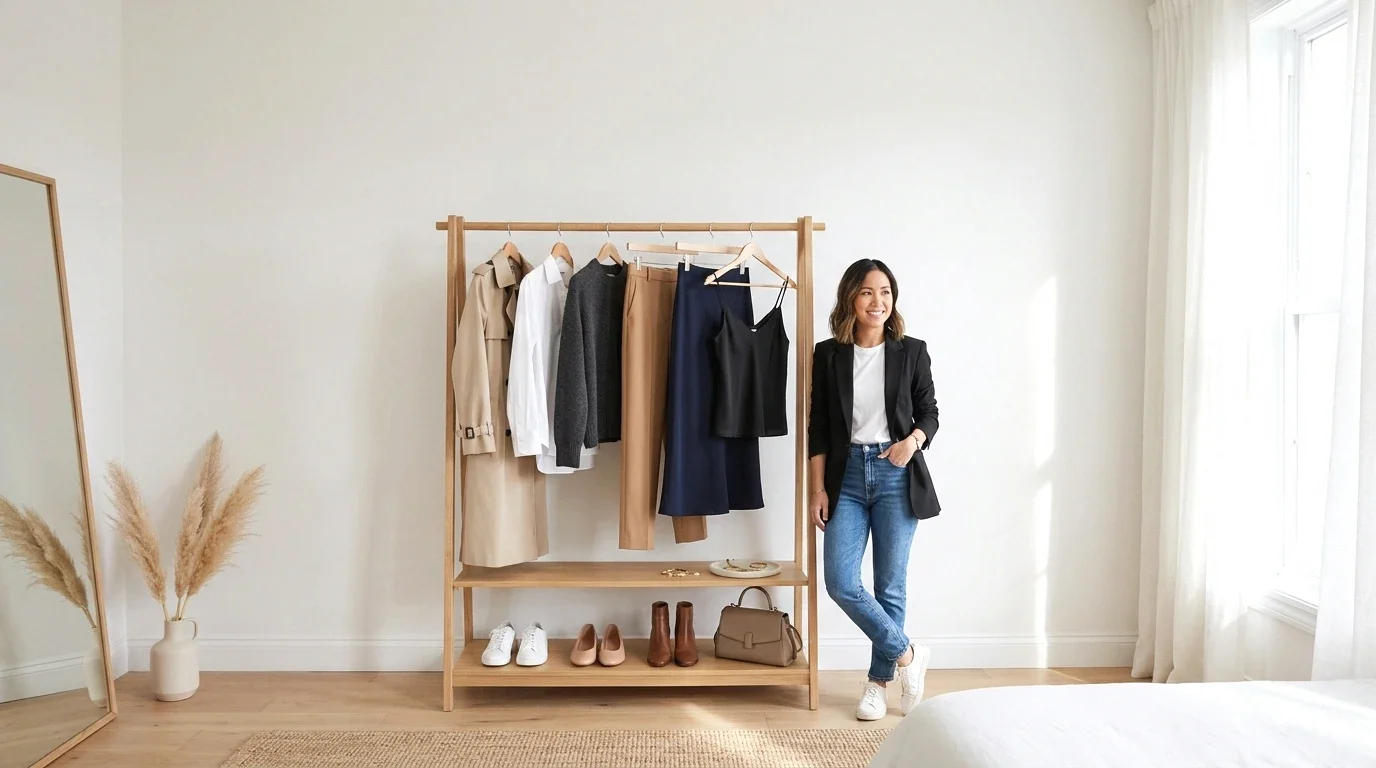
This guide shows you how to build a petite capsule wardrobe in a weekend by starting with your actual body, not a Pinterest mood board. You’ll empty your closet, sort with clear rules, identify your rise point and proportion breaks, and rebuild around 15–20 pieces that actually fit your frame. Saturday is for editing and assessing what you own. Sunday is for filling real gaps and putting outfits together. By Sunday night, you’ll have a working wardrobe you can get dressed from in under five minutes, every morning.
- A soft measuring tape
- Full-length mirror
- 3 laundry baskets or bins (Keep, Alter, Donate)
- Safety pins (10–15)
- Fabric scissors
- Notebook or phone notes app
- Phone camera for outfit photos
- Empty your closet completely
- Sort into three piles
- Try on everything in “maybe”
- Measure your proportions
- Choose your color story
- Build core bottoms
- Add tops at your rise point
- Layer in outerwear
- Fill petite-specific gaps
- Try no-sew fixes
- Assemble outfit combinations
Empty Your Closet Completely Before You Judge Anything
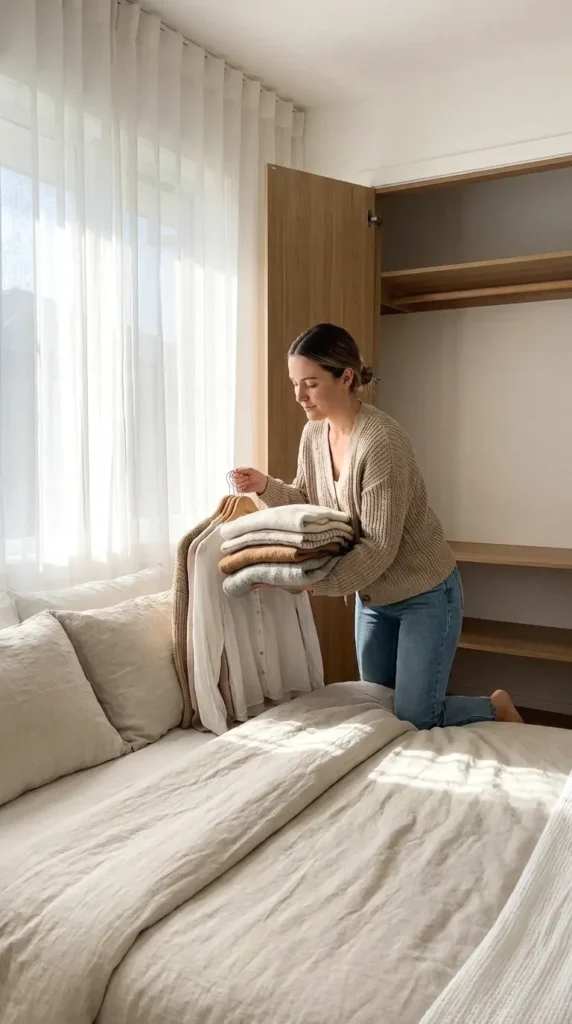
Pull every single item out of your closet and drawers — clothes, shoes, belts, all of it — and pile them on your bed. You cannot build a capsule around a wardrobe you can’t fully see. Hidden pieces at the back of the closet get forgotten and end up duplicated at the store.
Once the closet is bare, wipe down the shelves and rod. A clean, empty space makes it psychologically easier to be honest about what goes back in, instead of shoving things back where they’ve always lived out of habit.
Sort Every Piece Into Three Piles
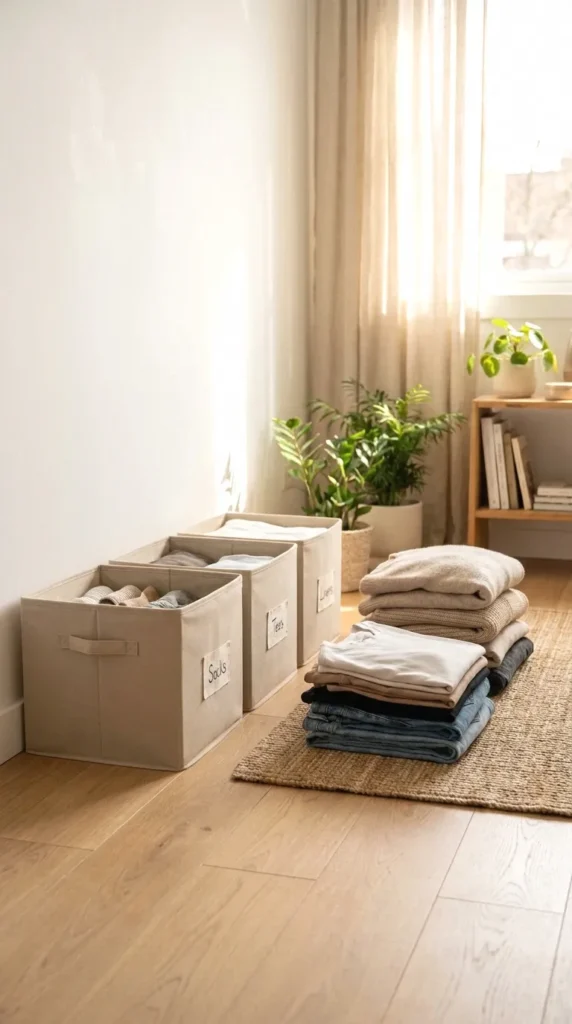
Label your three bins Keep, Alter, and Donate. Keep is for anything that fits well right now and you’ve worn in the last 6 months. Donate is for anything you haven’t touched in a year or that clearly doesn’t fit.
Alter is the pile that matters most for petites — pieces that are almost right. A blazer with great fabric but sleeves that run long. Trousers with the perfect color but too much break at the ankle. Don’t decide yet whether alterations are worth it; just separate them out so you can assess with clear eyes in Step 3.
Try On Everything in the “Maybe” Pile

Anything you hesitated on goes back on your body, not just held up in front of a mirror. Fabric drapes differently on than off, and for petite frames a half-inch of extra length in the crotch or shoulder seam changes an entire garment’s silhouette.
Check three spots specifically: where the shoulder seam sits, where the pants break at your ankle, and how much fabric pools at the waist when you tuck in a top. If two out of three are off, move it to Alter or Donate — don’t keep hoping it’ll “work with the right shoes.”
Measure Yourself and Note Your Proportions
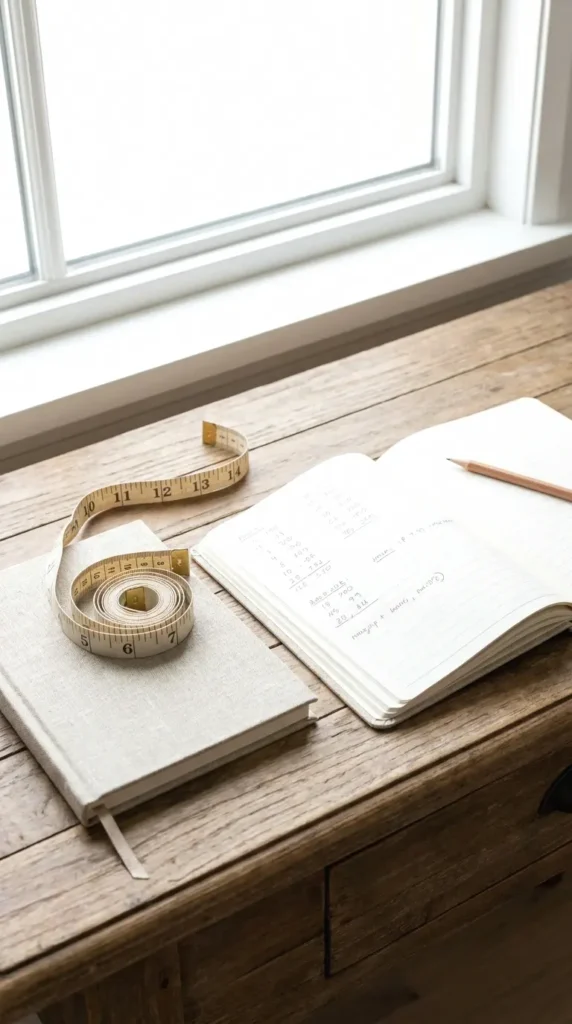
Grab your measuring tape and note four numbers: shoulder-to-waist length, waist-to-hip, inseam, and rise (crotch to waistband). Write them in your notebook — these become your reference every time you shop, so you stop guessing whether a “petite” label will actually fit.
Most ready-to-wear brands are drafted for a 5’6″–5’8″ frame. If your shoulder-to-waist measurement runs shorter than 15 inches, expect most non-petite tops to sit low and boxy on you, even in a small size.
Choose Your Capsule Color Story
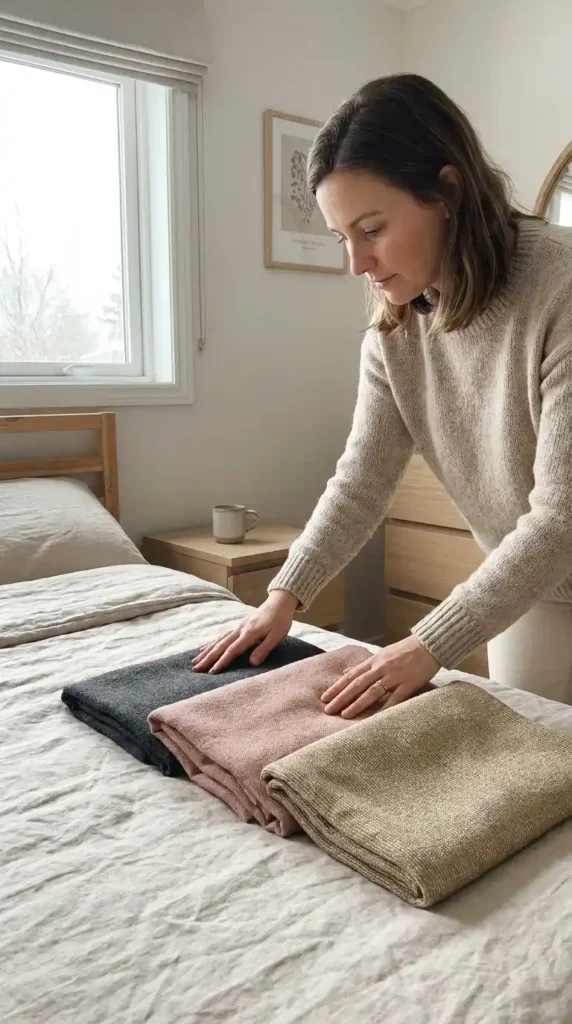
Pick one neutral base, one accent, and one metallic for accessories — that’s it. A tight palette means every piece mixes with every other piece, which matters more for petites since fewer visual breaks in an outfit make you look taller.
Charcoal, ivory, and a rose or blush accent work for most skin tones and seasons. Write your three colors at the top of your notebook page. Every purchase this weekend gets checked against that list before it comes home.
Build Your Core Bottoms First
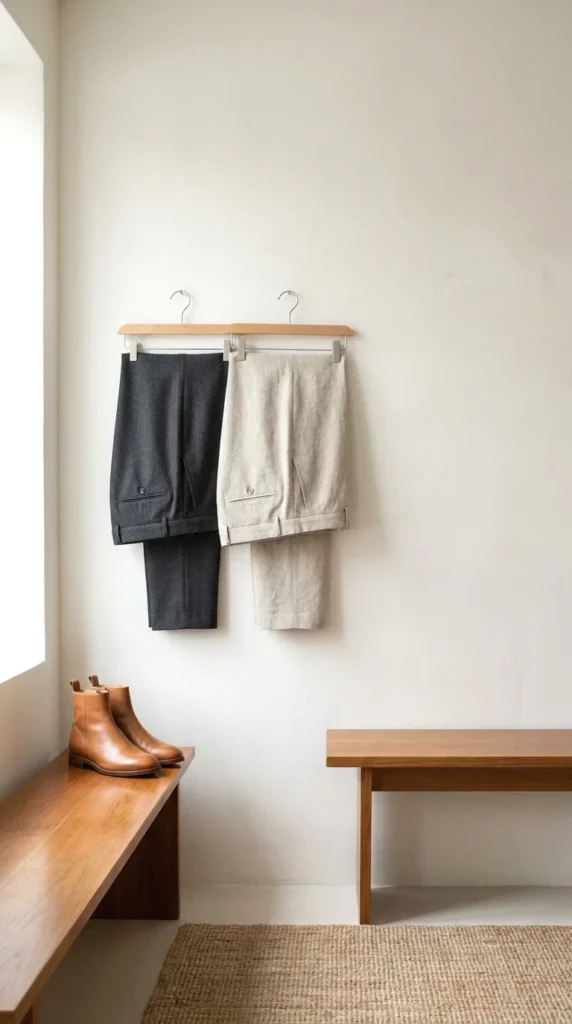
Bottoms anchor everything else, so choose these before tops. You need two trouser or jean styles and one skirt or dress, all hemmed to break exactly at your ankle bone — not below it.
A high-rise cut sitting at or above your natural waist elongates your leg line further. If your rise measurement from Step 4 runs short, prioritize high-rise styles over mid- or low-rise when you shop in Step 9.
Add Tops That Meet Your Rise Point
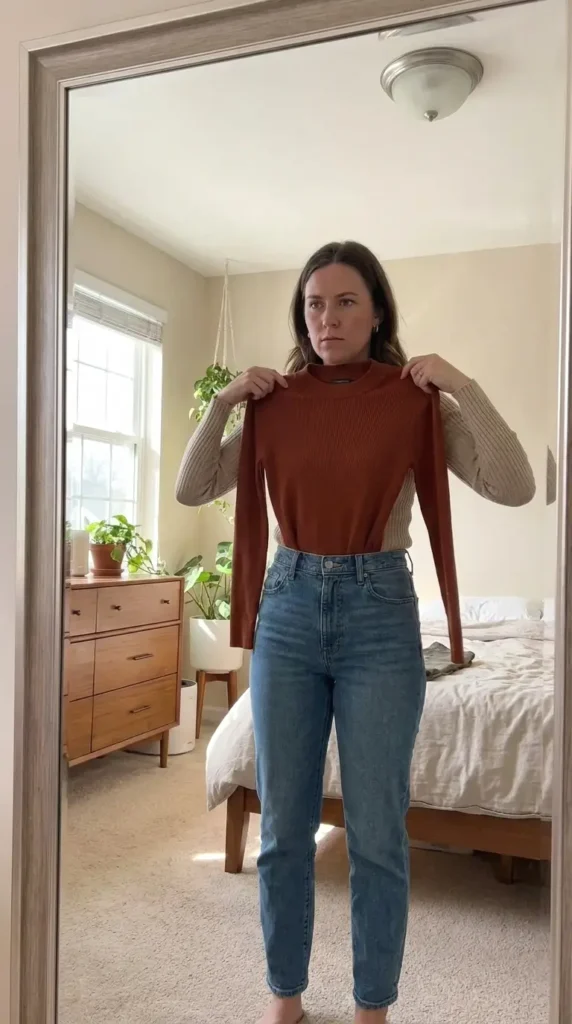
Every top in your capsule should hit right at or just below your high-rise waistband — not several inches past it. A top that runs long bunches under a blazer and buries your waistline, which is the one landmark that makes a petite frame look proportional.
Aim for 4–5 tops: two fitted knit tops, one button-down, one sleeveless layering piece, and one sweater. If a top only comes in one length and it runs long, tucking it is non-negotiable, not optional styling.
Layer In Outerwear Built for Your Frame
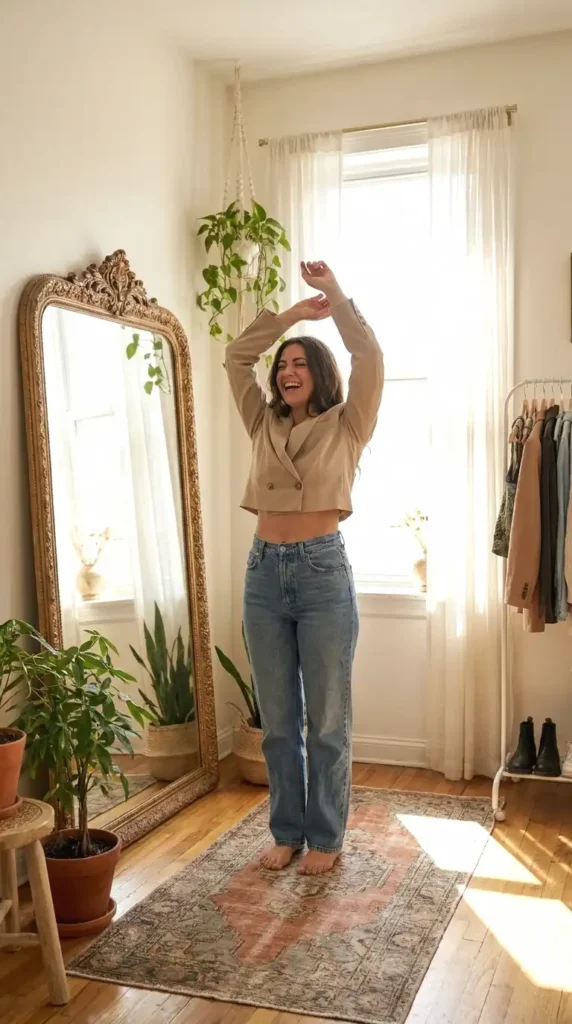
Cropped and hip-length jackets work better than anything that hits mid-thigh, since a longer coat cuts a petite frame in half visually. Look for a blazer, a cropped jacket, and one coat, all landing at or above your hip bone.
Sleeve length matters as much as body length here. Try lifting your arms overhead in the fitting room — if the cuff climbs past your wrist bone, the sleeve is too long for your arm, even if the body length is right.
Fill Petite-Specific Gaps With Targeted Shopping
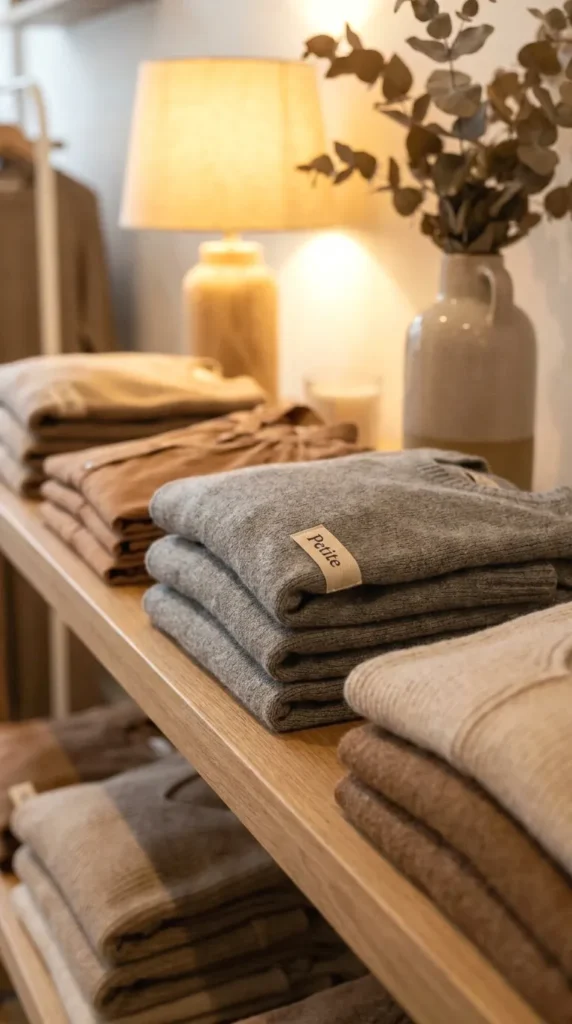
By now your notebook has a clear list of what’s missing. Search specifically within petite size ranges (often labeled P, or 0P–14P) rather than sizing down in regular ranges — sizing down shrinks the whole garment proportionally, including shoulders and sleeves that were already too big.
Buy only what’s on your list from Step 6’s color story. Three or four targeted purchases, made with your measurements in hand, beat a cart full of “maybe this works” items every time.
Try Quick No-Sew Fixes on Borderline Pieces
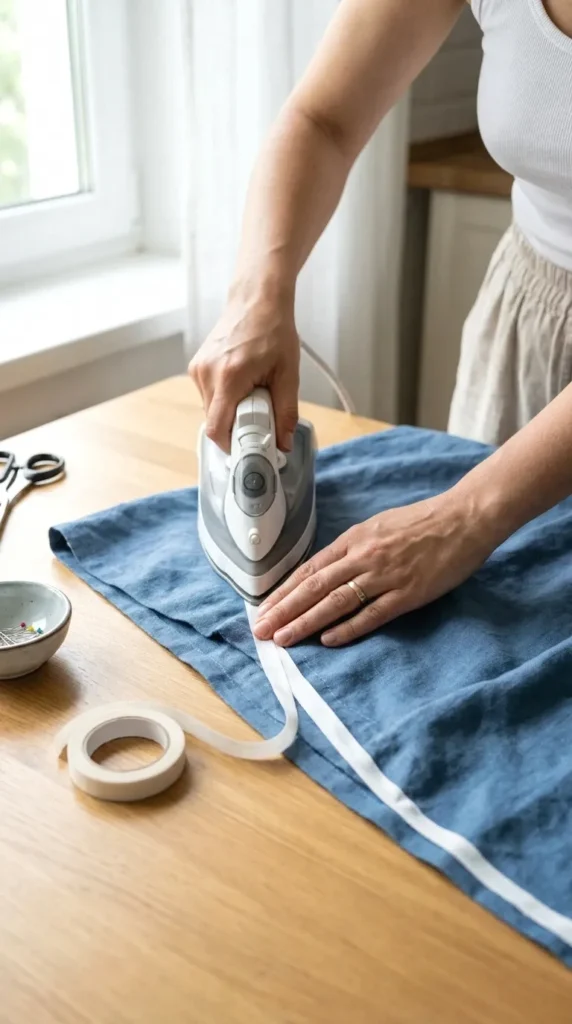
Some Alter-pile pieces don’t need a tailor at all. Fabric tape can shorten a hem temporarily for 2–3 wears while you decide if a piece earns a permanent fix. Safety pins, tucked from the inside, take in a waistband that gaps without a visible stitch line.
Test each fix by sitting down and raising your arms before committing. A hem that looks fine standing still can pull loose the moment you bend or reach, so check under real movement, not just in front of the mirror.
Assemble and Photograph Your Outfit Combinations
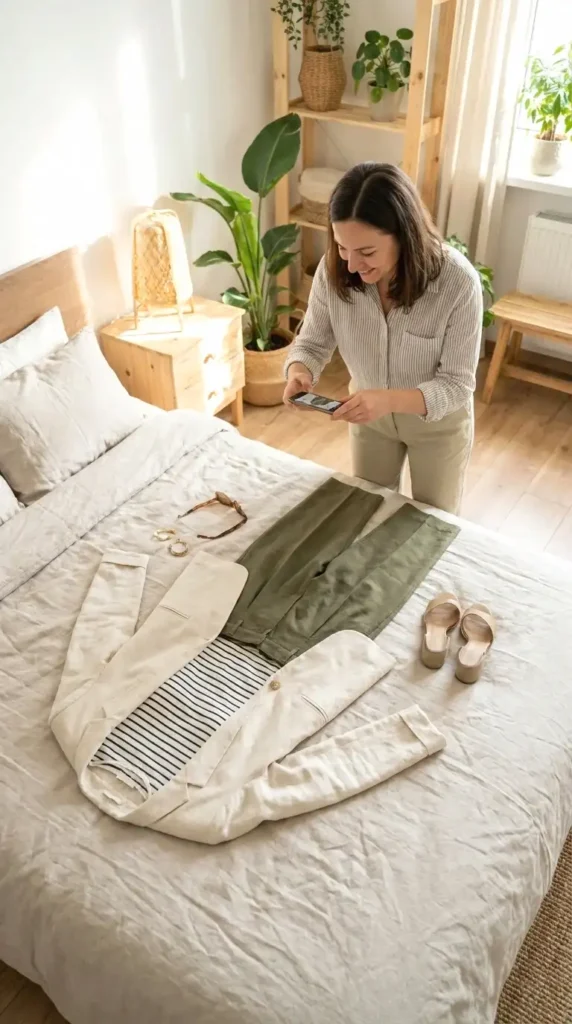
Lay your finished capsule out on the bed and start pairing pieces: one bottom, one top, one layer. With 15–20 pieces built on a single color story, you should land on 25 or more wearable combinations without repeating an identical outfit.
Photograph each combination on your phone in one folder labeled by season or occasion. On busy mornings, you’ll scroll this folder instead of standing in front of your closet deciding — which is the entire point of a capsule.
- Sizing down instead of shopping petite: Shrinks shoulders and sleeves along with the body, so nothing actually fits right.
- Keeping pants that break below the ankle: Even a small amount of extra length visually shortens the leg more than any other fit issue.
- Choosing a long, uncropped coat: Cuts the body in half visually and hides your waistline completely.
- Skipping the “arms overhead” test on alterations: A quick fix that looks fine standing still often fails the moment you move.
- Building the capsule around trends instead of your three colors: Breaks the mix-and-match system the whole capsule depends on.
- Empty the closet completely
- Sort into Keep / Alter / Donate
- Try on everything in “maybe”
- Measure shoulder-to-waist, waist-to-hip, inseam, rise
- Pick 1 neutral, 1 accent, 1 metallic
- Build 2 bottoms + 1 skirt/dress, hemmed to ankle bone
- Add 4–5 tops that hit at the rise point
- Layer in hip-length outerwear only
- Shop petite sizing for remaining gaps
- Try no-sew fixes, test with arms overhead
- Photograph 25+ outfit combinations
Conclusion
You now have a closet built entirely around your actual proportions, not a generic size chart. Every piece hits your rise point, breaks at your ankle bone, and mixes with everything else you own.
The next natural step is a five-minute Sunday-night ritual: pick tomorrow’s outfit from your photo folder before you go to bed. Save this guide and come back to it each season as your capsule evolves. 📌