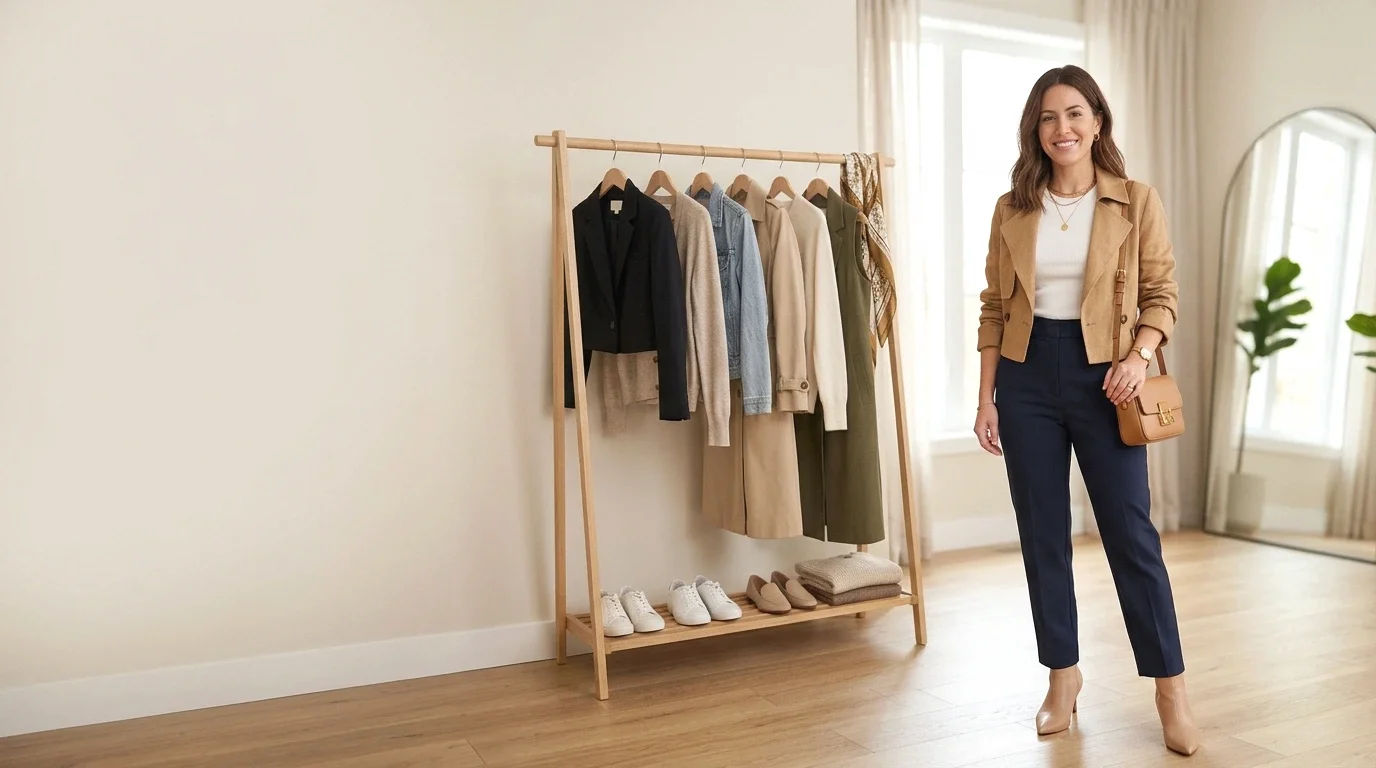
How to Layer Petite Outfits Without Adding Bulk (A Simple Petite Layering Guide)
If you’re petite, you already know the problem. You put on a cute sweater, add a jacket over it, and suddenly you look like you borrowed your outfit from someone twice your size. Layering is supposed to add style, not steal your shape. The good news is that petite layering isn’t about skipping layers altogether — it’s about stacking them the right way.
This petite layering guide walks you through a simple system: slim base, one statement piece, matched lengths, and a defined waist. Follow these steps in order and you’ll end up with outfits that look intentional, not accidental. Most of this takes practice you can build in 10 minutes in front of your closet, and once you know your formula, getting dressed gets faster every time.
By the end, you’ll have a repeatable method for adding warmth and dimension to any outfit without hiding your frame underneath it.
TOTAL TIME
10 minutes
ACTIVE TIME
10 minutes
DIFFICULTY
Beginner
WHAT YOU NEED
- 1 fitted base layer (tank, thin turtleneck, or fitted tee)
- 1 mid layer (button-down, thin sweater, or vest)
- 1 statement outer layer (blazer, cardigan, or coat)
- A belt (thin or medium width)
- A full-length mirror
AT A GLANCE
- Start with a slim base layer
- Choose one statement layer, not two
- Match your layer lengths to your torso
- Tuck or half-tuck to create a waistline
- Keep bulky textures to one layer only
- Open your outer layer to add vertical line
- Balance wide layers with slim bottoms
- Check proportions in a full-length mirror
Start With a Slim Base Layer
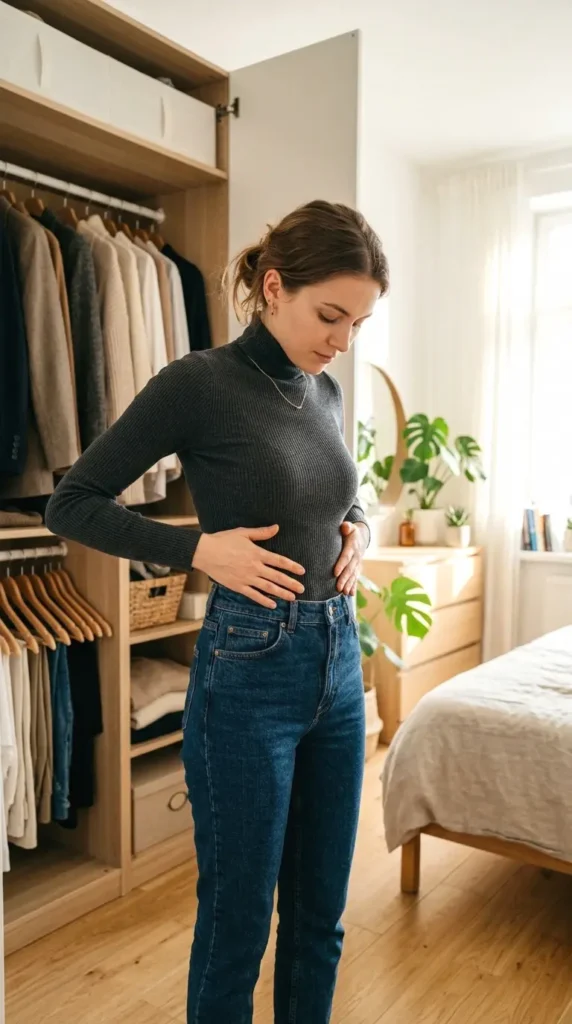
Everything you layer on top builds on this first piece, so bulk here multiplies later. Pick a base that sits close to your body — a thin tank, fitted tee, or lightweight turtleneck. If it has any looseness or extra fabric at the waist, that fabric will bunch under everything else you add. A thin, close-fitting base gives your other layers a clean foundation instead of a lumpy one.
Choose One Statement Layer, Not Two
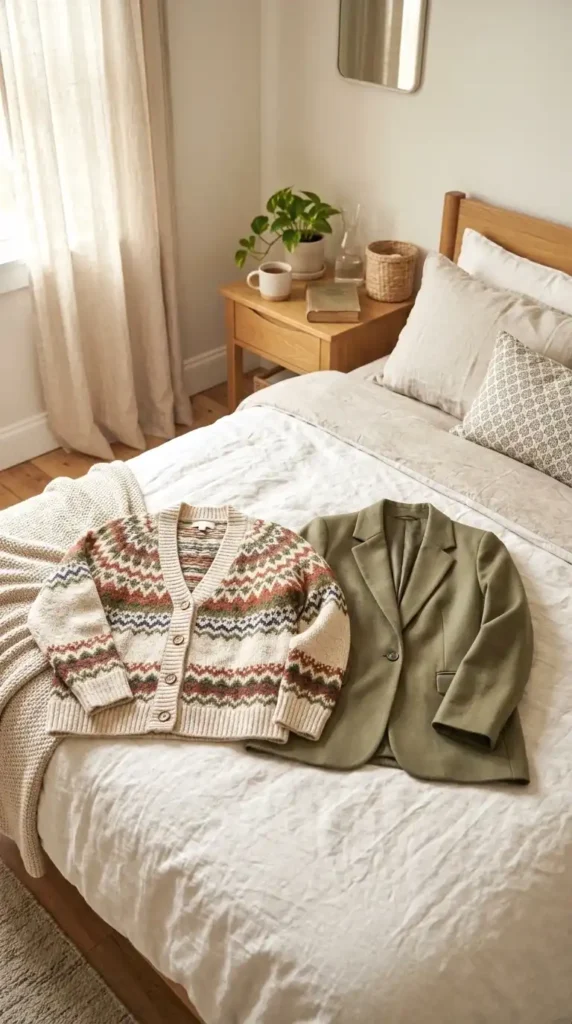
Petite frames only have room for one layer to “speak.” Pick either your mid layer (a patterned cardigan, textured sweater) or your outer layer (a bold coat, structured blazer) to be the interesting piece — never both. If your cardigan has a bold print, keep your jacket plain and solid. Two loud layers compete for attention and visually double your width, even if each piece fits well on its own.
Match Your Layer Lengths to Your Torso
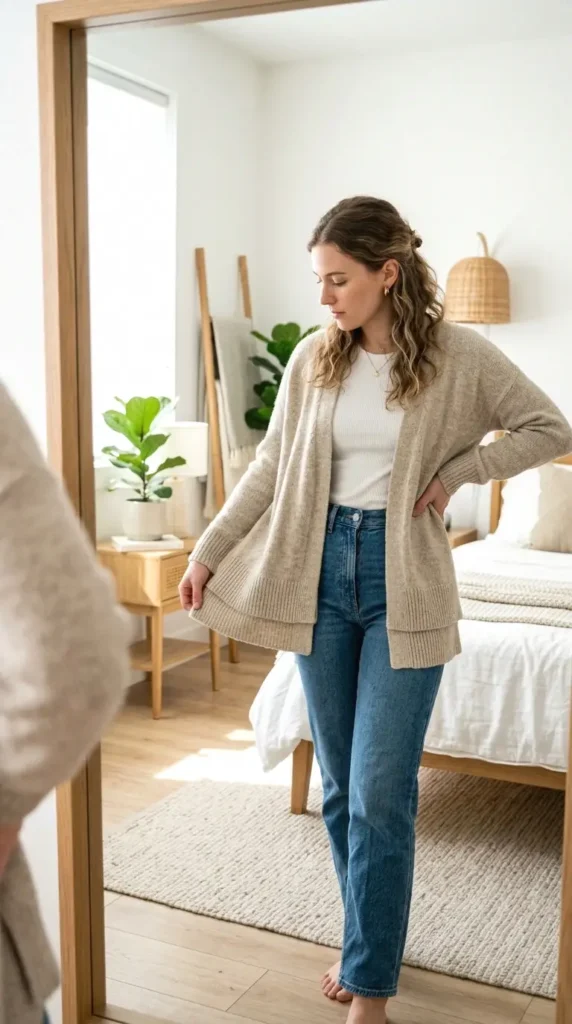
This is where most petite layering goes wrong. If your base layer, mid layer, and outer layer all end at different, random points, each hemline creates a horizontal break that shortens your torso further. Aim to end your layers at just two or three points max — for example, your base layer at hip length and your outer layer several inches longer. Before you add your next layer, check where the previous one ends and land the new one intentionally 2 to 4 inches below or above it.
Tuck or Half-Tuck to Create a Waistline
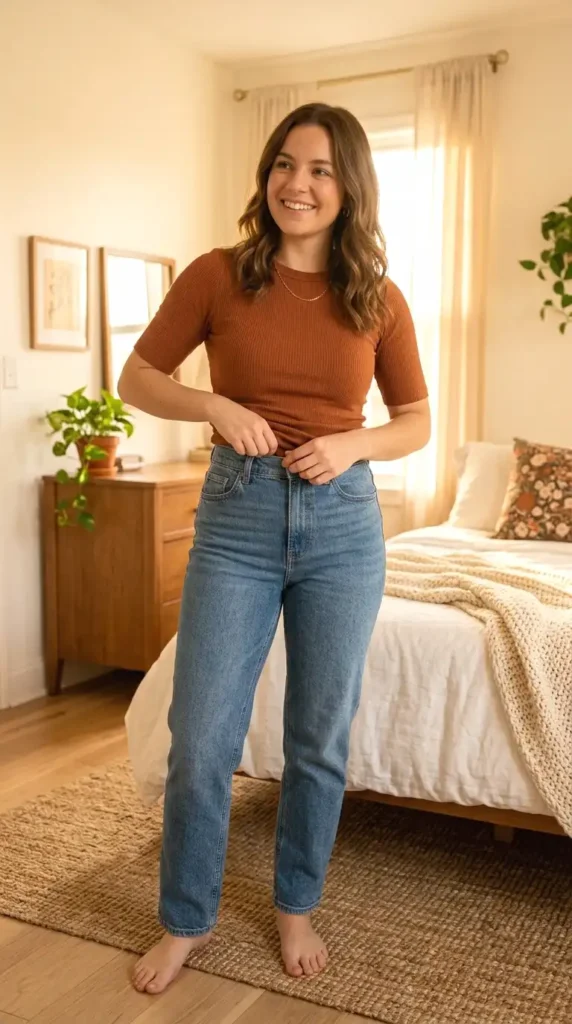
Without a visible waist, layers just stack into one shapeless block. A front tuck or half-tuck breaks that block by showing a hint of your natural waistline underneath your layers. Tuck just the front few inches of your base layer into your bottoms, then let the rest hang loose. This single move does more for petite proportions than almost any other styling trick on this list.
PRO TIP
If your top is too short to tuck comfortably, a thin belt worn over an untucked layer creates the same waist definition without any tucking at all.
Keep Bulky Textures to One Layer Only
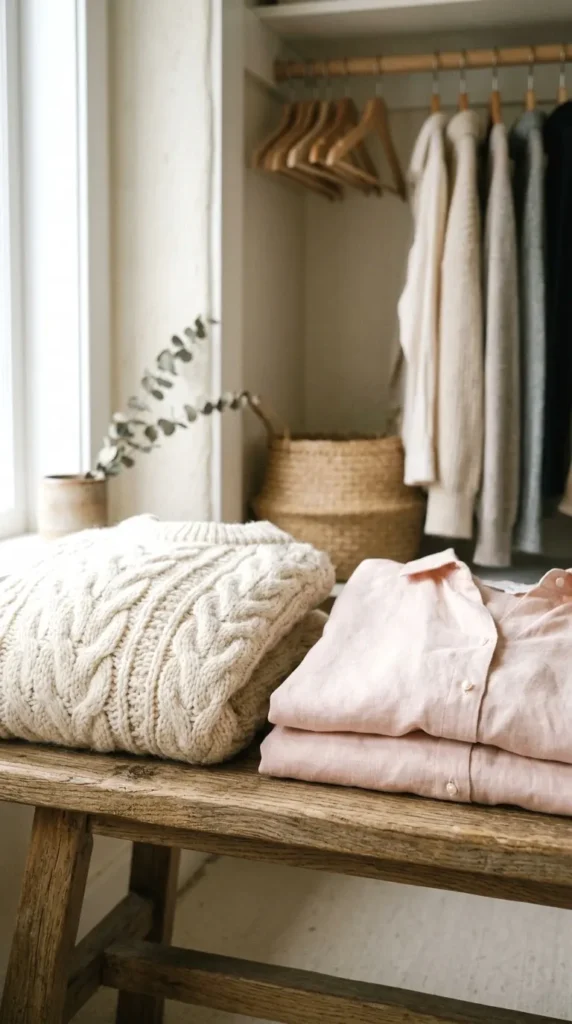
Chunky knits, quilted fabric, faux fur, and heavy wool all add visual and physical width. If you use one of these textures in your base layer, keep every layer above it thin and smooth. Stacking two textured pieces — say, a cable-knit sweater under a puffer vest — reads as bulk from across the room, even on a taller frame.
HEADS UP
Watch out for hidden bulk in linings. A thin-looking coat with heavy quilted lining can add as much width as a visibly chunky one — check the inside, not just the outside, before you buy or wear it.
Open Your Outer Layer to Add Vertical Line
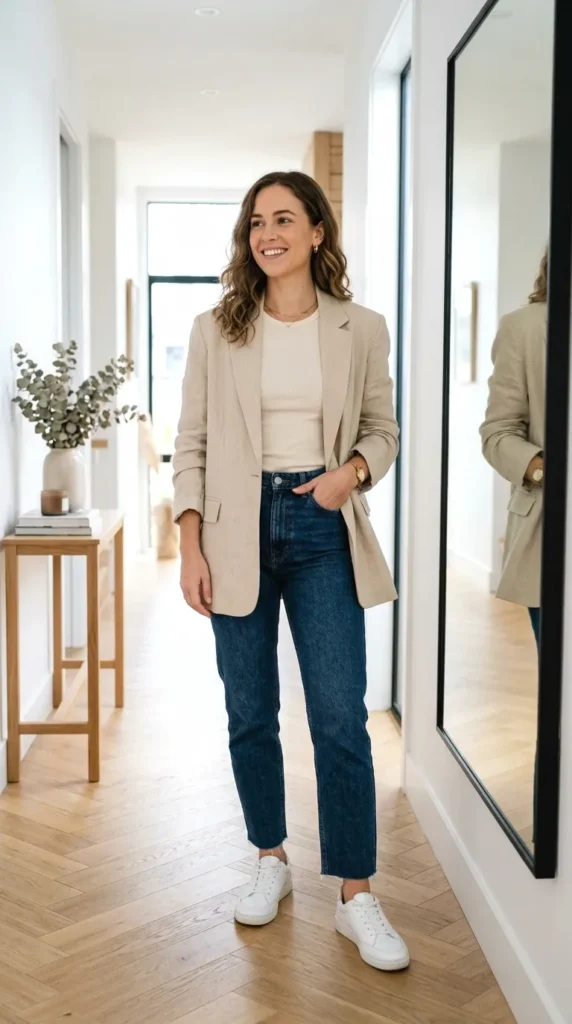
A buttoned-up jacket or cardigan creates one solid horizontal block across your chest. Leaving your outer layer open, even by a few buttons, exposes a strip of your base layer down the center of your body. That strip acts as a vertical line, and vertical lines make petite frames look longer. This works whether your outer layer is a blazer, cardigan, or open coat.
Balance Wide Layers With Slim Bottoms
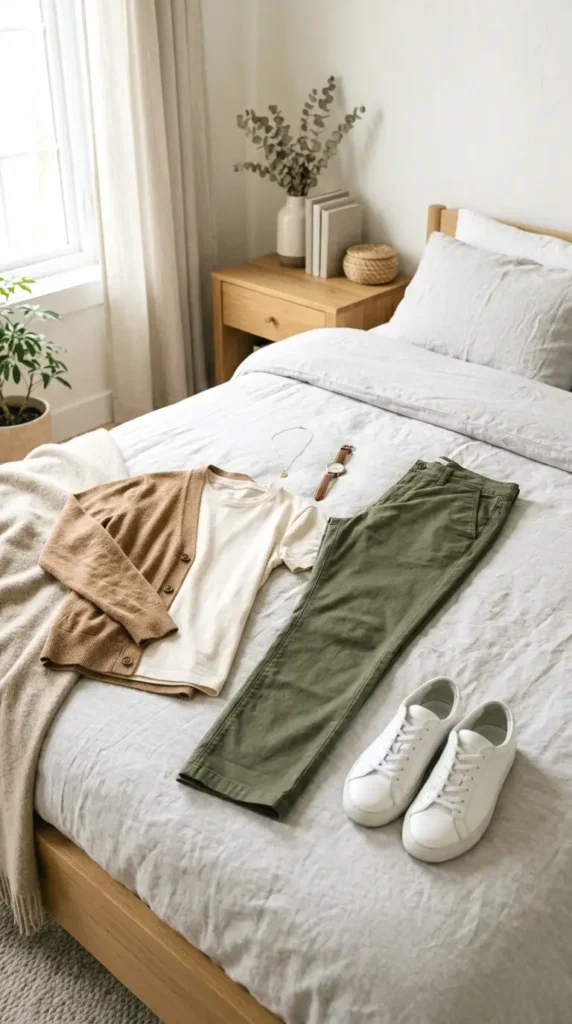
Three layers on top already add visual weight, so your bottom half needs to counter it, not match it. Pair your layered top half with a slim or straight-leg pant, fitted jean, or slim skirt. Wide-leg pants or a full skirt worn under a layered top doubles the width top and bottom, which overwhelms a petite frame fast. Save wider bottoms for outfits where you’re wearing a single, simple top layer instead.
Check Proportions in a Full-Length Mirror Before You Leave
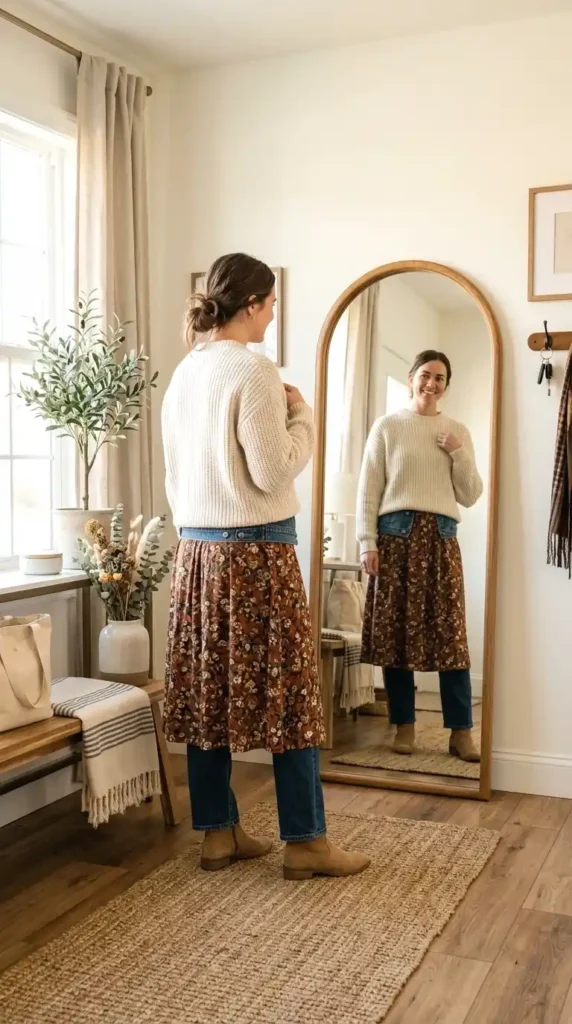
Does the outfit look balanced from 6 feet away, not just up close? Standing too near a mirror hides proportion problems that are obvious from a normal viewing distance. Step back, look at your outfit as a whole shape rather than piece by piece, and check that no single layer is stealing attention from the rest. If one layer pulls your eye more than the others, that’s the one to remove or swap.
COMMON MISTAKES
Wearing three loud layers at once. A patterned scarf, a printed cardigan, and a bold coat together fight for attention and flatten your shape into one busy block. Pick one loud piece and let the rest stay quiet.
Sizing up “for room to layer.” Extra room in your base layer bunches under everything else. Size for a close fit and let your outer layer provide the extra space instead.
Letting every hem land somewhere different. Four random hemlines create four horizontal breaks in your torso. Land your layers at two or three lengths, max.
Skipping the waist entirely. Without a tuck or belt, layers stack into a shapeless column from shoulder to hip.
Choosing bulky bottoms to match bulky tops. Wide-leg pants under a layered top double the width instead of balancing it.
FAQ
Can I layer with a scarf too, or is that one layer too many?
A scarf can work if it’s thin and worn loosely rather than wrapped thick. Treat it as your one statement piece if it has color or pattern, and keep the rest of your layers plain.
What if my only warm coat is bulky?
Keep every layer underneath it thin and close-fitting, and leave it open when you can. The bulk stays contained to one outer piece instead of stacking with the layers below.
Does this petite layering method work for plus-size petite frames too?
Yes. The same rules — one statement layer, matched hem lengths, a defined waist — apply regardless of size. The proportions matter more than the measurements.
How many layers is too many for a petite frame?
Three is usually the practical limit: base, mid, and outer. A fourth layer almost always adds more bulk than style.
QUICK REFERENCE CARD
WHAT YOU NEED:
Fitted base layer • Mid layer • Statement outer layer • Thin belt • Full-length mirror
STEPS:
- Start with a slim base layer
- Choose one statement layer, not two
- Match your layer lengths to your torso
- Tuck or half-tuck to create a waistline
- Keep bulky textures to one layer only
- Open your outer layer for vertical line
- Balance wide layers with slim bottoms
- Check proportions from 6 feet in the mirror
Wrapping Up
You now have a real system for petite layering — not just a list of pieces, but a way to stack them so they work with your frame instead of against it. Pick one statement layer, keep your hems intentional, and always find your waist before you walk out the door.
Once this becomes second nature, try applying the same rules to your next seasonal wardrobe refresh. Save this guide to your Pinterest board so it’s ready the next time you’re staring at your closet, unsure what to layer.