

How to Transition a Petite Wardrobe From Summer to Fall (Without Losing Any Closet Space)
By late September, your closet is fighting you. Tank tops are still hanging next to sweaters you haven’t worn since March, and every time you reach for a fall layer, three summer pieces fall off their hangers with it. If you’re petite, the problem gets worse fast — most “fall transition” advice is written for someone five inches taller, with a closet three times the size.
A proper petite seasonal wardrobe transition isn’t about buying a new closet’s worth of clothes. It’s about knowing exactly which summer pieces earn a spot through October, which fall pieces actually fit your frame without alteration, and how to store the rest so your closet stops feeling like a losing battle. This guide walks you through that process from start to finish — sorting, trying on, tailoring what needs it, and packing away what doesn’t.
You’ll need about 2 to 3 hours, most of it active. By the end, your closet will hold only pieces that fit right and work for the weather ahead, and everything else will be packed away where it belongs.
Total Time
2–3 hours
Active Time
2 hours
Difficulty
Beginner
What You Need
- Full-length mirror
- 2–3 storage bins or vacuum-seal bags
- A measuring tape
- Sewing kit or fabric tape (for temporary hems)
- A donation bag or box
- Sticky notes or masking tape (for labeling piles)
At a Glance
- Pull every summer piece out first
- Sort into keep, store, or donate
- Try on core fall basics
- Hem or tailor anything too long
- Choose three transitional layers
- Build cross-season color anchors
- Pack away off-season items
- Do a final fit check in daylight
Pull Every Summer Piece Out of Your Closet First

Empty the closet completely before you sort anything. Working around what’s still hanging leads to guessing, and guessing is how the same three tank tops end up back on the rack every year. Lay everything across your bed or floor so you can see the full scope of what you own.
This step feels slow, but it takes about 15 minutes and saves you from re-sorting later. Include drawers, not just hanging space — petite closets often hide half a wardrobe in a dresser you forgot to check.
Sort Each Piece Into Keep, Store, or Donate

Label three areas of your floor or bed: Keep, Store, Donate. Every piece goes into exactly one pile — no maybes.
- Keep: works for fall as-is
- Store: pure summer, no fall use
- Donate: didn’t fit right even in summer
Petite frames tend to over-keep pieces that are simply too long or boxy, thinking they’ll “get tailored eventually.” If a piece has sat unaltered for over six months, move it to donate.
Try On Your Core Fall Basics Before Committing to Them
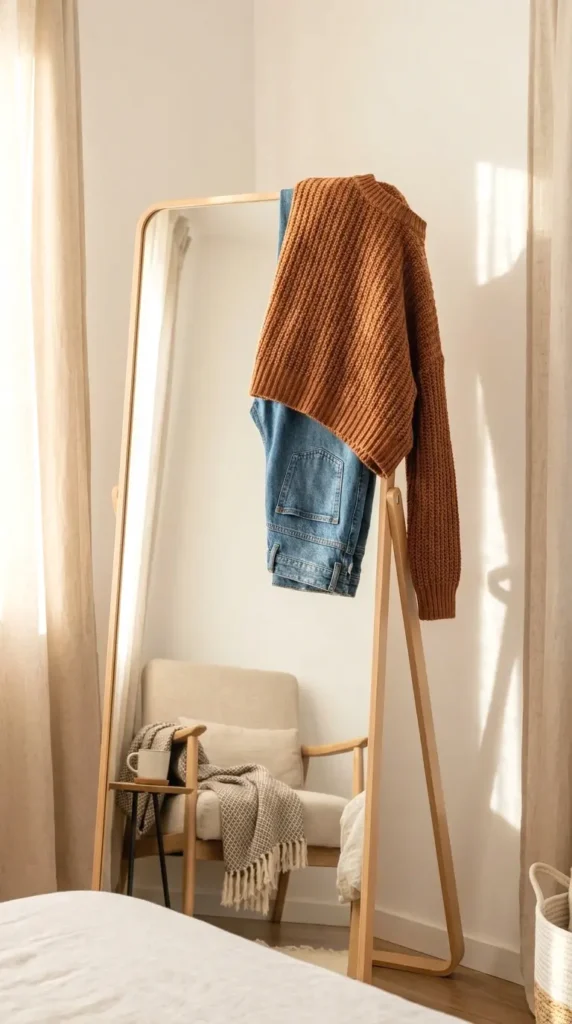
Before you build any outfit, physically try on your fall basics — jeans, sweaters, blazers, boots. Bodies shift slightly between seasons, and a sweater that fit in March can hang differently after months in storage.
Stand in front of a full-length mirror for each piece. Check three things specifically: sleeve length past the wrist, hem length on bottoms, and shoulder seam placement. (If you don’t have a full-length mirror, prop a hand mirror on a shelf and check yourself in sections — top half, then bottom half.) Petite proportions shift fastest at the sleeve and hem.
Pro Tip: Try things on with the shoes you’ll actually wear them with. A hem that looks fine in socks can suddenly drag on the floor in flats.
Hem or Tailor Anything That Runs Long
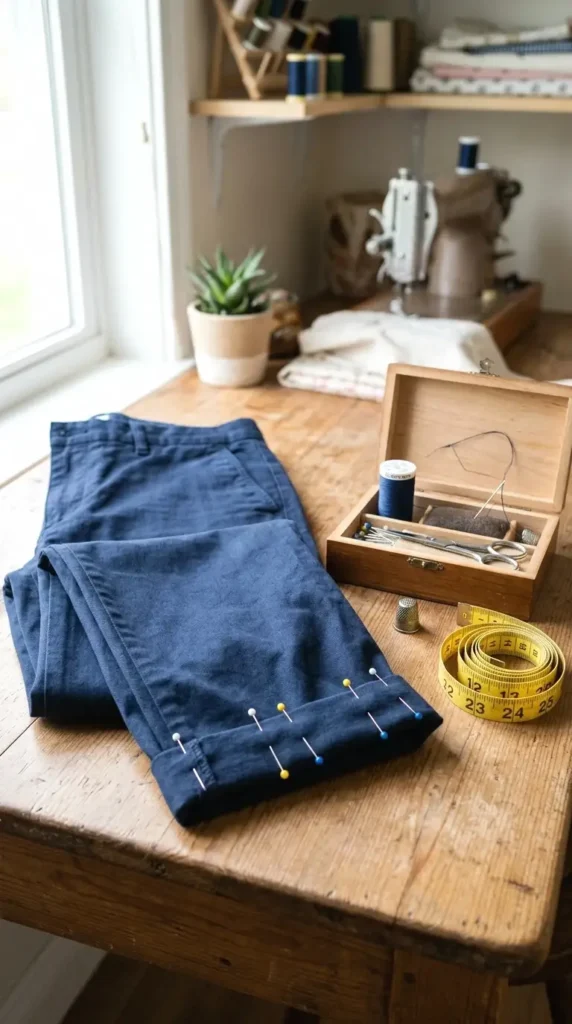
Sleeves and hems that fall even an inch past where they should are the single fastest way a fall outfit reads as “borrowed clothes” on a petite frame. Pin the excess length while wearing the actual shoes you’ll pair with the piece, then either sew a temporary hem yourself or set it aside for a tailor.
A basic no-sew hem tape works for one season if you’re not ready to commit to permanent alterations. Iron it in place following the package instructions, and avoid wearing the piece through a wash cycle until you’re sure of the length.
Heads Up: Never cut fabric before pinning and trying the piece on twice. Petite hems are unforgiving — once you cut, you cannot add length back.
Three Layers Are Enough — Choose Them Carefully

Resist the urge to buy a whole new fall layering wardrobe. A cropped jacket, a longline cardigan, and one structured blazer cover almost every fall outfit a petite frame needs. Each one should hit at a different length so they don’t compete with each other or shorten your leg line when stacked.
Check the shoulder seam on every layer. If it sits more than half an inch past your actual shoulder, the whole silhouette reads oversized rather than intentional. Try each layer over your thinnest and thickest keep-pile tops to confirm it works both ways.
Build a Small Capsule of Cross-Season Color Anchors

Pick two or three colors from your keep pile that photograph well against your skin tone and pair easily with both your summer and fall pieces. These become your anchors — the colors you reach for when you’re not sure what to wear.
Neutral anchors like camel, charcoal, or a deep berry tend to bridge both seasons without looking out of place in either. Lay your anchor colors next to each other on the bed and confirm they don’t clash before finalizing the list. This takes about 10 minutes but saves you from mismatched outfits all season.
Pack Away Off-Season Summer Items to Reclaim Space
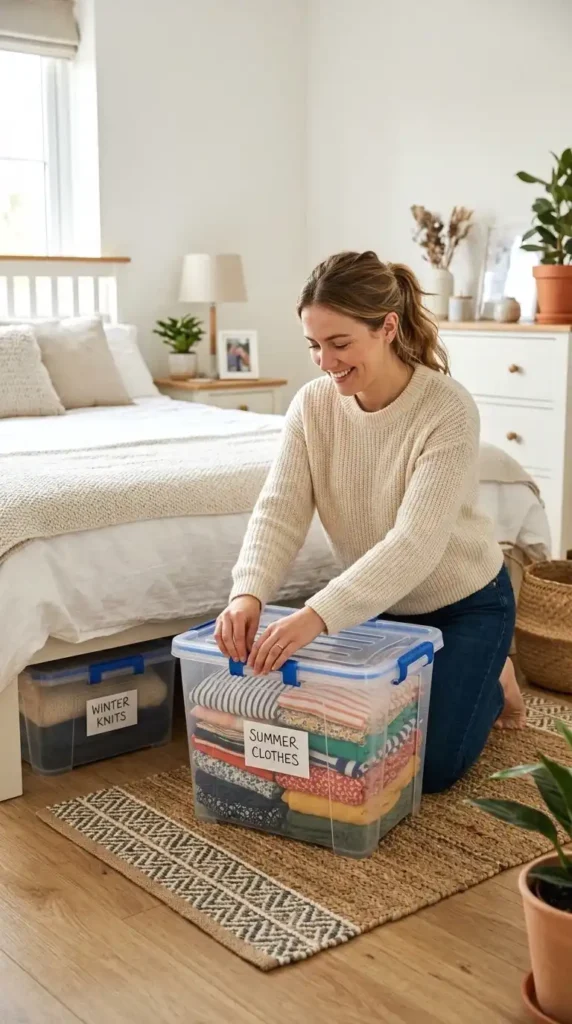
Once your store pile is confirmed, get it out of the closet entirely — not pushed to the back of a shelf. Vacuum-seal bags work well for knits and delicate fabrics, while bins are better for anything structured that could crease.
Label each container with a rough content list and the season, so next spring you’re not opening three bins to find one swimsuit. Store them somewhere dry: under-bed storage or a closet shelf works, but avoid garages or basements prone to humidity, which can mildew fabric over a season.
Do a Final Fit Check in Natural Light

Try on your finished fall lineup near a window, not under indoor bulbs. Artificial light flattens color and hides fabric pilling, both of which matter more on smaller frames where every detail is more visible.
Snap a quick photo in each outfit. It’s easier to spot a bunching hem or an overwhelming layer in a photo than in the mirror. If something still looks off after one full week of wear, it belongs back in the donate pile — not the keep pile.
Pro Tip: Take the photos in the same spot each time. It makes comparing outfits side by side much easier when you’re deciding what to keep.
Common Mistakes to Avoid
Buying fall layers before trying on last year’s
Shopping first means you end up with duplicates of pieces that already fit fine. Always sort your existing wardrobe before adding anything new.
Keeping pieces “for when they get tailored”
If a piece has sat unaltered for six months or more, the tailoring isn’t happening. Donate it and free the space.
Stacking layers that are all the same length
Three layers that all hit at the hip flatten a petite silhouette. Vary the length of each layer so they create shape instead of bulk.
Storing off-season clothes in a damp space
Garages and basements often trap moisture. A closet shelf or under-bed bin keeps fabric in better shape for next year.
Checking fit under indoor lighting only
Indoor bulbs hide pilling and flatten color. A quick check near a window catches problems before you wear the outfit out.
Frequently Asked Questions
How long should a petite seasonal wardrobe transition actually take?
Most people finish in **2 to 3 hours** if they sort in one sitting instead of spreading it across several days.
Do I need to buy new clothes to transition my wardrobe for fall?
No. Most petite closets already have fall-ready pieces buried behind summer clothes. Sort first, then shop only for real gaps.
What if I don’t have vacuum-seal bags for storage?
Any clean, dry bin works. Fold items flat and add a scent-free sachet if you’re worried about a musty smell over the season.
How do I know if a layering piece is too long for my frame?
If it hits below your natural hip crease and you’re under 5’4″, it’s likely cutting your leg line short. Try a cropped or hip-length version instead.
Quick Reference Card
What You Need:
Mirror · Storage bins or vacuum bags · Measuring tape · Sewing kit or fabric tape · Donation bag · Sticky notes
Steps:
- Pull every summer piece out first
- Sort into keep, store, or donate
- Try on core fall basics
- Hem or tailor anything too long
- Choose three transitional layers
- Build cross-season color anchors
- Pack away off-season items
- Do a final fit check in daylight
Conclusion
Your closet now holds only what actually fits and works for the weather ahead. Nothing is competing for space, and nothing is hiding in the back waiting to be tailored “eventually.”
A full petite seasonal wardrobe transition like this one holds up through the whole fall — not just the first cold week. Next time you swap seasons, this same sort-try-store rhythm will take half the time.
Save this guide to your fall wardrobe board so you have it ready the next time the seasons shift. 🍂