How to Try Styling Regular Clothes Petite Pregnant Women Already Own
Your favorite jeans stopped buttoning weeks before your bump looked “big enough” for maternity clothes, and now you’re stuck standing in front of a closet full of clothes that technically still fit — just not comfortably. That gap between “not showing much” and “ready for maternity wear” can last longer than people admit, and nobody talks about how to dress through it.
This guide walks you through styling regular clothes petite pregnant body, piece by piece, so you can stretch your current wardrobe for several more weeks before spending a dime on maternity sizes. Because you’re petite, standard maternity cuts often swallow your frame anyway — so these adjustments aren’t just a stopgap, they may become your actual strategy for the whole first half of pregnancy. Expect to spend about **20 minutes** going through your closet, and the rest happens naturally as you get dressed each morning.
Total Time
20 Minutes
Active Time
20 Minutes
Difficulty
Easy
What You Need
- A belly band or hair tie
- Existing button-down shirts and cardigans
- Any wrap dresses or wrap tops you own
- Stretchy or elastic-waist bottoms (leggings, joggers, soft skirts)
- One bralette or a bra one size up
- Optional: a larger top or hoodie borrowed from a partner
At a Glance
- Sort your closet into three piles
- Size up in bottoms, not tops
- Switch to a belly band
- Layer with open button-downs and cardigans
- Move to stretchy waistbands
- Style wrap dresses and tops
- Raise empire-waist pieces above the bump
- Borrow looser pieces
- Swap to a bralette or bigger bra
- Know when it’s time for maternity
Sort Your Closet Into Three Piles First

Pull every bottom, top, and dress you own into one spot on your bed — not just the things you think will work. Sort them into three piles: still fits normally, fits but feels snug, and doesn’t close anymore. This step matters because petite frames show a bump earlier relative to torso length, so items that “should” still fit often don’t, and you need an honest starting point before you improvise anything.
Size Up in Bottoms, Not Tops
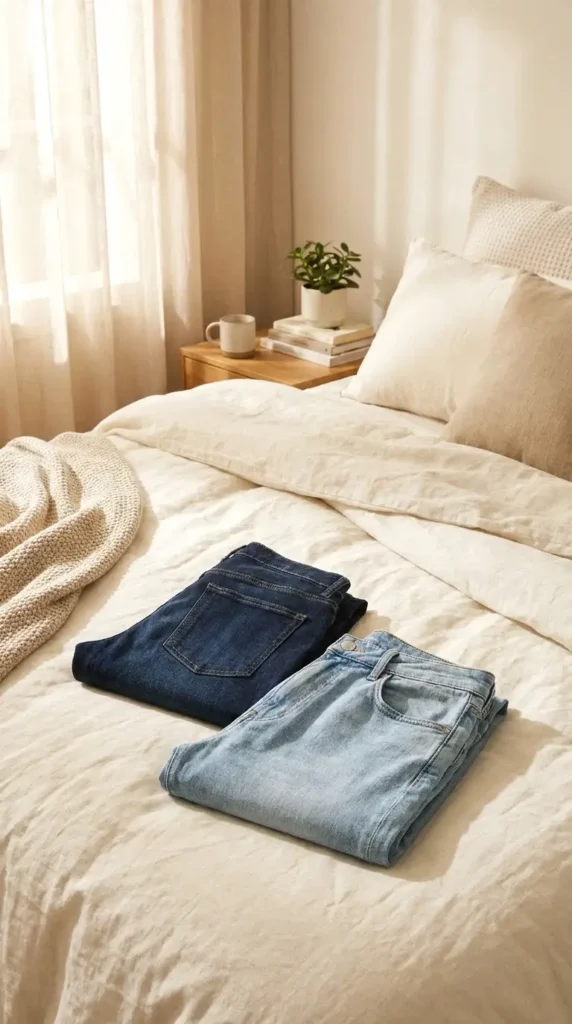
Buy or borrow bottoms one size larger before you touch your tops. Petite bodies carry a bump forward and high, which means the waistband is usually the first thing to fail — not the shoulders or bust. A pair of jeans one size up in your regular petite line will often fit the hips and length correctly while giving your belly room the original pair never had.
Pro Tip: Stick to the same petite length or inseam when sizing up — only the waist and hip need more room, not the leg length.
Switch to a Belly Band Before Your Pants Stop Buttoning
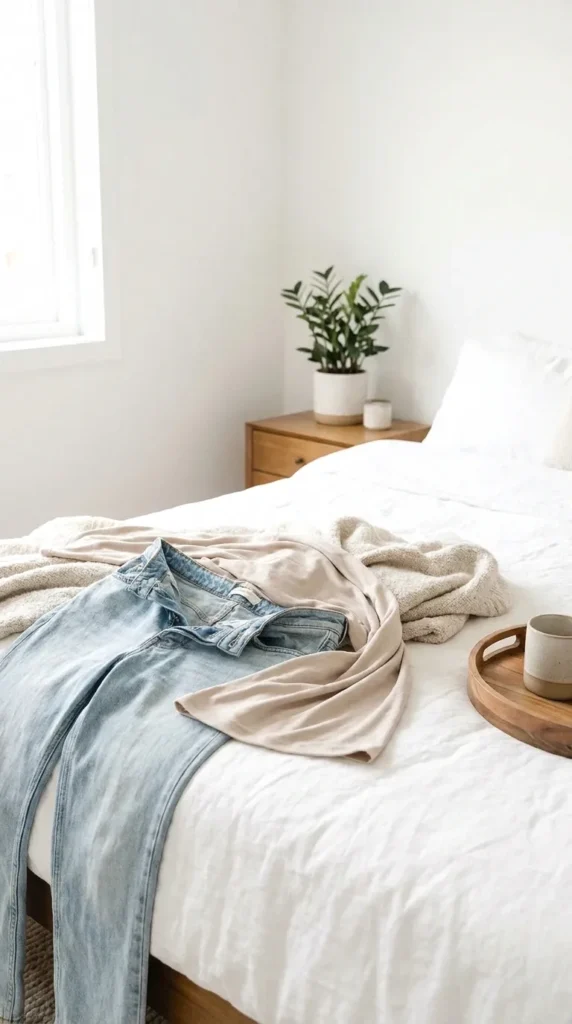
Loop a belly band through the buttonhole of your jeans or trousers, leave the top button open, and pull the band down over the gap. Do this the moment your waistband starts leaving a mark, not after it stops closing entirely. Waiting too long means squeezing into pants that dig in for a week before you finally give in and switch — a belly band bought early saves that whole stretch of discomfort.
Heads Up: A too-tight waistband left buttoned “just a little longer” can dig into your skin and restrict circulation. If you see a red line after taking pants off, size up or switch to a band immediately — don’t push through it.
Layer With Unbuttoned Button-Downs and Open Cardigans

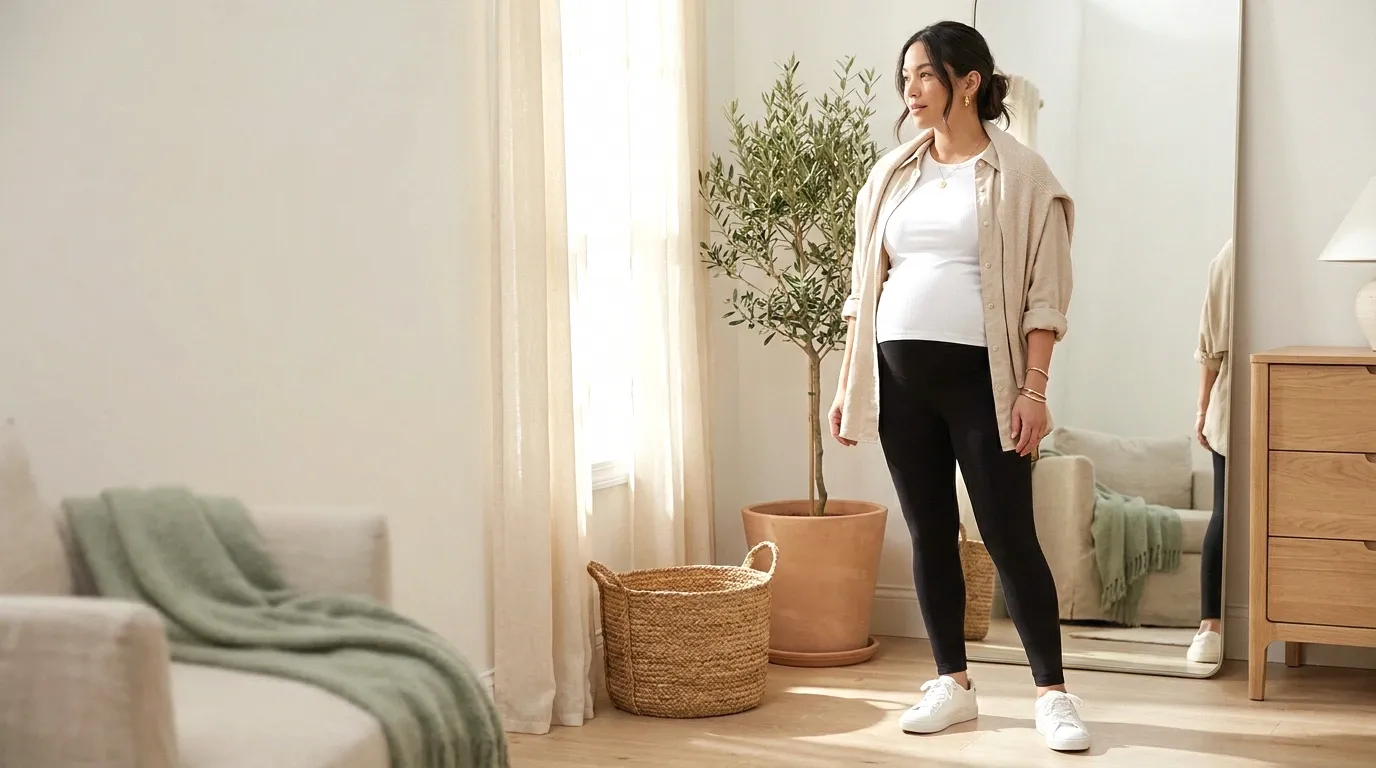
If a blazer or button-down no longer closes over your chest, stop trying to close it. Wear it open over a plain tank or fitted tee instead, letting it act as a layering piece rather than a buttoned top. This works especially well for petite frames because an open layer adds visual length instead of extra bulk across a smaller torso. Roll the sleeves once to keep proportions balanced, and pick one solid-color layer per outfit so the look doesn’t feel busy.
Move to Stretchy Waistbands for Your Everyday Bottoms
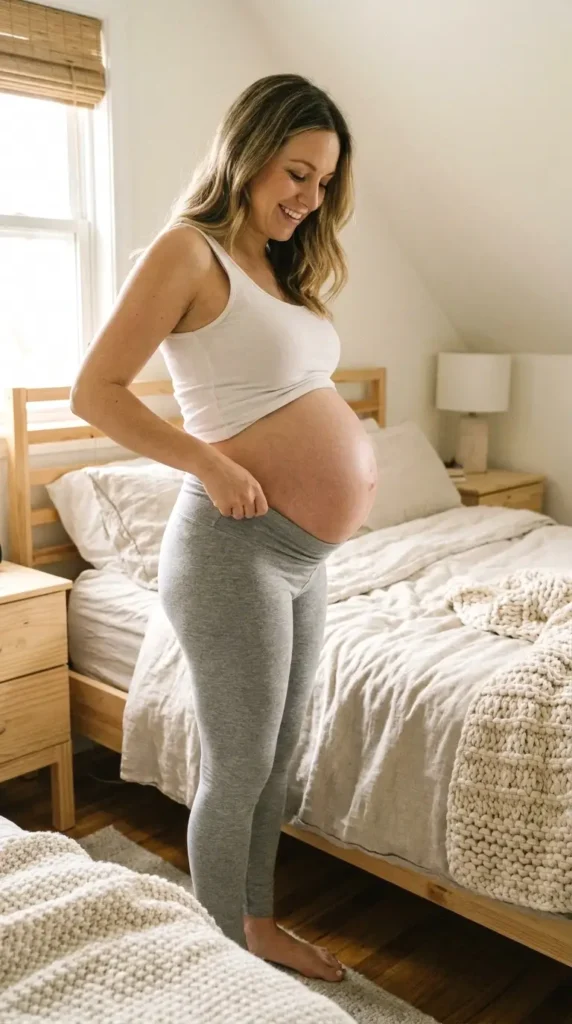
Three categories of bottoms will get you through the next month without a single maternity purchase: leggings, joggers, and soft elastic-waist skirts.
- Leggings for errands and casual days
- Joggers when you want pockets and structure
- A-line skirts with a soft elastic waist for anything dressier
Rotate between these instead of forcing structured trousers to work. The elastic sits below the belly rather than across it, so there’s nothing pressing on the area that’s changing fastest.
Style Wrap Dresses and Wrap Tops to Expand With You
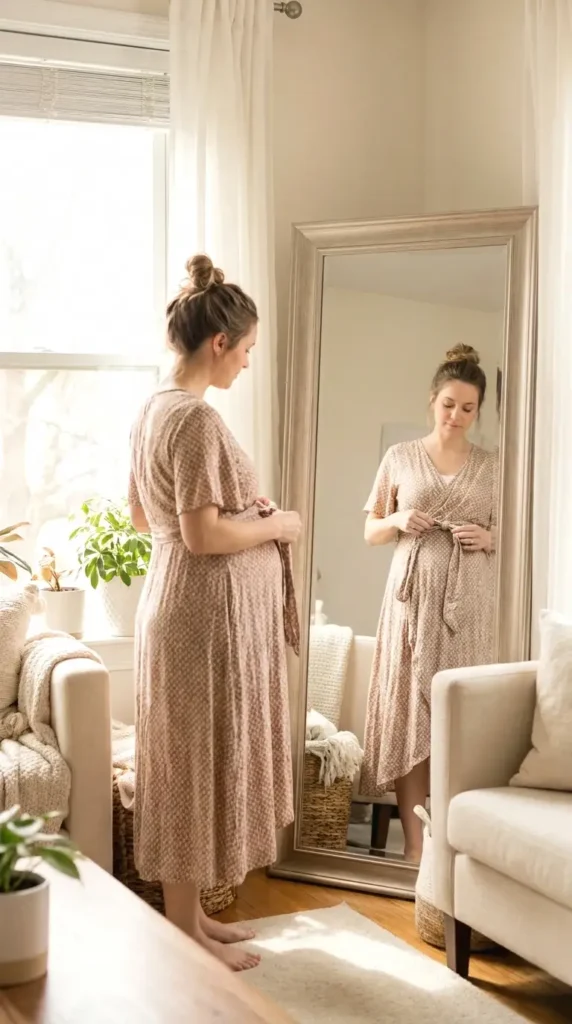
A genuine wrap style — one that ties, not one that’s sewn to look like a wrap — will adjust its own room as you grow, sometimes for months. Retie it looser at the waist each week rather than buying a new one. The V-neckline created by a wrap top also elongates a petite torso, which regular stretch tops without that shape tend to shorten instead.
Pro Tip: If you don’t own a true wrap dress, a faux-wrap style with a stretch knit fabric and a little extra ease in the waist tie can work as a temporary substitute.
Raise Empire-Waist Tops and Dresses to Sit Above the Bump
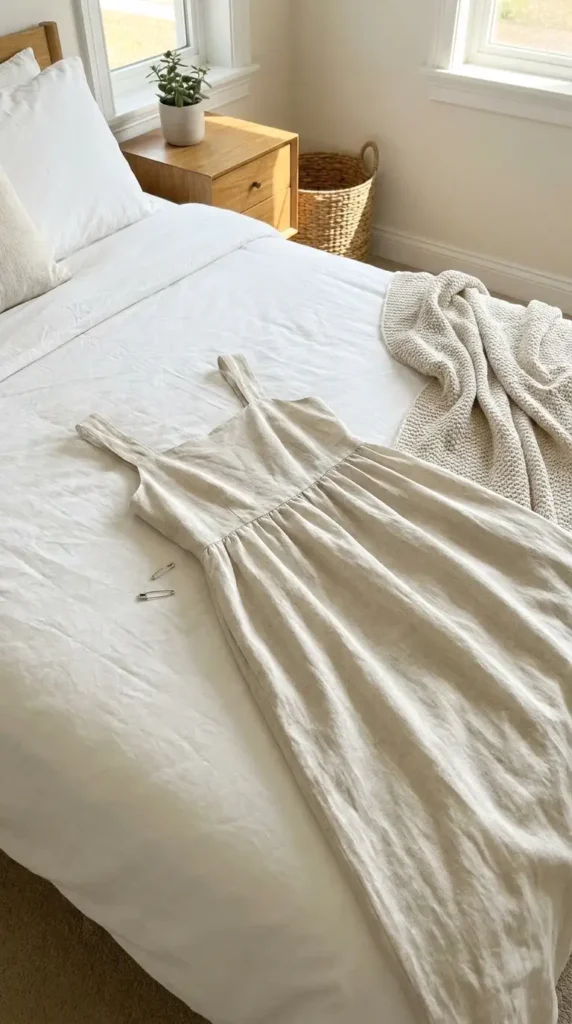
Pull any empire-waist piece up slightly at the shoulders so the seam sits right under your bust instead of at your natural waist. On a petite frame, that seam often lands too low to begin with, so a small adjustment now keeps the fabric skimming over the bump instead of clinging to it. Safety-pin the shoulder seam temporarily if the strap length needs to shorten by an inch or two.
Watch for one thing: if the fabric below the seam is stiff rather than flowy, it will tent out oddly instead of skimming — save these pieces for looser cardigans over top.
Borrowing Looser Pieces Works Better Than Buying More
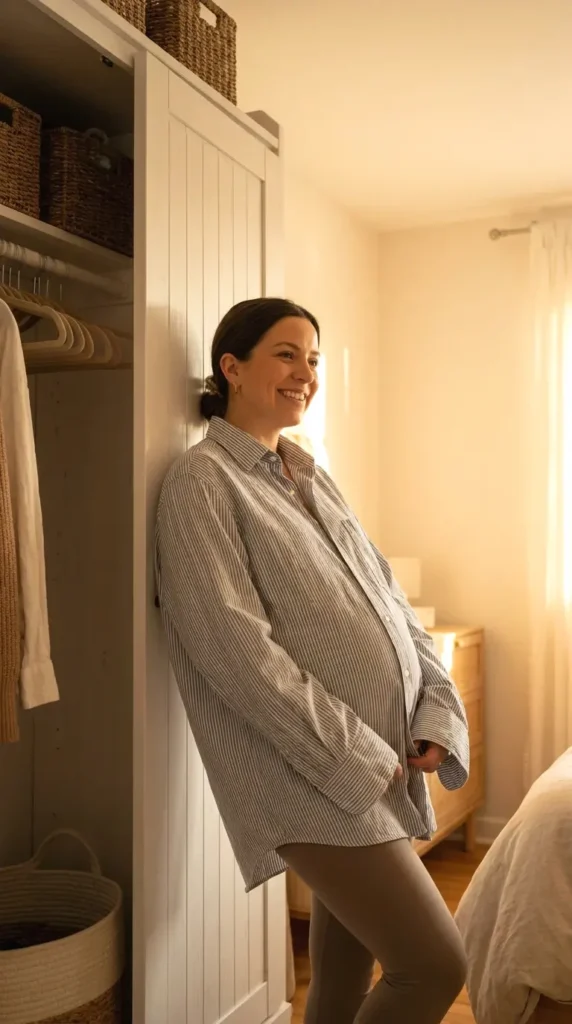
Before you spend money on a single new item, raid a partner’s closet or your own oversized drawer. A partner’s button-down shirt, hoodie, or crewneck gives you room a fitted petite top never will, and the extra length actually flatters a bump instead of exposing it. Cuff the sleeves twice and tuck the front only — leaving the back untucked keeps the proportions from swallowing a smaller frame.
Swap Fitted Bras for a Size Up or a Bralette
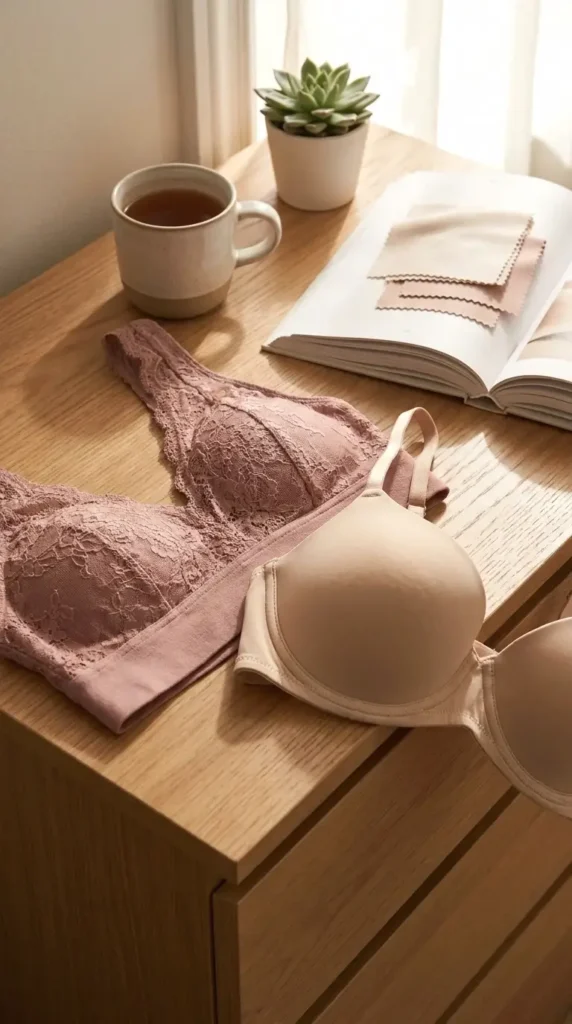
Your ribcage expands early in pregnancy, often before the belly does, so a bra that felt snug even a few weeks ago now digs in under the band. Move to the next band size up, or switch entirely to a wireless bralette with stretch fabric. This isn’t a maternity-specific purchase — any basic wireless style works — so you can grab one from a regular section without waiting for a maternity aisle.
Know the Three Signs It’s Time to Shop Maternity
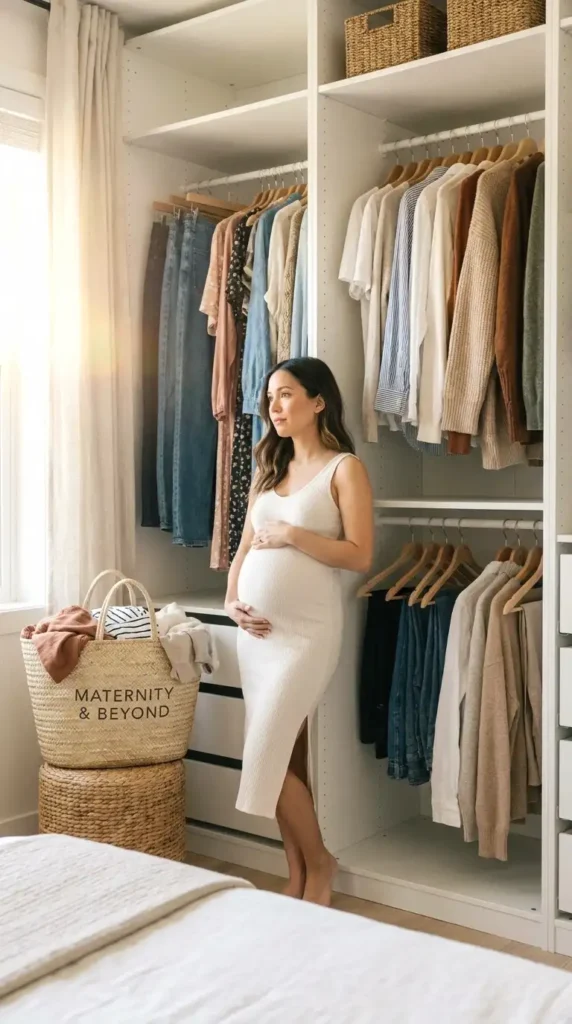
Regular-clothes hacks have a shelf life, and three signs mean that shelf life is ending: pants gap open even with a full-size increase, tops ride up no matter how you tug them down, and you’re spending more time adjusting an outfit than wearing it. When two of these three show up in the same week, that’s the honest signal to start shopping maternity rather than layering another workaround
.Pro Tip: Petite maternity lines run small in length as well as width — when you do shop, look specifically for “petite maternity” cuts rather than sizing down in a standard line.
Common Mistakes to Avoid
Sizing up in tops instead of bottoms
A bigger top rarely solves the actual problem, which is waistband pressure. It just adds bulk on top of a smaller petite frame while the real discomfort stays put.
Buying regular-size maternity clothes out of impatience
Standard maternity cuts are built for average and tall heights. On a petite frame, they pool at the ankles and swallow the shoulders — petite-specific maternity lines exist for a reason.
Ignoring a red mark left by a waistband
A visible line after taking pants off is a sign the band is too tight, not something to push through for another week.
Retiring wrap dresses too early
A true wrap style has more stretch left in the tie than people assume. Loosening it another notch often works long after it feels “done.”
Frequently Asked Questions
How long can I realistically wear regular clothes while pregnant?
Most petite women can stretch regular clothes through the first **12 to 16 weeks** of visible bump using these adjustments, though it varies by body and pregnancy.
Do I need a belly band if I already have stretchy pants?
Not always. Save the band for structured bottoms like jeans or trousers, since stretchy pants usually don’t need the extra support.
Will sizing up in regular clothes look too big everywhere else?
On a petite frame it can, which is why sizing up in bottoms only — not tops — keeps the fit balanced instead of oversized all over.
Is it okay to wear a regular bra through early pregnancy?
A regular wireless bra or bralette one size up is fine early on. Switch to a true maternity or nursing bra only once regular sizing stops feeling comfortable.
Quick Reference Card
What You Need
Belly band · Button-downs & cardigans · Wrap dresses/tops · Stretchy waistbands · Bralette or bra one size up
Steps
- Sort your closet into three piles
- Size up in bottoms, not tops
- Switch to a belly band
- Layer with open button-downs and cardigans
- Move to stretchy waistbands
- Style wrap dresses and tops
- Raise empire-waist pieces above the bump
- Borrow looser pieces
- Swap to a bralette or bigger bra
- Know the three signs it’s time for maternity
Conclusion
You now have a real plan for stretching your closet through those in-between weeks, no maternity purchase required yet. Every adjustment here works with pieces you already own, sized and styled for a petite frame instead of a generic one. Keep this guide bookmarked as your bump changes week to week — you’ll likely revisit different steps as things shift. When you’re ready to shop maternity, you’ll know exactly why, and exactly what to look for.
Save this pin so you can come back to it every week of your first trimester wardrobe stretch.