
How to Use Vertical Lines to Create the Illusion of Height When Styling Petite Frames
Standing at 5’2″ or under, you already know the drill: pants pool at your ankles, blazers swallow your shoulders, and dresses that look elegant on a tall friend somehow make you look like you borrowed your sister’s clothes. The good news is that height on a hanger is not the same as height on your body. Vertical lines styling petite frames is one of the oldest tricks in a stylist’s toolkit, and it works because your eye follows a line the same way it follows a road — straight up, not side to side. Once you know where to place those lines, you can look several inches taller without hemming a single pair of pants.
This guide walks you through nine practical adjustments, from the seams on your jacket to where your necklace lands. None of it requires new clothes or a tailor. Most of it takes less than 20 minutes once you know what you’re looking for, and you can test it right now with what’s already in your closet. Grab a full-length mirror and let’s get your silhouette working for you instead of against you.
- A full-length mirror
- One long cardigan, duster, or open jacket
- One necklace longer than 24 inches
- Shoes that closely match your pants or skin tone
- A tucked-in top with a defined waistband
- Start with a vertical anchor piece
- Choose pinstripes and seams that run up, not across
- Layer with a long, open cardigan or duster
- Match your shoes to your pants or skin tone
- Tuck in your top to create a visible waist line
- Add a long necklace below the collarbone
- Choose vertical seaming on jackets and blazers
- Skip horizontal cutoffs at your widest point
- Check your full silhouette from across the room
Start With a Vertical Anchor Piece
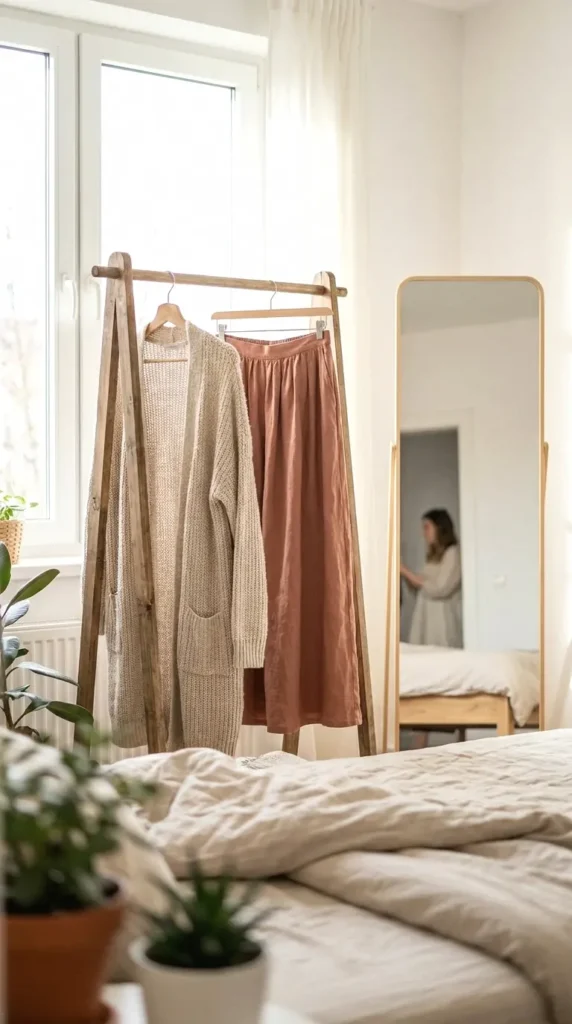
Before you touch shoes, jewelry, or layers, pick one item that already runs top to bottom without a break — a maxi skirt, a long cardigan, or a column dress. This single piece becomes the spine your outfit builds around. Stand in front of the mirror holding it up against your body and notice how your eye travels straight down instead of stopping at your hips. One piece is enough to start; you’ll layer the rest onto it in the next few steps.
Choose Pinstripes and Seams That Run Up, Not Across
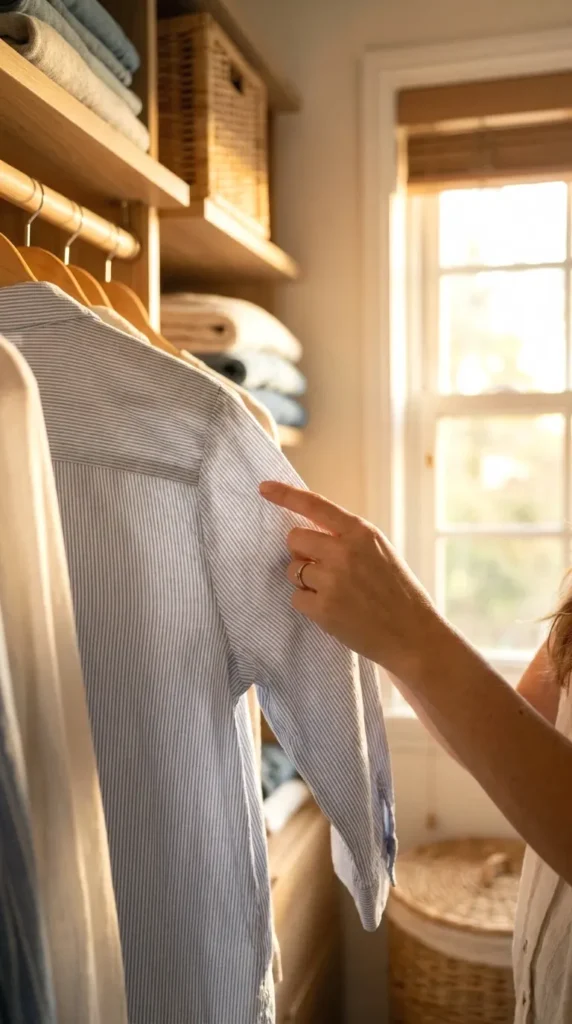
Not all stripes work in your favor. A horizontal stripe cuts your body into a shorter block, while a vertical pinstripe pulls the eye upward in one motion. Check any striped or paneled item you own by looking at the direction the lines actually run — some “vertical” blouses have a horizontal seam at the bust that breaks the line without you noticing. Hold the item at arm’s length and trace the lines with your finger; if your finger has to stop and restart, that seam is working against you.
Layer With a Long, Open Cardigan or Duster
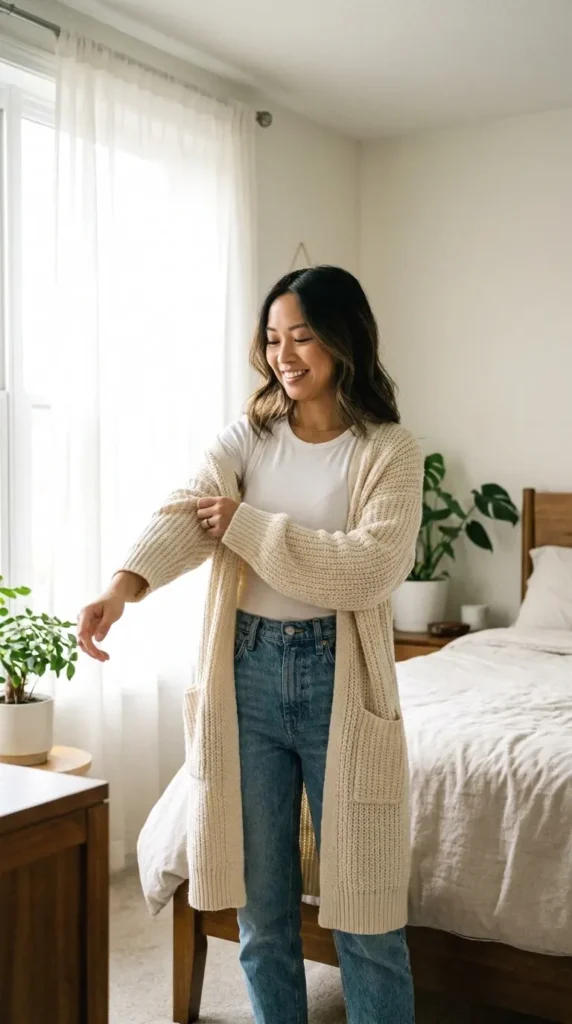
An open cardigan that hits below the hip does more for height than almost anything else in your closet. Leave it unbuttoned so the front edges hang straight down in two parallel lines. Wear it over a slightly shorter top underneath so the cardigan is clearly the longest layer, not competing with anything of equal length. If you don’t own a duster-length cardigan, an open button-down shirt worn as a layering piece over a tank creates a similar effect.
Match Your Shoes to Your Pants or Skin Tone
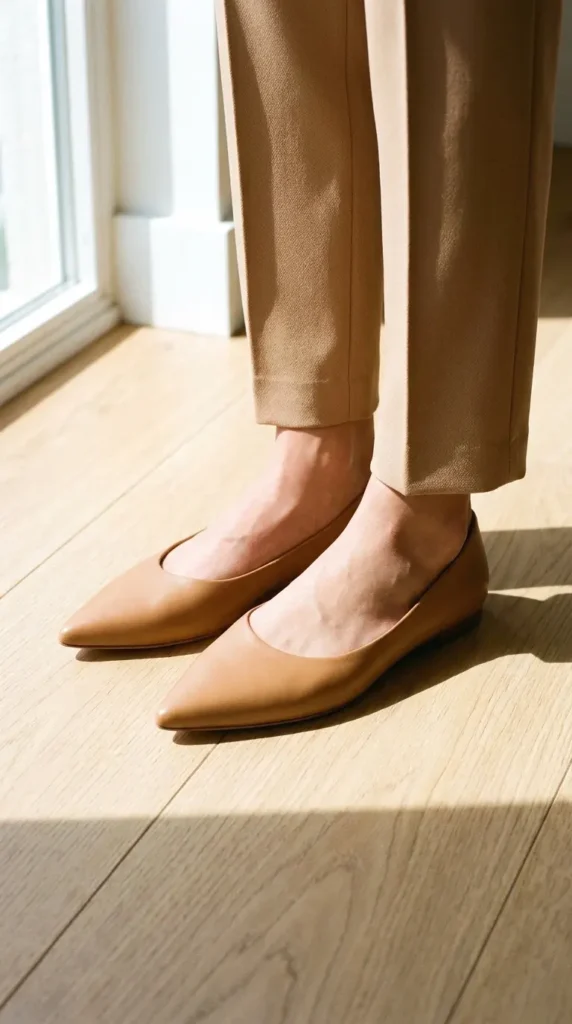
A visible color break at your ankle is one of the most common ways petite dressers accidentally cut their own height in half. Whether you’re in trousers, jeans, or a skirt, matching your shoe color closely to your bottoms — or to your bare skin, if you’re going sockless — removes that stopping point entirely. Nude flats with bare legs, black boots with black pants, or tonal denim with tan sneakers all keep the line running.
Tuck In Your Top to Create a Visible Waist Line
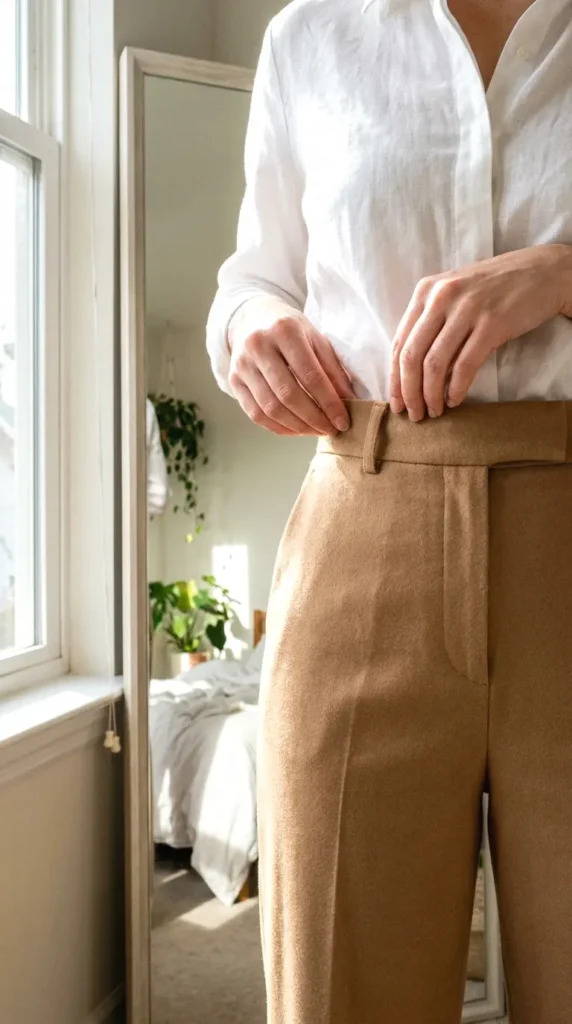
Two vertical lines only work together if there’s a clear point where they meet. A front tuck or French tuck — tucking just the front few inches of your shirt into your waistband — marks that meeting point without bunching fabric around your whole midsection. Leave the sides and back loose. This small gap between top and bottom is what makes your legs read as longer, since it visually raises your natural waistline.
Add a Long Necklace That Drops Below the Collarbone
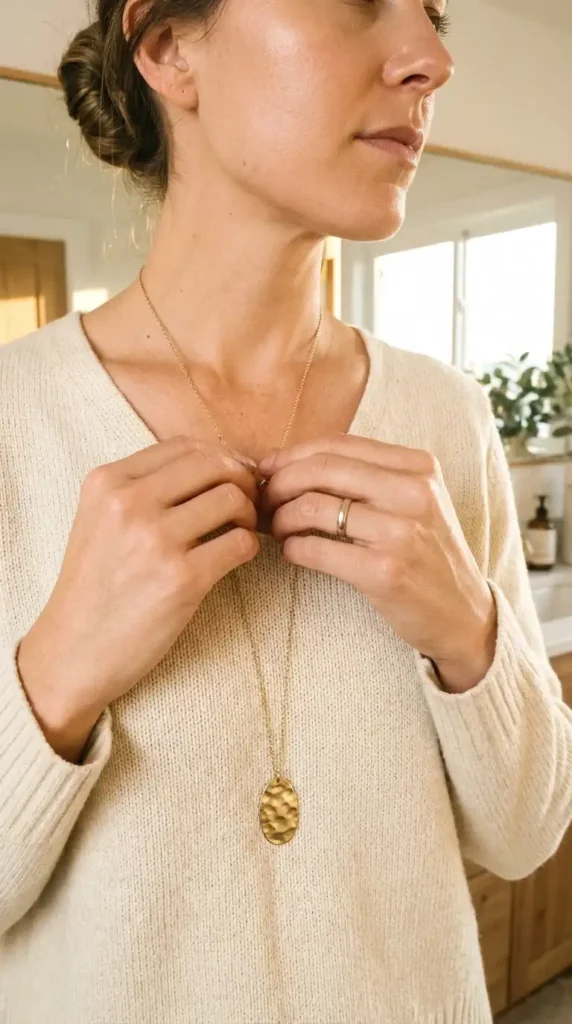
Watch what happens when a necklace sits high and tight around your throat: it draws a horizontal band right where your neck meets your chest, shortening everything below it. Swap it for a pendant or chain that falls at least 4 inches below your collarbone instead. This single accessory change works with almost any neckline except a high turtleneck, where the length gets lost under fabric.
Choose Vertical Seaming on Jackets and Blazers
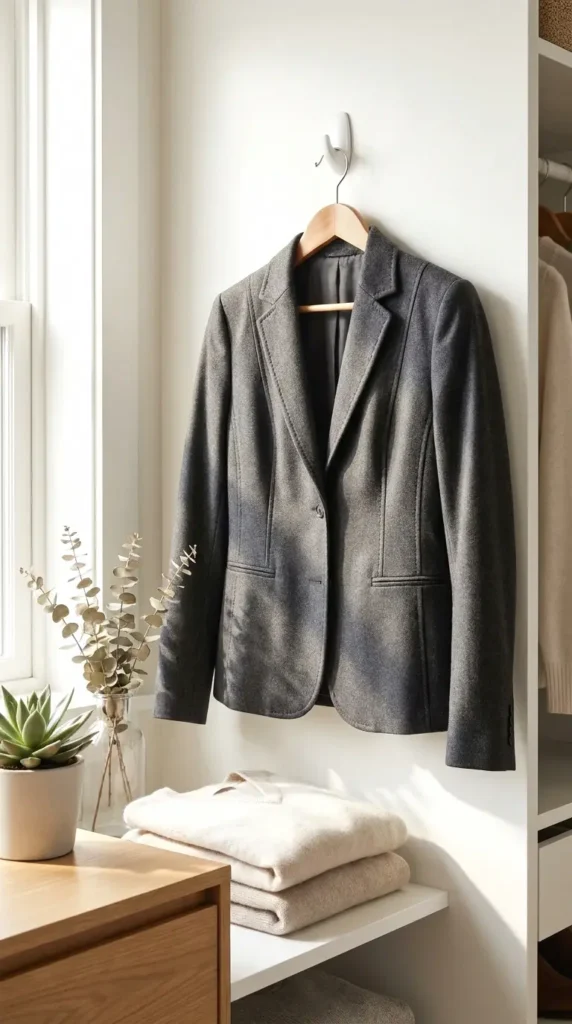
Look closely at the front of any blazer before you buy or wear it — princess seams that run from shoulder to hem create two subtle vertical lines down the torso, while a boxy jacket with no seaming just reads as one flat rectangle. Try this test in the mirror: button the jacket and see if your eye can trace an unbroken line from your shoulder to the hem. If it stops at a horizontal seam or pocket flap, the jacket is working against your frame, not for it.
Skip Horizontal Cutoffs at Your Widest Point
Every body has a natural widest point, whether that’s the hip, thigh, or waist, and any hemline or waistband that lands exactly there will emphasize width instead of height. Cropped jackets, cargo pants with a mid-thigh pocket, and cardigans that stop at the hip bone are the most common offenders. Move the cutoff 2 to 3 inches higher or lower than that point, and the horizontal line stops competing with the vertical ones you’ve already built.
Check Your Full Silhouette in a Mirror From Across the Room

Everything up to this point has been about individual pieces, but height is read as a whole picture, not a checklist. Step back at least 6 feet from a full-length mirror, the farthest distance your space allows. Look for three things:
- One continuous line from shoulder to floor
- No hard color break at the ankle
- No horizontal line sitting at your widest point
If all three check out, take a photo. A camera flattens depth the way a stranger’s eye does, and it often reveals a break you didn’t notice standing close to the glass.
| If This Happens | Try This |
|---|---|
| Your cardigan keeps swinging open and closing on its own | Pin the inside seams together at the chest, just below where it naturally sits open |
| Your French tuck keeps coming untucked | Tuck a smaller section, no wider than **3 inches**, and tuck it deeper than feels natural |
| You don’t own any shoes close to your pant color | Cuff your pants slightly instead, so bare ankle shows in one clean line rather than a shoe color clash |
| Your necklace disappears under a scarf or high neckline | Swap the necklace for a long open scarf worn loose down the front instead |
Does vertical lines styling petite really work with any body shape?
Yes. The effect comes from how the eye tracks a line, not from your specific proportions, so it works whether you’re petite and curvy, petite and straight, or anything in between.
Can I mix vertical lines with a belt?
Yes, as long as the belt is the same color as your top or bottom, so it doesn’t create a new horizontal break at your waist.
Do heels matter for this method?
Height from heels is separate from this technique. Vertical lines add visual height even in flats, so heels are optional, not required.
What if my job requires a uniform I can’t change?
Focus on the pieces you control, like shoes matching your pant hem and a longer necklace, since even small changes still shift the line.
How long before this starts to feel automatic?
Most people stop thinking about it after styling **2 to 3 outfits** this way, since the eye starts catching the horizontal breaks on its own.
- Pick one vertical anchor piece
- Check stripes and seams run up, not across
- Layer an open, long cardigan or duster
- Match shoes to pants or bare skin
- French tuck your top at the waist
- Wear a necklace below the collarbone
- Choose blazers with princess seaming
- Avoid hemlines at your widest point
- Check the full look from 6 feet back
Conclusion
You now have a full set of vertical lines working for you instead of against you, from your shoulders down to your ankles. Nothing here required new clothes or a tailor — just a shift in how you match, tuck, and layer what’s already in your closet. Try it on your next outfit and watch how a full-length mirror confirms the difference before anyone else even notices. Pin this guide now so it’s ready the next time you’re getting dressed.