
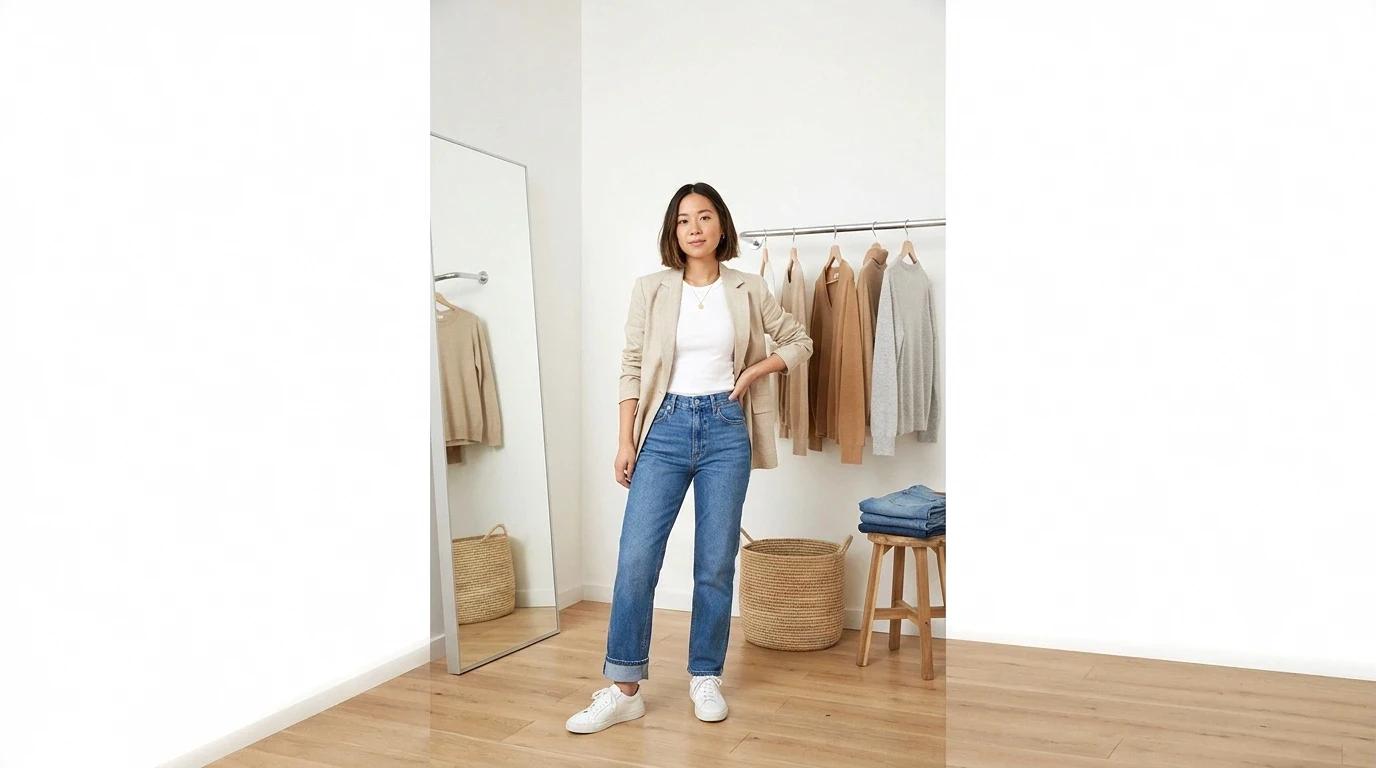
How to Cuff Jeans Petite: The Right Width, Height & Fold
If you’re 5’4″ or under, you already know the problem. You cuff your jeans the way every tutorial shows you, and instead of looking casual and put-together, your legs look shorter and your whole outfit looks unfinished. That thick, bunchy double-roll everyone loves? On a petite frame it eats up leg length fast.
The fix isn’t a different fold technique — it’s matching the cuff width, height, and fabric weight to your actual proportions. Once you get the ratio right, a cuffed jean can genuinely make your legs look longer, not shorter.
This guide walks you through how to cuff jeans petite the right way, from picking the starting length to pressing the final fold so it holds all day. It takes about 10 minutes once you know your ideal width, and you only have to figure that out once — after that, it’s muscle memory every time you get dressed.
Total Time
10 minutes
Active Time
5 minutes
Difficulty
Easy
What You Need
- Straight, slim, or bootcut jeans (avoid super skinny for a clean cuff)
- The shoes you plan to wear with them
- A full-length mirror
- A fabric iron (optional, for setting the fold)
- Two small safety pins or fashion tape (optional, for holding the cuff in place)
Start With the Right Jean Length Before You Cuff
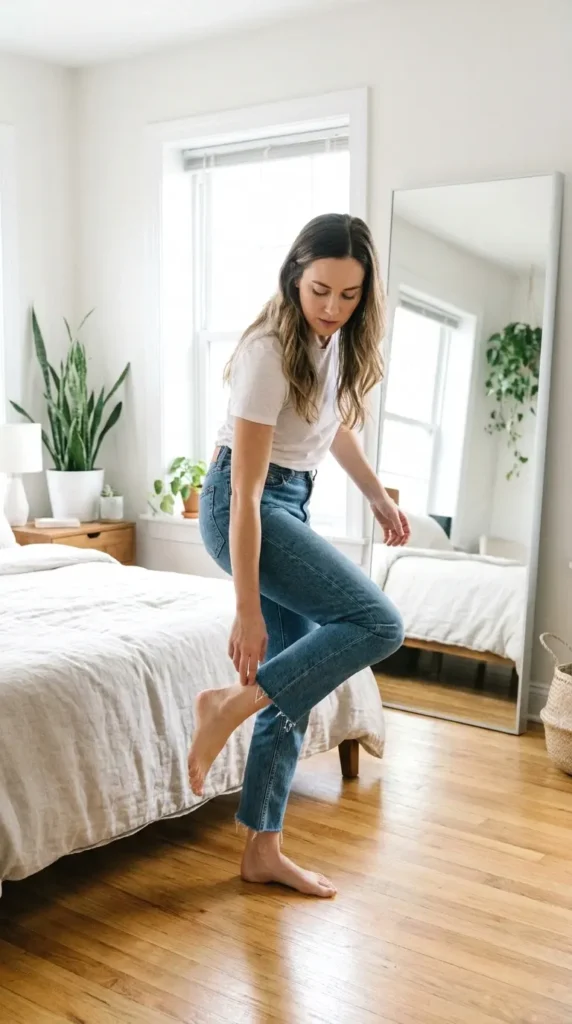
A cuff can only fix so much. If your jeans pool heavily at the ankle before you even fold them, you’re starting from too much fabric, and the cuff will end up thick and stiff no matter what technique you use. Look for jeans that hit right at your anklebone, or just below it, when worn without a cuff. That’s your ideal starting point.
If your only option is a longer pair, that’s fine — you’ll just fold more, and that changes your width and height decisions later. Tailoring the hem first, even by an inch, makes every cuff after this step easier and flatter.
Try Them On With the Shoes You’ll Actually Wear
⚠ Heads Up
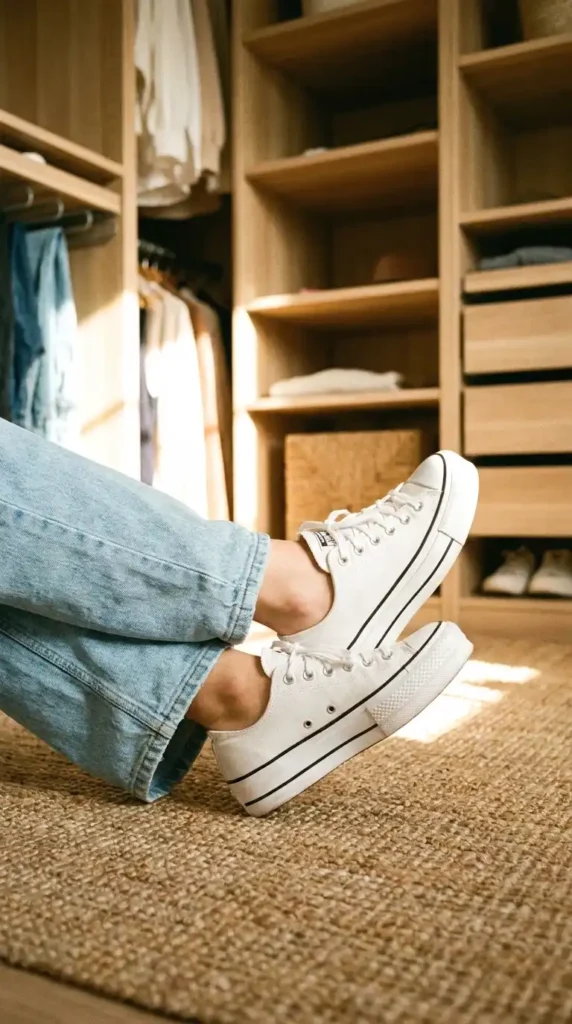
Cuffing jeans while barefoot is the single biggest reason petite cuffs look wrong later. Flats sit higher on your ankle than sneakers, and heels change the whole leg line. What looks perfect barefoot can look boxy the moment you put on your actual shoes.
Put on the exact shoes you’re planning to wear before you touch the fabric. Sneakers, flats, and boots all call for a different cuff height, and guessing now means redoing the fold later. Stand normally, not on your toes, since your natural stance is what people will actually see.
Choose Your Cuff Style Based on the Jean’s Fabric Weight
💡 Pro Tip
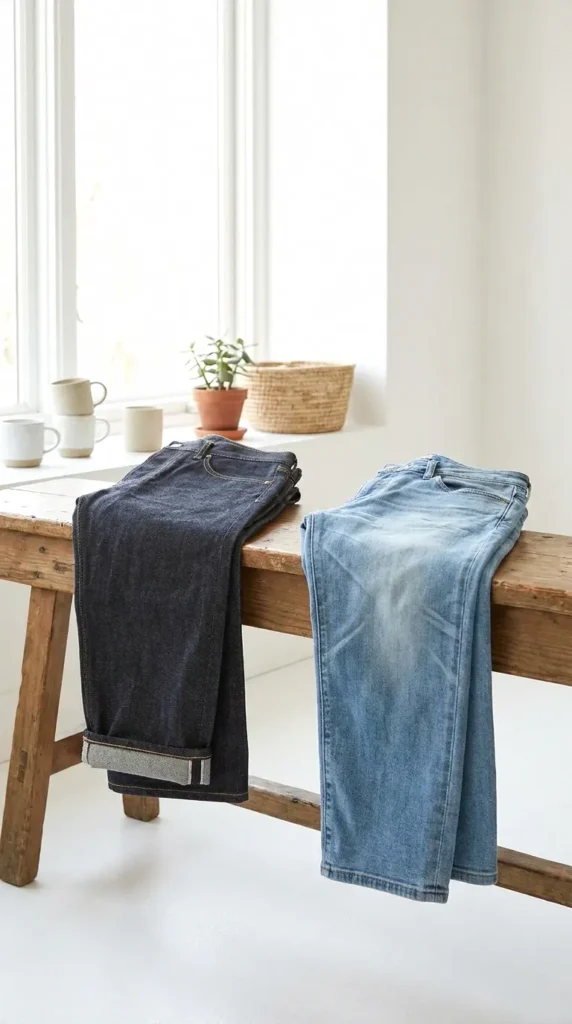
Thicker denim like raw or selvedge holds a single wide cuff beautifully on its own — skip the double roll entirely and let one clean fold do the work.
Heavy, rigid denim and soft, stretchy denim behave differently once folded, so match your technique to what you’re wearing:
- Rigid or raw denim: holds a single fold well and looks intentional with just one cuff
- Stretch or lightweight denim: needs a double fold to keep its shape, since one fold alone tends to slip
- Bootcut or wide-leg: usually looks best with no cuff, or a very shallow single roll only
Petite frames generally do better with less bulk, so when in doubt, choose the lighter option on this list.
Fold the First Cuff to Set Your Base Width
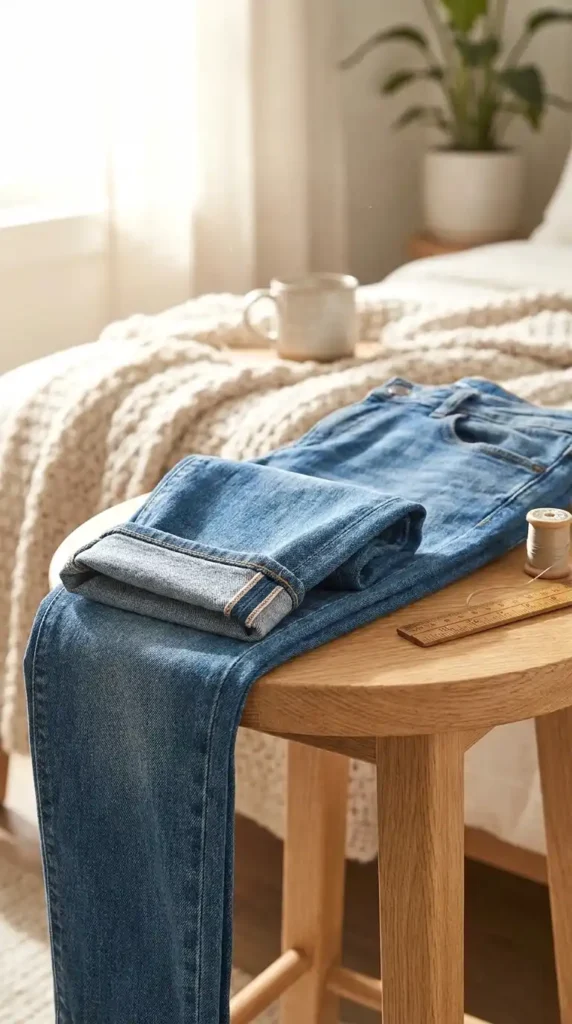
Pinch the outer seam of the jean at your ankle and fold the fabric upward, outside to outside, so the seam stays flat rather than twisting. For most petite frames, a 1 to 1.5 inch fold is the right starting width — wide enough to read as intentional, narrow enough not to swallow your ankle. Smooth it flat with your fingers before moving to the second fold.
Roll the Second Fold Tighter Than the First
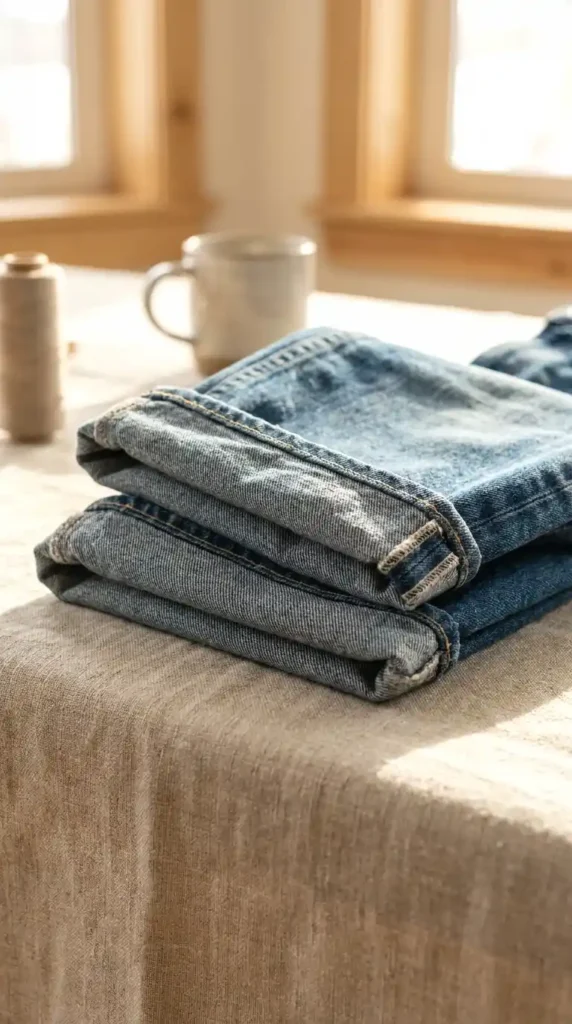
The second fold sits directly on top of the first, but it needs to be slightly narrower — about half an inch less than your base fold. This creates the stacked, tailored look instead of one thick lump of fabric. Uneven pressure here is the most common slip-up: press evenly across the whole width, not just at the seam, or one side will sit higher than the other.
Adjust the Cuff Height for Your Specific Shoe Style
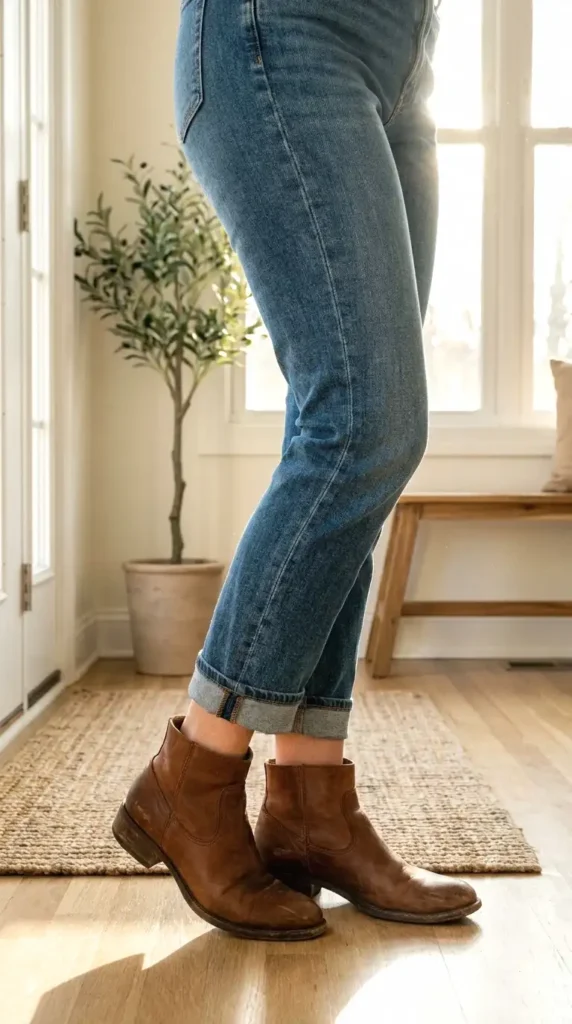
Your shoe choice from earlier now determines exactly where the bottom of the cuff should land:
- Sneakers: cuff should sit right at the top of the shoe, barely grazing it
- Ankle boots: cuff should stop about 1 inch above the boot opening
- Flats or loafers: cuff should sit right above the anklebone, showing a sliver of skin
- Heels: cuff should sit slightly higher, around 1.5 inches above the anklebone
Getting this height right does more for your leg line than the fold width does, so don’t rush past it.
Check the Proportion From a Full-Length Mirror
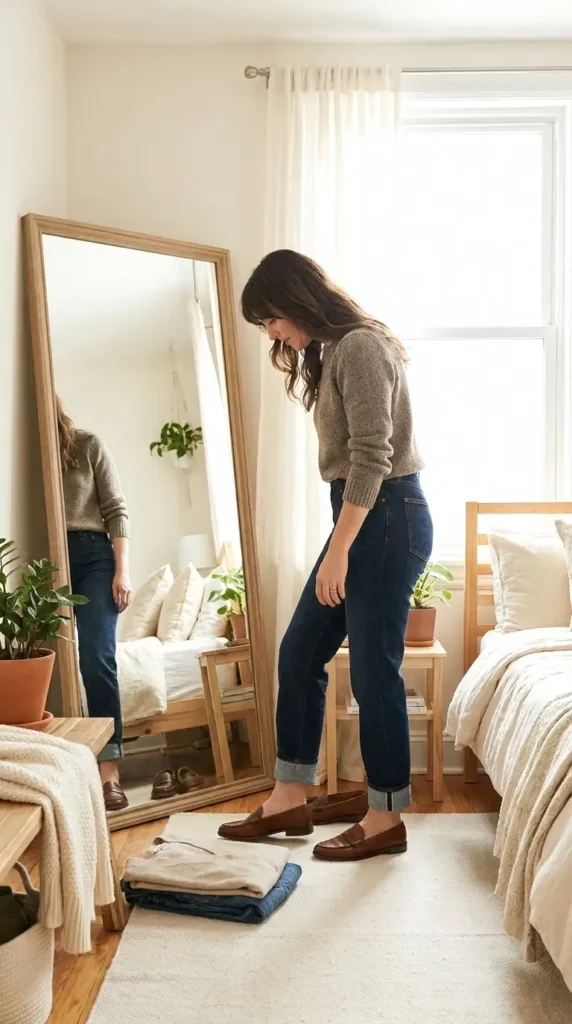
Step back far enough to see your whole leg at once, not just the ankle area — a close-up view tricks you into thinking a cuff looks fine when it’s actually cutting your leg shorter. Turn to the side too, since cuffs often look different from a profile view than head-on. If the cuff visually chops your leg into two short blocks instead of one long line, size it down by a quarter inch and check again.
Press or Pin the Cuff If It Won’t Hold Its Shape
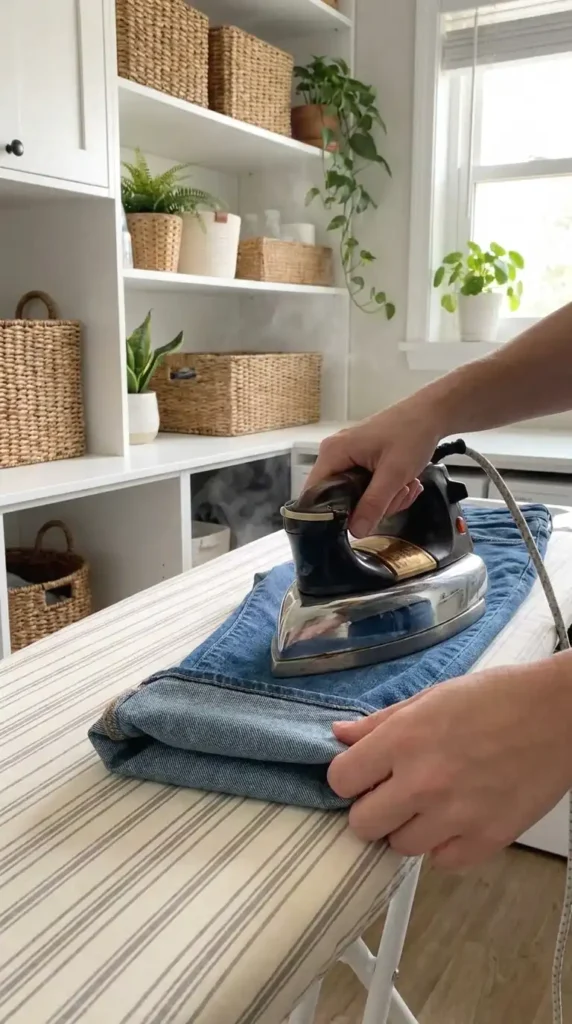
Lightweight or stretchy denim sometimes unrolls within an hour of wear, which defeats the whole point. If that happens, run a warm iron over the folded edge for 10 seconds per side to set a crease the fabric will remember. No iron handy? A single small safety pin tucked inside the fold, hidden from view, holds just as well and takes seconds to place.
Common Mistakes
Common Mistakes to Avoid
1. Cuffing jeans that are already too long
A big fold made from excess fabric always looks bulky. Hem the jean closer to your ankle first, then cuff.
2. Making both folds the same width
Equal-width folds read as accidental rather than styled. Keep the second fold narrower than the first.
3. Cuffing barefoot, then wearing heels
The cuff height that looked right barefoot will sit too low once you add shoes. Always fold in the shoes you’ll wear.
4. Rolling stretch denim too loosely
Soft fabric relaxes and slips within an hour without a firm fold or a pressed crease.
5. Choosing a wide-leg jean and cuffing it anyway
Wide-leg silhouettes usually look better with a clean, uncuffed hem or a very shallow single fold on a petite frame.
FAQ
Frequently Asked Questions
How wide should a cuff be for a petite frame?
Start with a base fold of 1 to 1.5 inches, then a slightly narrower second fold. Wider cuffs tend to shorten the leg visually.
Can I cuff skinny jeans the same way?
Skinny jeans can be cuffed, but a single shallow fold usually looks cleaner than a double roll since there’s less fabric to work with.
Should the cuff show skin above the ankle?
A small sliver of skin, especially with flats, makes the leg line look longer. A cuff that fully covers the ankle can shorten it.
Does cuffing work with bootcut jeans?
Generally no. Bootcut hems are designed to skim over shoes, so cuffing usually looks better skipped or done very shallow.
Quick Reference Card
Quick Reference Card
What You Need:
Straight/slim/bootcut jeans · Your actual shoes · Full-length mirror · Iron (optional) · Safety pins (optional)
Steps:
1. Start with the right jean length
2. Try on with your actual shoes
3. Choose cuff style by fabric weight
4. Fold first cuff (1–1.5 in)
5. Roll second fold tighter
6. Adjust height for your shoe
7. Check proportion in full mirror
8. Press or pin to hold shape
You’ve Got the Formula Now
That’s it — you now know exactly how to cuff jeans petite, matched to your fabric, your shoes, and your actual proportions. No more guessing, no more bulky rolls eating up your leg length.
Once this becomes second nature, try it on a few different washes and widths to see which cuff height is your go-to signature look. Save this pin so you always have the fold ratio on hand before you get dressed. 🤍